



Heat Pumps
Do I Need New Radiators for a Heat Pump in Berkshire or Surrey?
By Adam Dare
Heat Geek trained installer
Updated 12 November 2026
Reading time
🎉 Named South East Heating Installer of the Year 2026
It is one of the first worries Berkshire and Surrey homeowners have when they start looking at a heat pump. You have read that switching means ripping out every radiator in the house, or that the quote will quietly balloon once the installer is inside and starts finding “problems.” It is a fair thing to be wary of, because it does happen with bad installers. But the reality for most homes is far less dramatic. You may need to upgrade some radiators, you will rarely need to replace them all, and which ones is a calculation, not a guess.
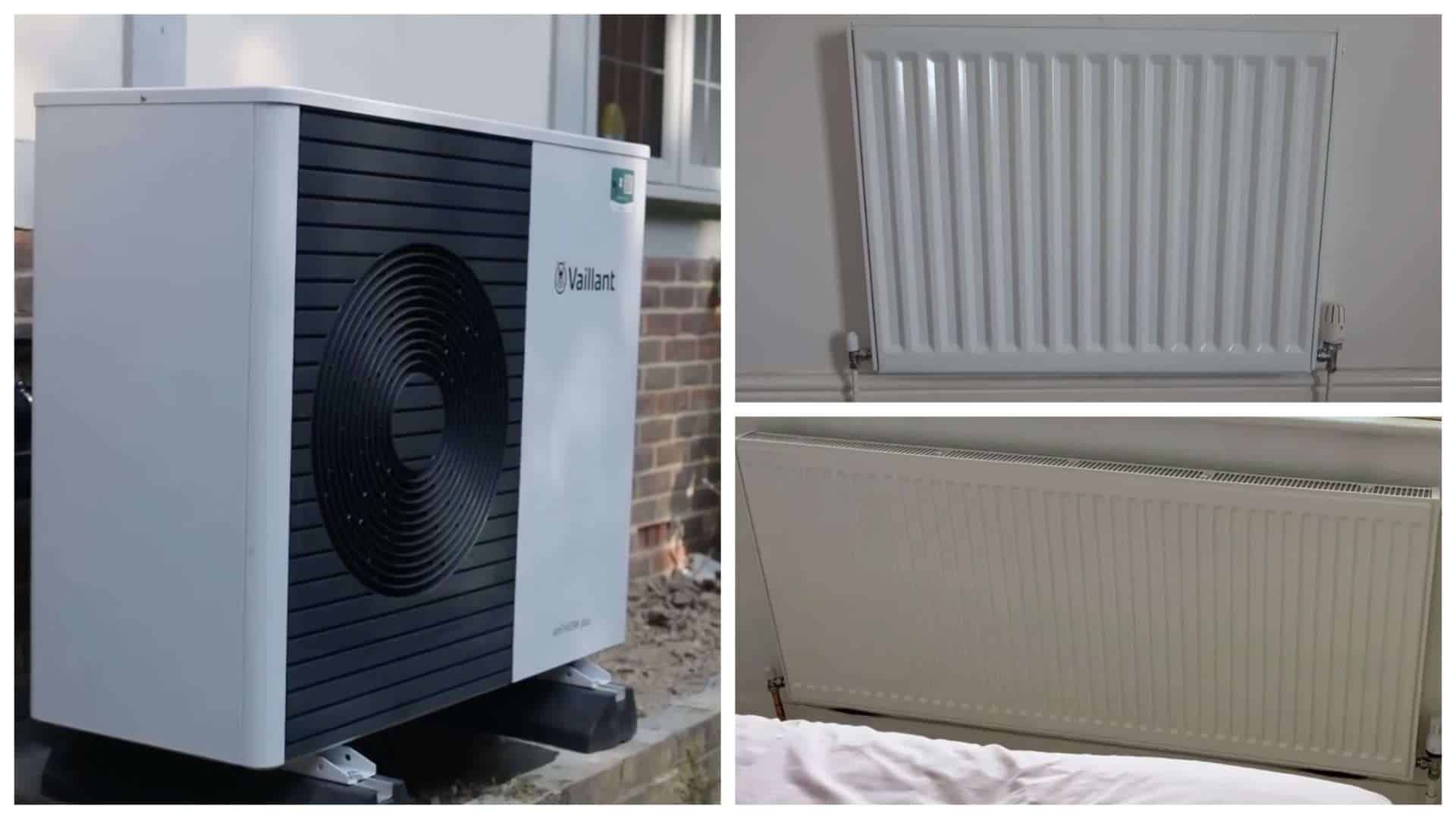
This guide explains exactly how the radiator question is answered for your specific home, and why a good installer can tell you the scope before you commit rather than after.
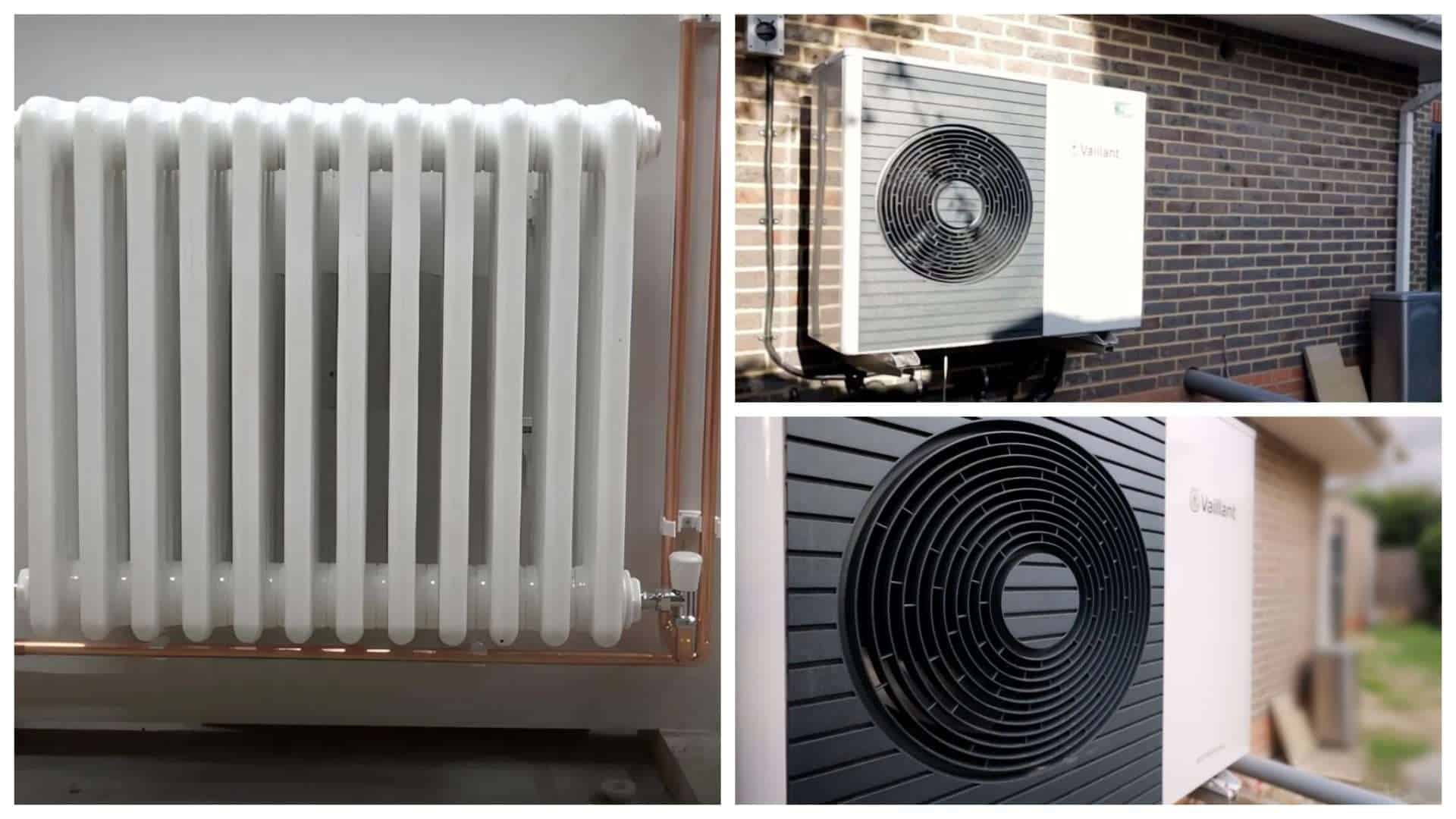
Most homes keep most of their radiators. In a typical installation, a few radiators get upgraded and the rest stay exactly where they are. The idea that a heat pump requires a whole new set of radiators is one of the most persistent myths about the technology, and it puts people off a system that would suit their home perfectly well.
The honest version is more nuanced. Some radiators in your home are probably already big enough to work with a heat pump. Some may be slightly undersized and need upgrading to a larger or higher-output model. A good air source heat pump installation starts by working out which is which, room by room, before a single radiator is touched. The rest of this guide explains how that is done.
Find Out Which Radiators Actually Need Changing
If your home is older and someone has told you a heat pump will not work, the design is what to question, not your house.
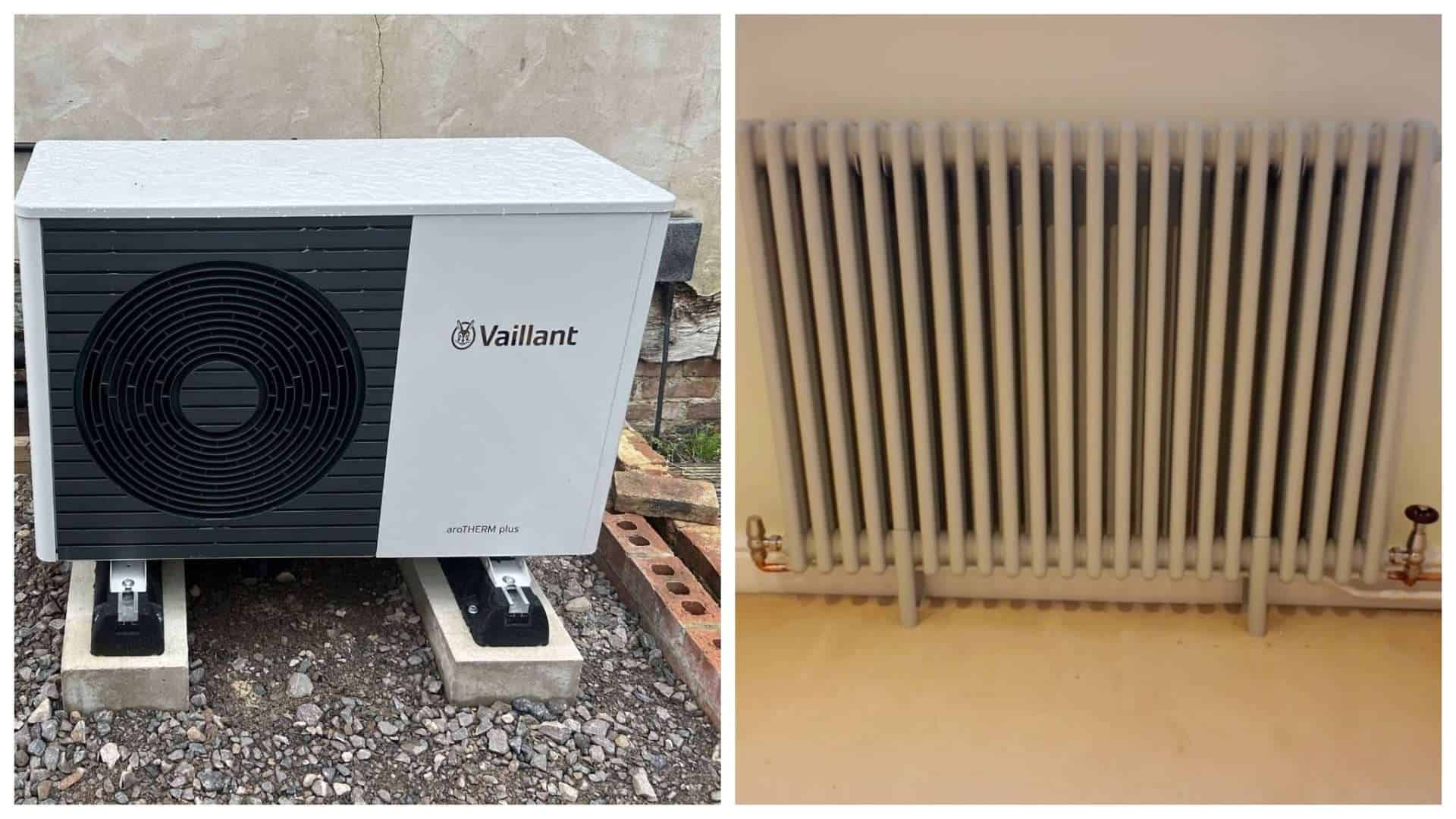
The reason any radiators need changing at all comes down to temperature. A gas boiler pushes very hot water through your radiators, typically at 65 to 75 degrees. A heat pump is at its most efficient running much cooler, around 35 to 45 degrees, and that lower water temperature is exactly what lets it deliver three to four units of heat for every unit of electricity it uses. If comfort still isn’t right after handover, look for signs your radiators weren’t resized for the new flow temperature.
Water temperature through the radiators
Gas boiler
65 to 75 degrees
Heat pump
35 to 45 degrees
The lower temperature is what lets a heat pump deliver three to four units of heat for every unit of electricity it uses.
A radiator gives out less heat when the water inside it is cooler. So a radiator that was perfectly adequate at 70 degrees with a boiler might not put out enough heat at 45 degrees with a heat pump. The fix is a radiator with more surface area, either physically larger or a double or triple panel in the same footprint. It is not that heat pumps need exotic radiators. They simply need radiators sized for a lower temperature.
This is also why cutting corners here is so costly. A lazy installer faced with undersized radiators will just turn the flow temperature up to compensate. The house warms up, but the efficiency collapses and the running costs climb, which defeats the point of the heat pump entirely. The relationship between radiator sizing and what a heat pump actually costs to run is direct, which is why the sizing has to be done properly.
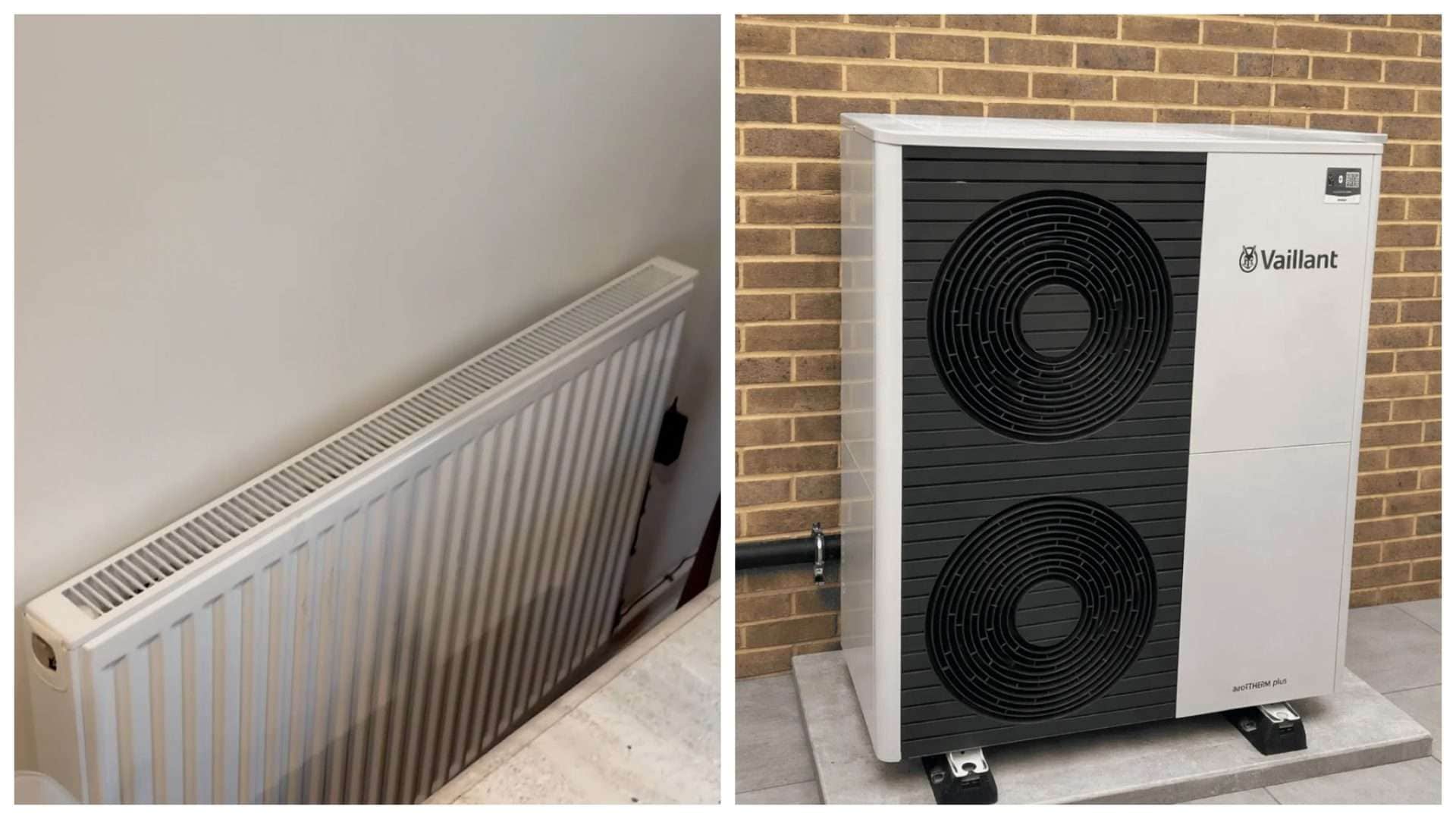
Here is the part that removes the fear of a ballooning quote. A competent installer does not guess how many radiators you need. They calculate it.
During the heat loss survey, every room is assessed for how much heat it loses on the coldest day of the year. That figure is then compared against the output each existing radiator can deliver at the system’s design flow temperature. Where the radiator already meets the room’s need, it stays. Where it falls short, it is flagged for an upgrade. This is done for every room in the house, and the result is a radiator schedule: a specific list of which radiators change and which do not.
Heat loss, room by room
Every room is assessed for how much heat it loses on the coldest day of the year.
Radiator output compared
That figure is checked against what each existing radiator can deliver at the design flow temperature.
Keep or upgrade
A radiator that meets the room’s need stays. One that falls short is flagged for an upgrade.
Radiator schedule
A specific list of which radiators change and which do not, fixed before the quote.
Because this happens before the quote, the scope is fixed in advance. You are not agreeing to an open-ended “we’ll see what we find” arrangement. You are agreeing to a defined list of work with a price attached. An installer who cannot give you that schedule before starting has not done the survey properly, and that is the situation where costs creep mid-job.
A Radiator Schedule Worked Out Room by Room
Your free Blueprint sets out the heat loss for every room and the radiator each one needs at the planned flow temperature.
“Creating first a detailed heat loss report and then a system design to meet the requirements… The installation was neat and the new pipe work was a work of art… Adam also ensured the grant application, planning and certification were all dealt with and left behind a comprehensive data pack at the end of the job.”
Stephen Saunders, Google Review
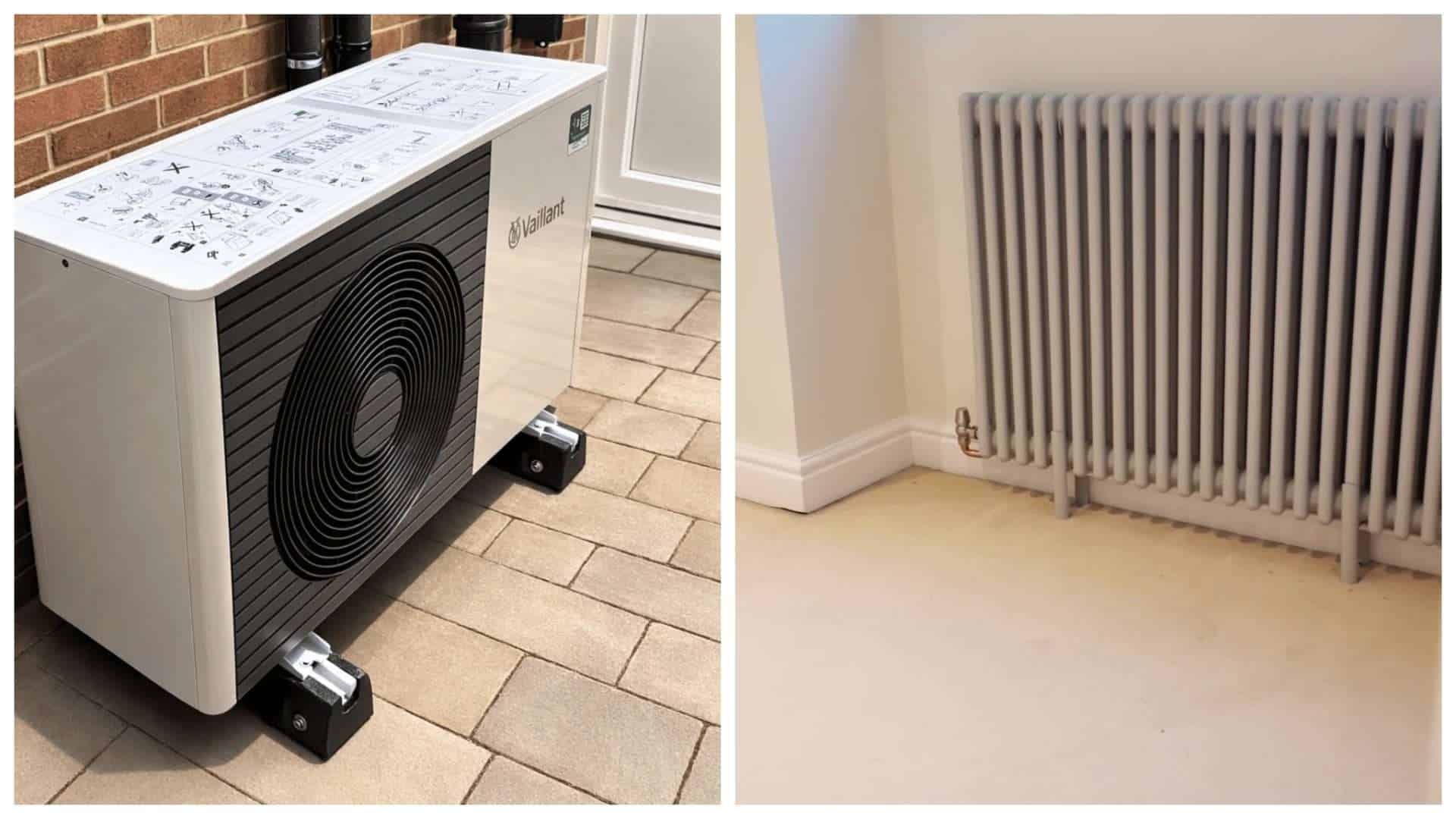
There is no fixed rule, because it depends entirely on the radiators you already have and how much heat each room needs. That said, some patterns are common.
The radiators most likely to need upgrading are the ones in your largest or coldest rooms, often a living room or a room with a lot of external wall and glazing, where the heat demand is highest. Small panel radiators in bedrooms and bathrooms are frequently already adequate, especially in better-insulated homes. In a typical Berkshire or Surrey property this tends to mean upgrading a handful of radiators rather than the whole house.
For anyone with a carefully restored interior, an upgrade does not have to mean a modern white panel. Traditional column radiators, including cast-iron-style ones, suit heat pumps well because their large surface area and high water volume work nicely at low flow temperatures. You can match the period of the house while still getting the output the room needs. Older properties tend to raise the most radiator questions, and our guide to whether a heat pump will work in an older home covers them in more detail.
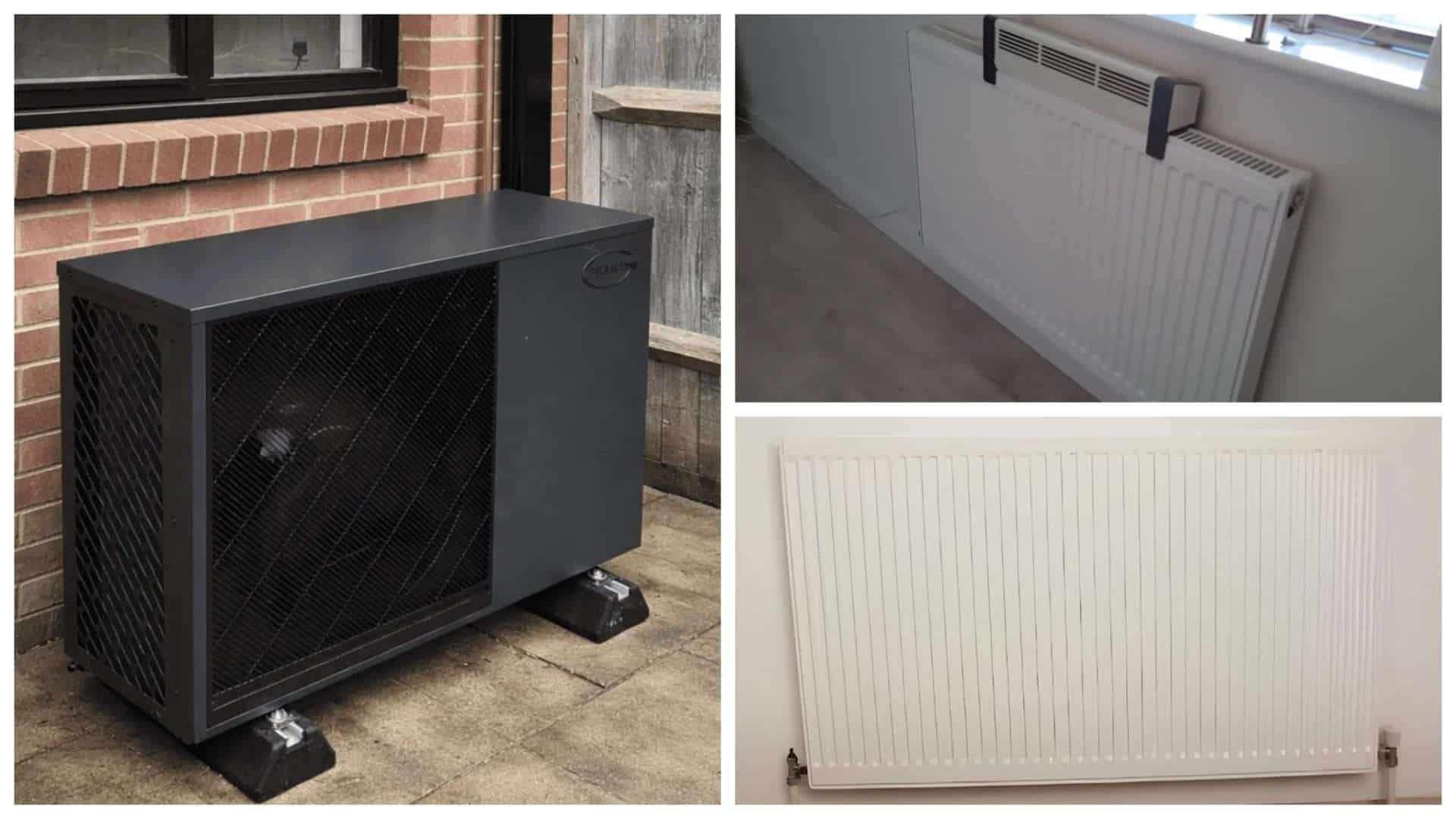
Occasionally a room needs more heat output than any sensible radiator can provide in the space available. This is where alternatives come in, and both work beautifully with a heat pump’s low flow temperature.
Underfloor heating turns the whole floor into a gentle, large-area emitter, which is an ideal match for a heat pump and frees the walls entirely. It is most straightforward in renovations and extensions where the floor is already coming up, and you can read more about underfloor heating installation and how it pairs with a heat pump. Fan convectors are the other option: compact units that use a quiet fan to push out more heat from a smaller body than a standard radiator could, useful in kitchens and rooms where wall space is at a premium. A good design uses whichever emitter suits each room, rather than forcing one solution everywhere.
Turns the whole floor into a gentle, large-area emitter and frees the walls entirely, and is most straightforward in renovations and extensions where the floor is already coming up.
Compact units with a quiet fan that push out more heat from a smaller body than a standard radiator, useful in kitchens and rooms where wall space is at a premium.
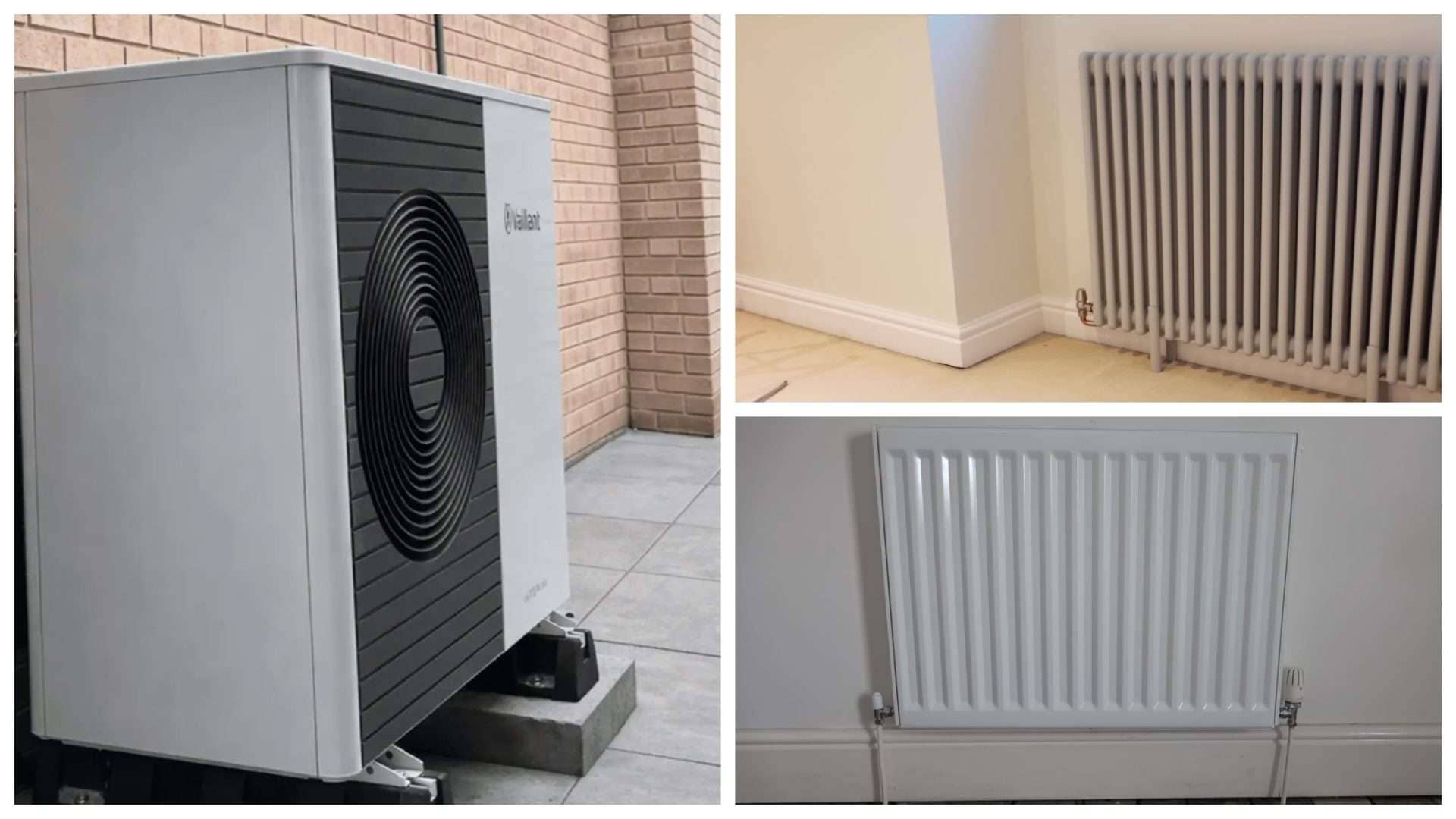
Possibly some, but rarely all. Most homes keep the majority of their existing radiators and upgrade only the ones that are undersized for a lower flow temperature. The exact number is determined by a room-by-room heat loss survey, and in a typical Berkshire or Surrey home it is usually a handful rather than the whole house.
Some radiators may need to be larger, because a heat pump runs at a lower water temperature than a boiler and a radiator gives out less heat when the water is cooler. A larger surface area makes up the difference. Many existing radiators are already big enough, which is why a survey is needed to tell them apart.
In most homes, yes, at least the majority of them. Radiators that are already adequately sized for the room’s heat demand at a low flow temperature can stay. Only the undersized ones need upgrading, and the survey identifies exactly which those are.
Through the heat loss survey. Each room’s heat loss is calculated and compared with the output its current radiator can deliver at the design flow temperature. Rooms where the radiator falls short are flagged, and you receive a radiator schedule before any work begins, so there are no surprises.
Yes. Column and cast-iron-style radiators have a large surface area and hold a high volume of water, which suits the low flow temperatures a heat pump uses. They are a good way to get the output a room needs while keeping the look of a period Berkshire or Surrey home.
Underfloor heating is an excellent match because the whole floor acts as a large, low-temperature emitter, but correctly sized radiators work very well too. The best choice depends on the room and the property. Many homes use a mix, with underfloor heating where it is practical and radiators elsewhere.
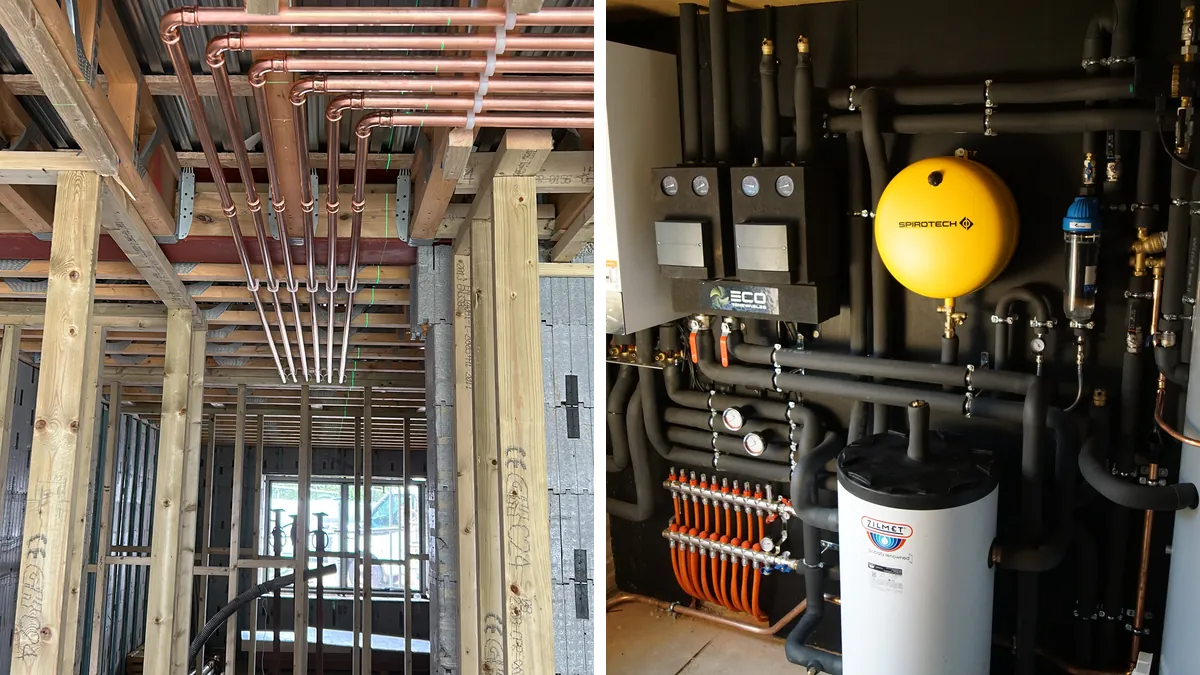
The honest answer to whether you need new radiators is that it depends on your specific home, and the only way to know for certain is a proper heat loss survey. Not a guess, not a rule of thumb, and not a number that changes once work has started.
A heat loss survey gives you a definitive radiator schedule as part of your Heat Pump Blueprint, with every change identified and costed. You will know exactly what is being done and what it costs, in advance.
More guides from the Eco Renewables blog on the same topic.
24 November 2026
Read the guide
24 November 2026
Read the guide
24 November 2026
Read the guideEco Renewables are trusted by homeowners throughout Berkshire and the South East to provide high-quality heat pump heating system installations.
If you're considering a heat pump, the survey is where it starts. We assess the property, run the heat loss calculations, and tell you exactly what the system would look like.
Get My Free Heat Pump Blueprint


