



Heat Pumps
Heat Pump Noise: What’s Normal in a Berkshire or Surrey Home
By Adam Dare
Heat Geek trained installer
Updated 24 November 2026
Reading time
🎉 Named South East Heating Installer of the Year 2026
It is one of the first worries people raise, and in a close-set street it is a fair one. The thought of a unit humming away outside the kitchen window, a neighbour growing irritated, and an awkward conversation over the fence puts people off before they have looked at anything else. In the higher-value, tightly spaced parts of Berkshire and Surrey, from Ascot to the conservation areas around Sunningdale and Virginia Water, the question comes up almost every time. The short answer is that a modern, well-sited heat pump is quiet, and the noise people picture is largely a siting and design problem that good installers solve before anything is fitted.
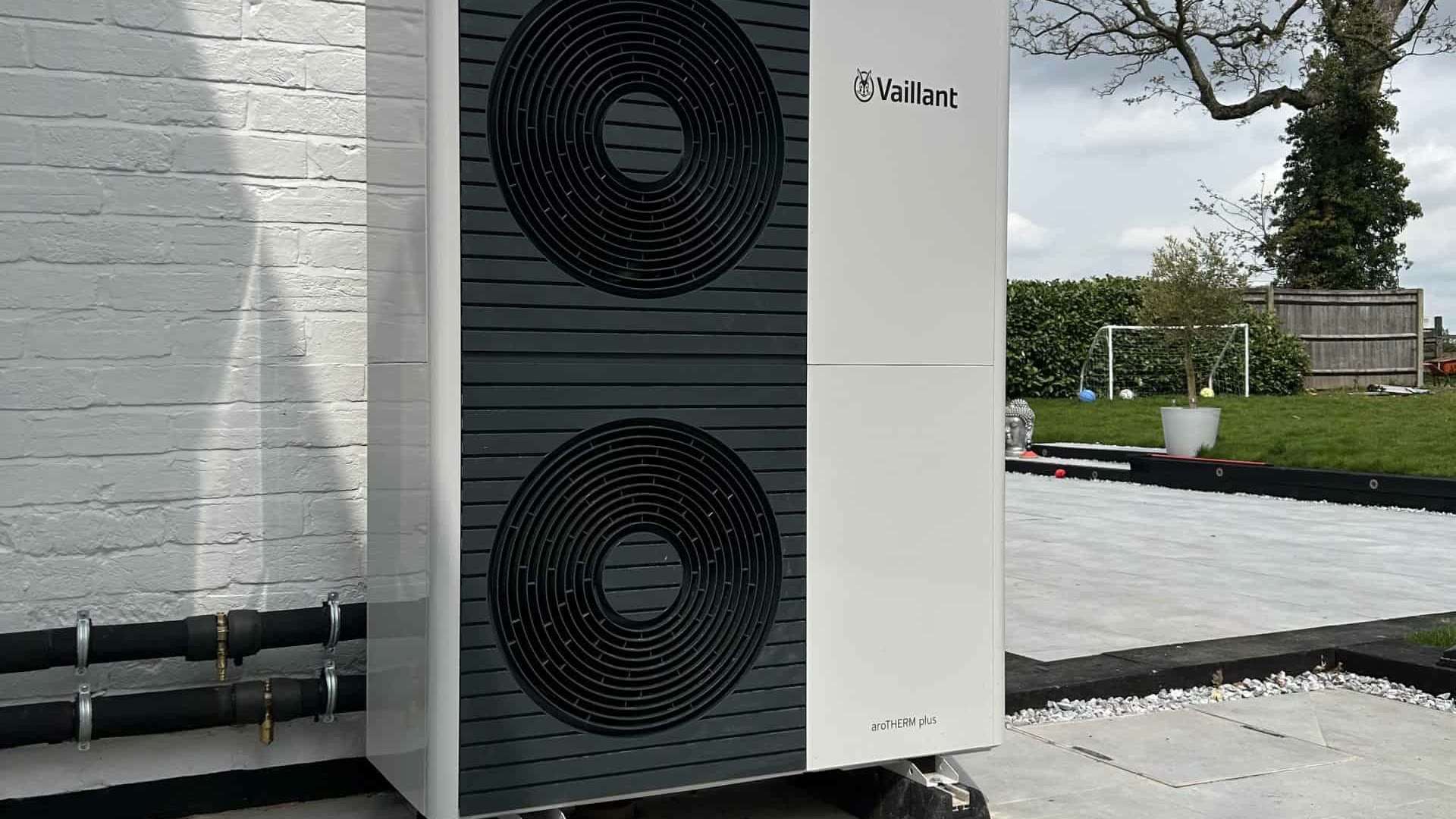
Here is what actually makes the noise, what the rules require, and what separates a heat pump you forget is there from one you notice.

A running air source heat pump sits in the range of normal background sound rather than anything you would call loud. Standing beside the outdoor unit, most people compare it to a quiet conversation, light rainfall, or the low hum of a fridge in the next room. Move a few metres away, behind a wall, or indoors with the window shut, and it fades into the background.
Manufacturers quote sound figures in different ways, which is where confusion creeps in. A sound power level describes the noise the unit itself produces, not what you hear standing nearby, and the level you actually experience drops with distance and with anything solid between you and the unit. This is why two homes with the same model can have very different experiences. What you hear depends far more on where the unit is placed and how it is mounted than on the headline number on the spec sheet. A unit sized correctly for the home also runs gently most of the time rather than flat out, which keeps it quieter still.
Get the Sizing Right for Quiet Running
A survey that measures the property properly is what lets a system be designed to run quietly rather than guessed at.
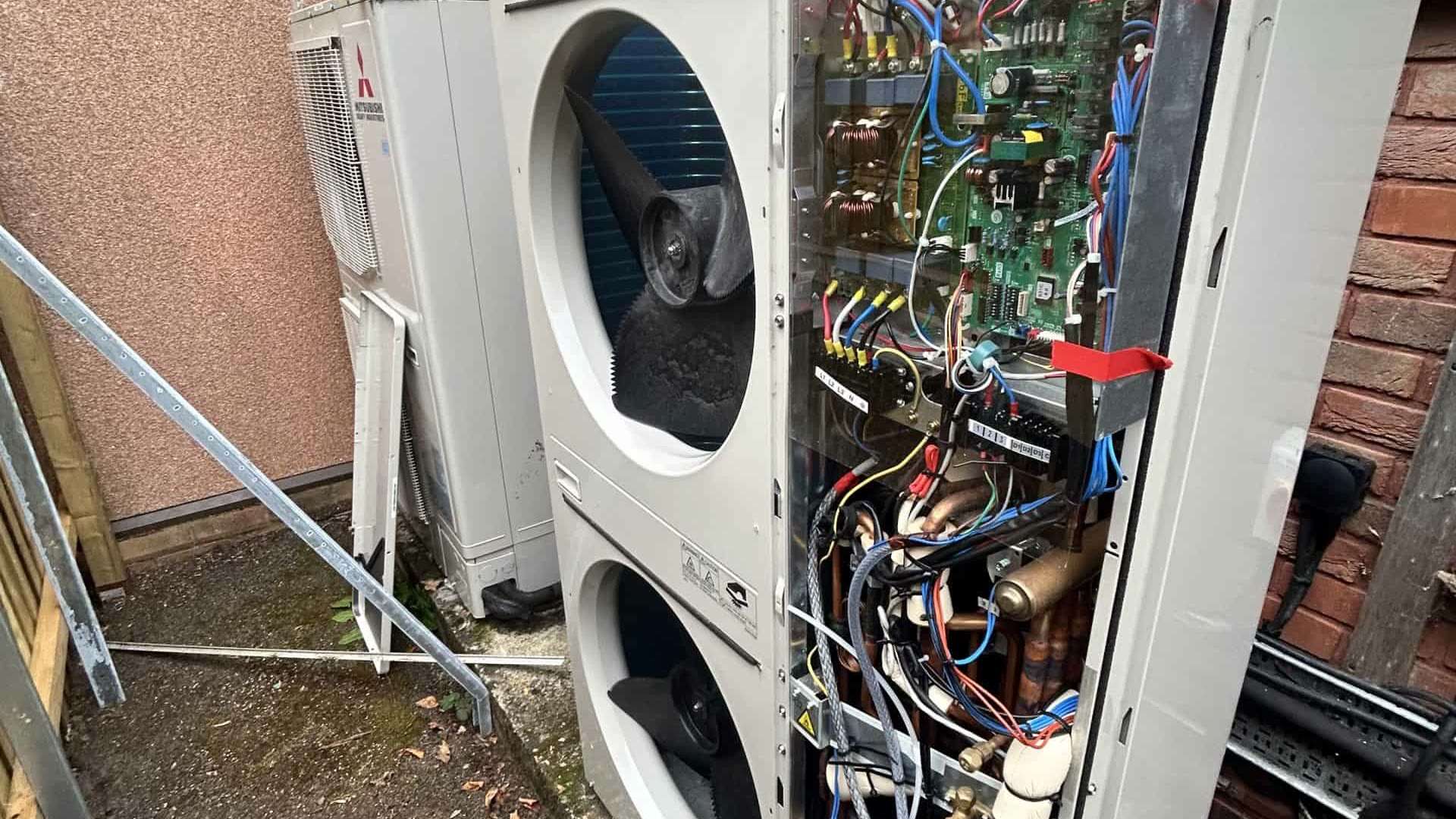
Two parts of a heat pump make sound: the fan that draws air across the unit, and the compressor that does the work of moving heat. Together they produce a low, continuous hum while the system is running. It is a steadier sound than a gas boiler, which fires up, roars for a while, clicks off, and then repeats. A heat pump tends to settle into a constant low murmur instead.
That steadiness is usually easier to live with than intermittent noise, and it gets quieter the better the system is designed. A heat pump matched correctly to the home runs low and slow, at gentle output, for long periods. One that is undersized or poorly set up has to work harder, which is both less efficient and louder. In other words, a quiet heat pump and an efficient heat pump are usually the same heat pump.
Fires up, roars for a while, clicks off, and then repeats.
The fan and the compressor produce a low, continuous hum while the system is running.
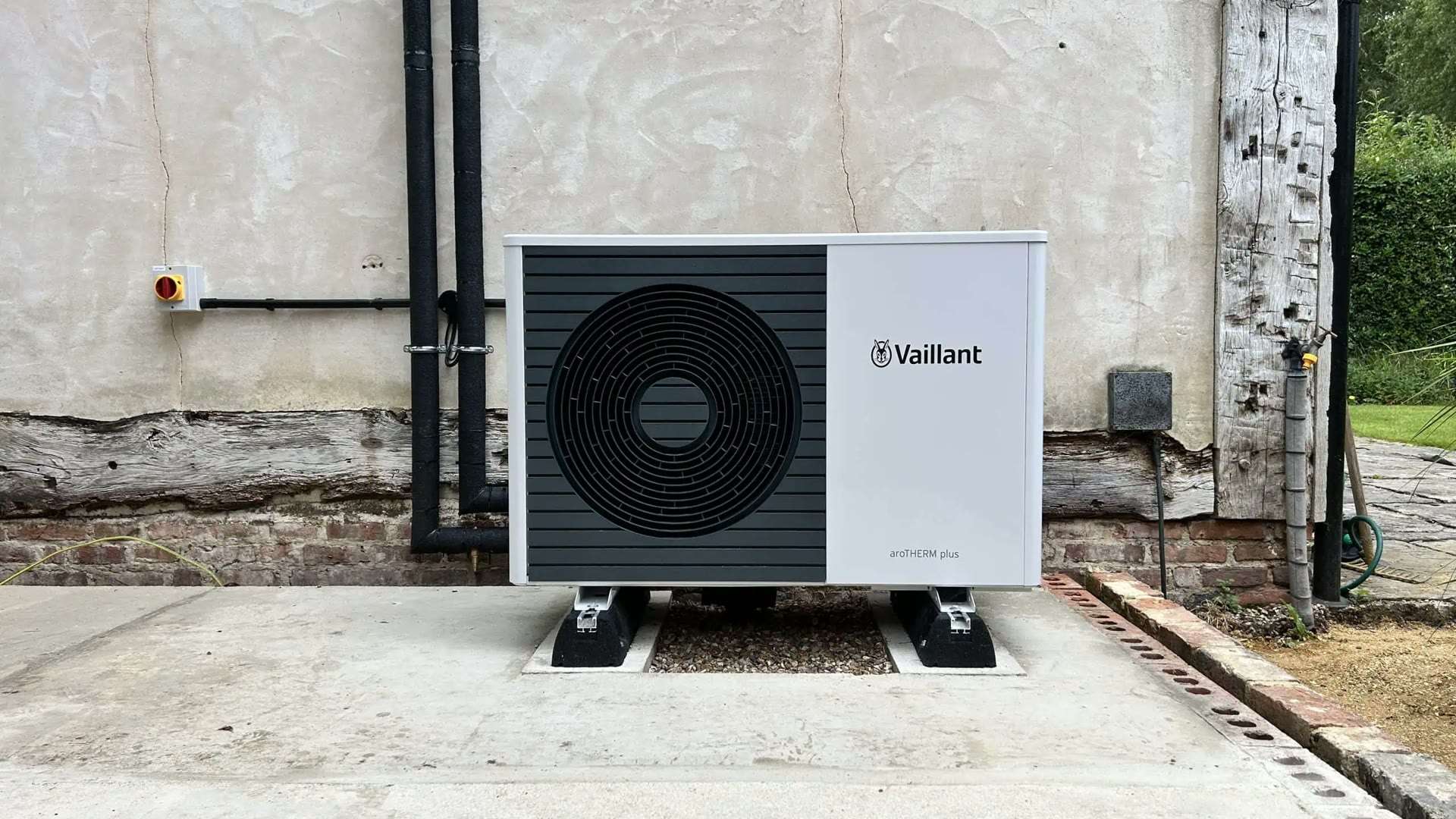
Heat pump noise is not left to chance. Most domestic installations go in under permitted development, and one of the conditions is a noise limit: the sound from the unit alone must not exceed 37 dB(A) when assessed one metre outside the nearest neighbour’s habitable-room window or door. The calculation, which takes the unit’s rating and the distance to the neighbour into account, is done before installation, so a position that would be too loud is ruled out at the design stage rather than discovered later.
37 dB(A)
Permitted development noise limit for the unit alone, assessed one metre outside the nearest neighbour’s habitable-room window or door before installation.
The rules were eased in England in 2025, with the old requirement to keep the unit at least a metre from the boundary removed, which gives more flexibility on placement. The noise assessment itself remains. Conservation areas, which cover large parts of older Berkshire and Surrey towns, are still treated as a special case and can carry extra conditions, and listed buildings need planning permission plus listed building consent. For an older or more sensitive property, the same care that goes into a heat pump for an older home applies to where the unit sits. The limit itself comes from the MCS planning standards, which accredited installers design to as standard.
Unit Placement Planned Around the Rules
Getting the unit specified and placed correctly for the specific property is what keeps it within the limits and out of a neighbour’s earshot.
He is incredibly knowledgeable about heat pumps… Adam was able to ensure the system was spec’d exactly as it needed to be to work most efficiently… available for follow up and support.
Gerard Barron, Google Review
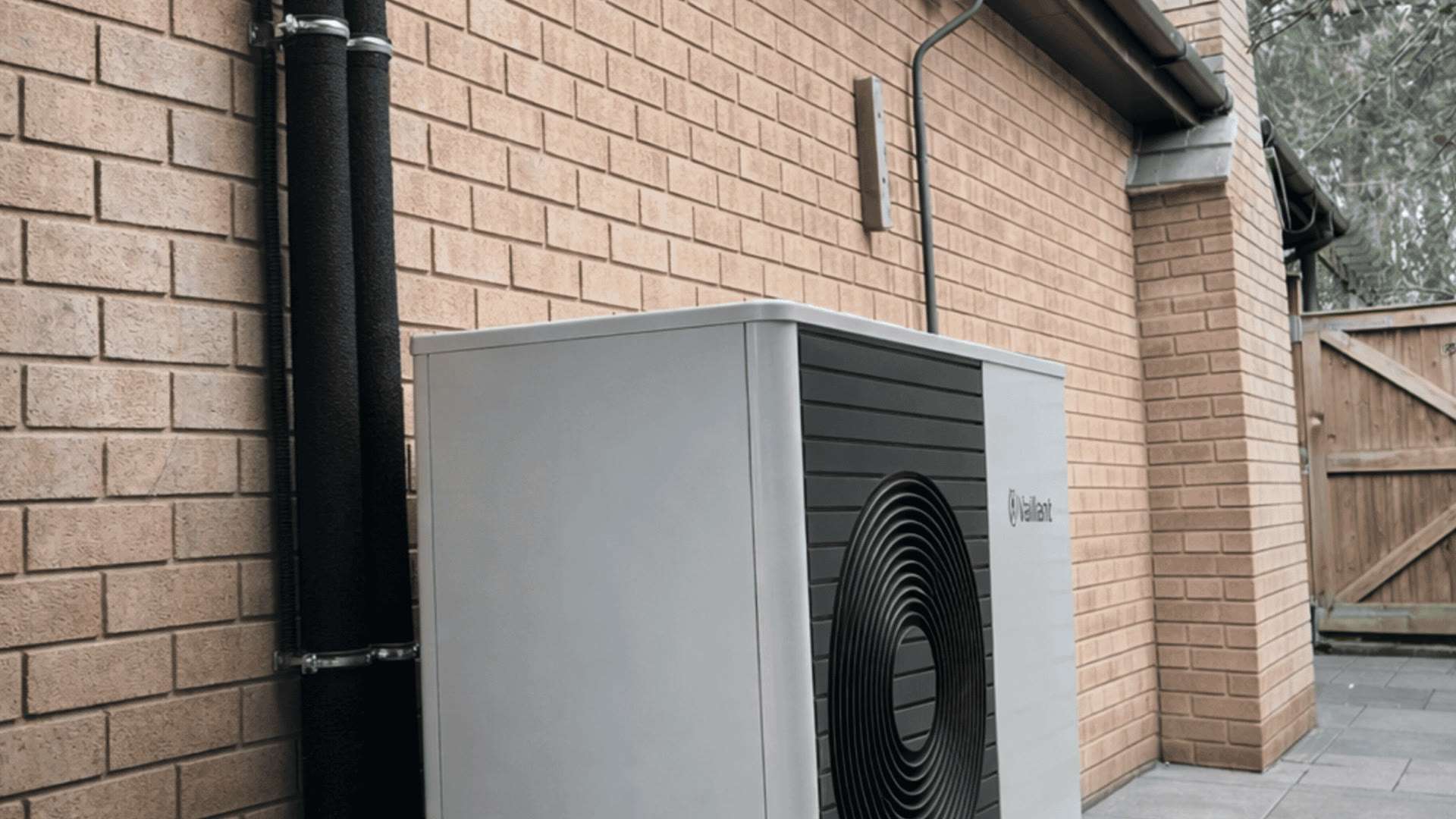
Almost everything about how loud a heat pump feels is within the installer’s control, and the main factors are simple. Placement comes first: a unit positioned away from bedroom windows, patios and the neighbour’s boundary is far less noticeable than one tucked into a narrow side passage where sound bounces between walls. Mounting matters too, because a unit fixed on anti-vibration feet or brackets does not transmit a low buzz into the fabric of the house. Sizing and unit choice round it off, since a correctly sized, good-quality unit running gently is quieter than a struggling one.
What keeps a heat pump quiet
This is why noise is really a question of who installs the system rather than which box you buy. A proper air source heat pump installation starts with a survey that works out the right unit and the right position together. It is also one of the clearest things to check when choosing a heat pump installer, because a good one will have a clear answer when you ask how they decide where the unit goes and how they handle noise.
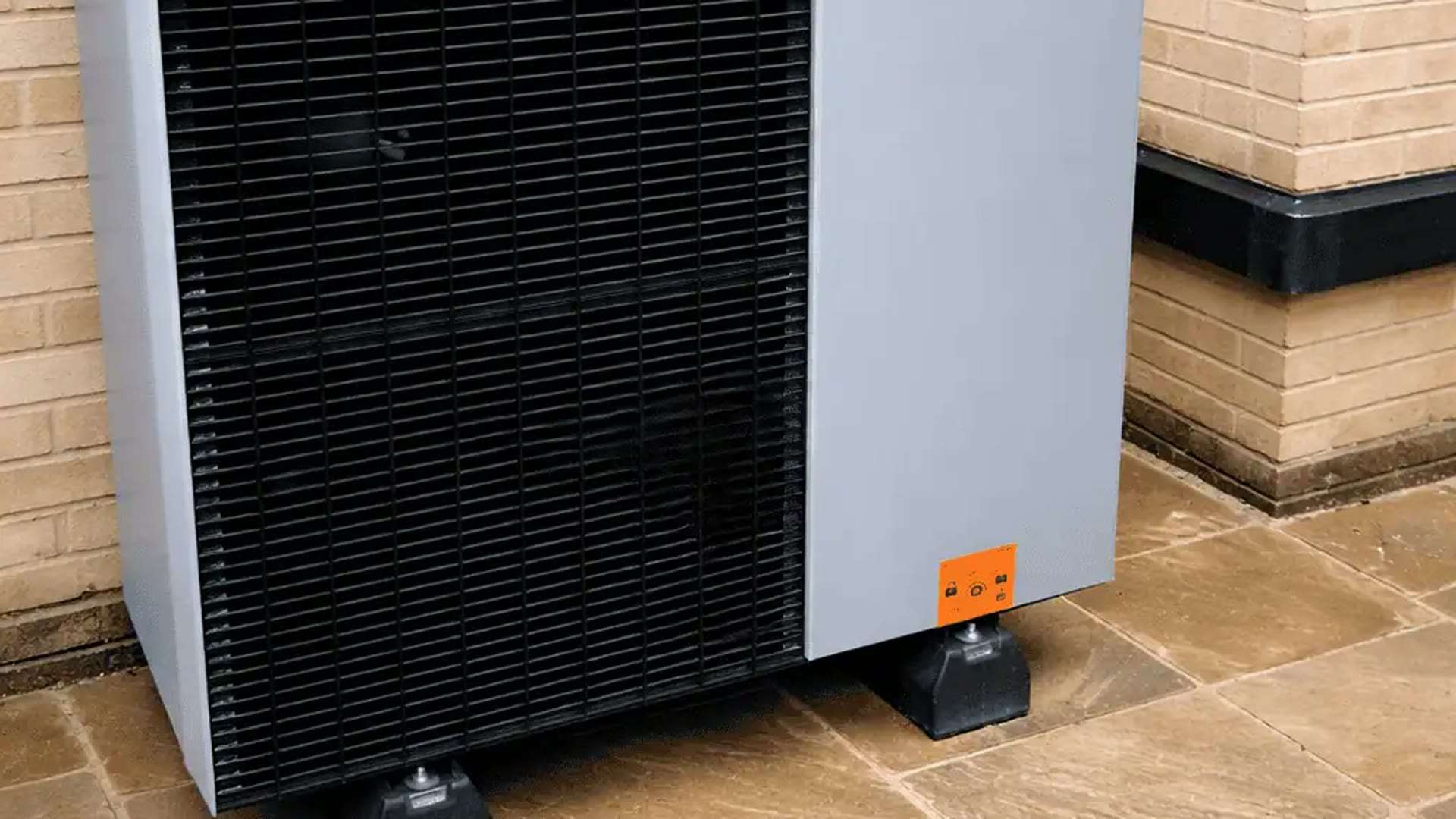
On cold nights a heat pump may run for long stretches, because that is when the home needs heat, and people reasonably worry about a constant noise outside the bedroom. In practice the night-time sound is the same gentle hum, not a sudden noise, and modern units modulate, easing their output up and down rather than switching hard on and off. Many also have a quieter night-time setting that lowers the fan speed during set hours. Combined with sensible placement away from bedroom windows, this is why most owners simply stop noticing the unit, day or night. The steady, low-level character of the sound is far easier to sleep through than the cycling of older heating.
No. A modern, well-sited air source heat pump runs at a low level comparable to everyday background sound, such as a quiet conversation or light rain. Most owners stop noticing it. Where a unit is intrusive, the cause is almost always poor siting or sizing rather than the technology.
It varies by model and, more importantly, by how far away you are and what is between you and the unit. Manufacturers’ figures are often quoted as sound power, which is higher than what you actually hear standing nearby. What matters for the rules is the level one metre outside your neighbour’s nearest habitable-room window or door, which must not exceed 37 dB(A) from the heat pump alone.
It should not. Before installation, the noise from the unit alone, one metre outside the nearest neighbour’s habitable-room window or door, is assessed and must come in at or under 37 dB(A) for the install to proceed under permitted development. Correct siting and mounting keep it comfortably within that.
They can run at night in cold weather, but at the same low hum rather than any sudden noise, and they modulate gently. Many units have a quieter night mode. Placed away from bedroom windows, they rarely disturb sleep.
Mostly siting, mounting, sizing and unit choice. Position away from windows and boundaries, anti-vibration mounting, a correctly sized unit running gently, and a quality model all reduce noise. These are design decisions, which is why a proper survey matters.
It is rare with a properly designed installation, and the permitted development noise limit exists specifically to prevent it. A poorly sited unit can be a problem, which is exactly why placement is assessed before anything is fitted.
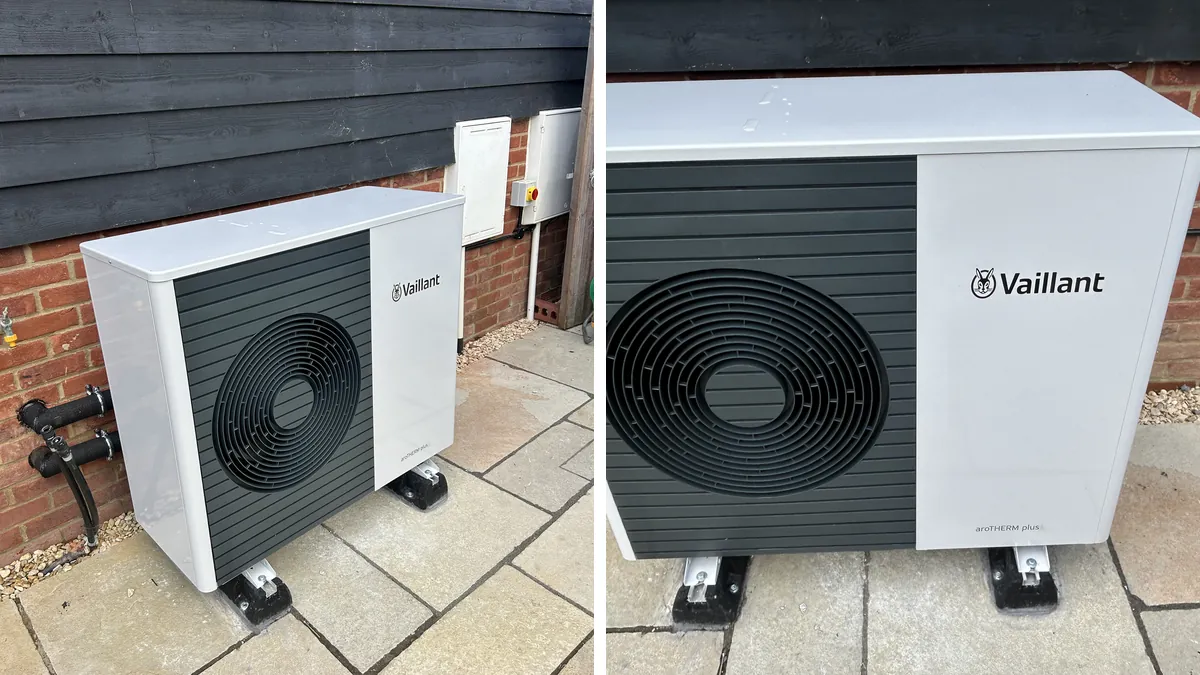
It depends on siting and design, and both are settled before you commit, not discovered afterwards. A proper survey works out the right unit and the right position for your specific property and confirms the noise level at your neighbours’ windows in advance. Across Berkshire and Surrey, that is how a heat pump ends up as something you forget is running.
More guides from the Eco Renewables blog on the same topic.
24 November 2026
Read the guide
24 November 2026
Read the guide
24 November 2026
Read the guideEco Renewables are trusted by homeowners throughout Berkshire and the South East to provide high-quality heat pump heating system installations.
If you're considering a heat pump, the survey is where it starts. We assess the property, run the heat loss calculations, and tell you exactly what the system would look like.
Get My Free Heat Pump Blueprint


