



Heat Pumps
How to Run a Heat Pump Efficiently in Berkshire and Surrey Homes
By Adam Dare
Heat Geek trained installer
Updated 12 November 2026
Reading time
🎉 Named South East Heating Installer of the Year 2026
How to run a heat pump efficiently in a Berkshire or Surrey home comes down to three habits: run it low and steady, let weather compensation set the water temperature, and stop treating the thermostat as an on-off switch. Nearly every “our heat pump is expensive” story we hear turns out to be a settings story, not a hardware story. The unit was fine. The setup, or the way it was driven, was not.
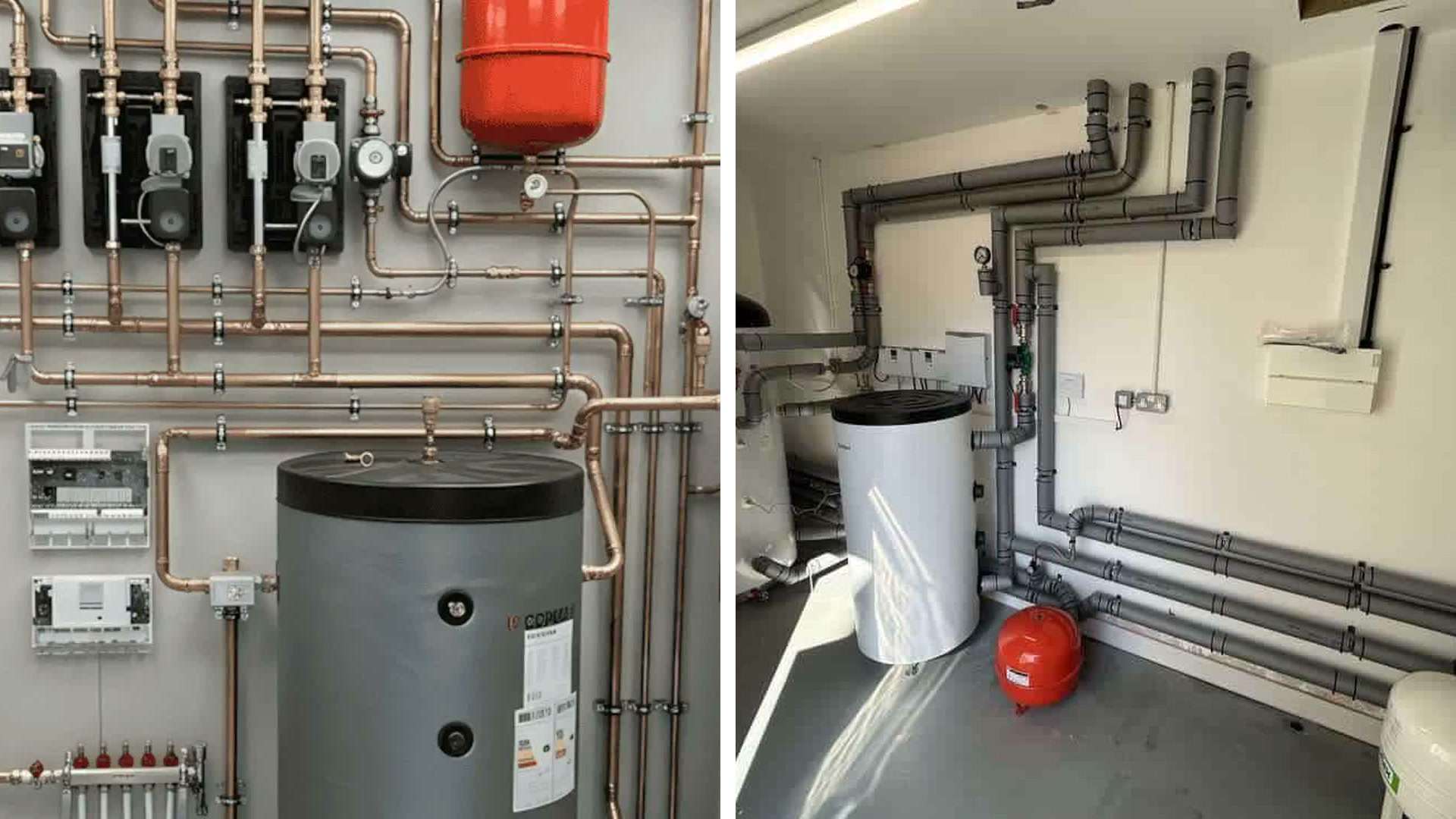
Three numbers decide most of a heat pump’s efficiency: the flow temperature, the compensation curve that steers it, and how often the unit stops and starts. All three are fixed at commissioning, which is why who sets the system up matters more than whose badge is on the casing. This guide covers what each one does, which heat pump settings you should adjust yourself, and what to leave alone.
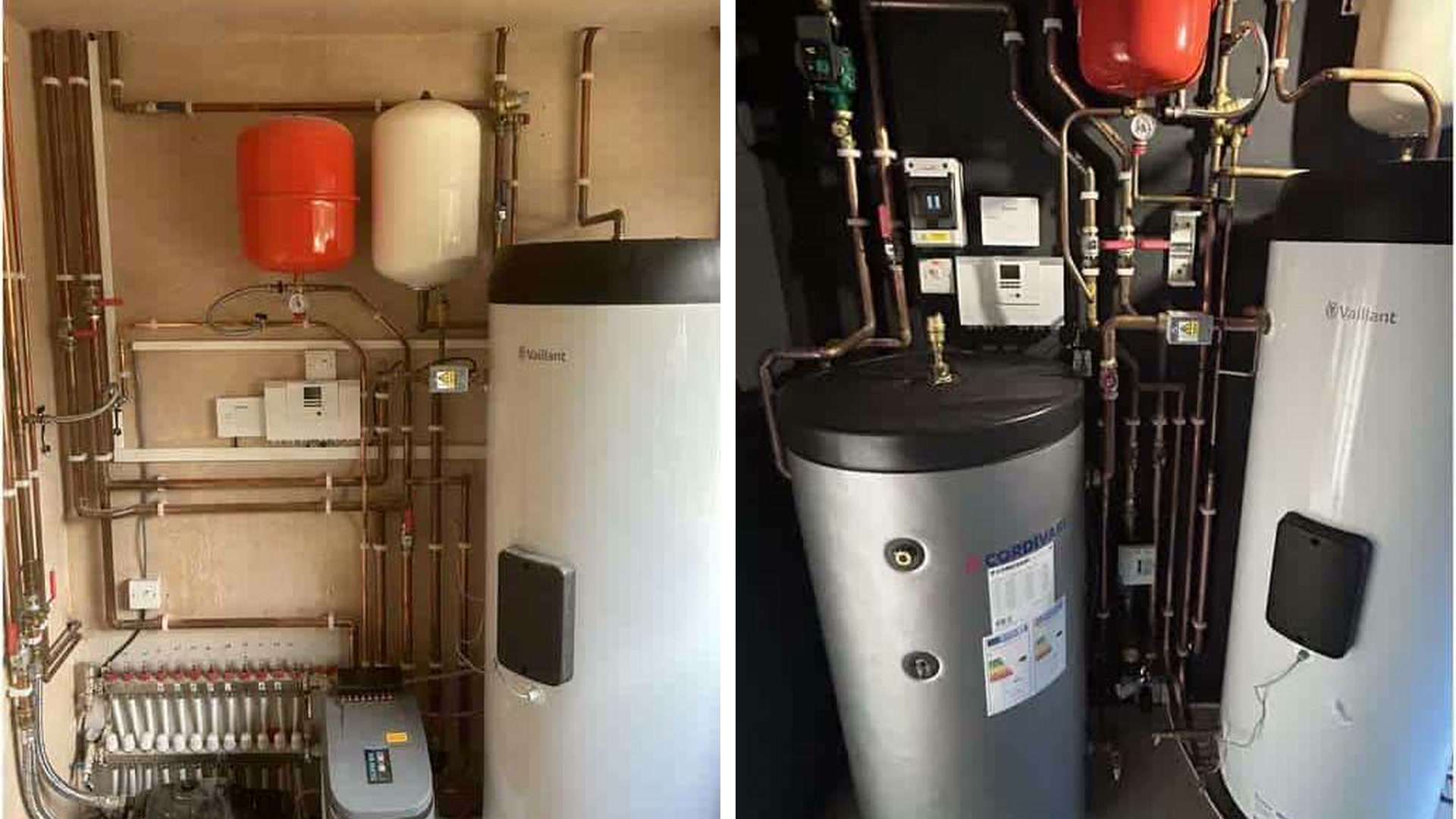
How you use a heat pump decides what it costs. A gas boiler sprints: very hot water in short bursts, the house banged up to temperature, then silence until the thermostat calls again. A heat pump cruises. It produces cooler water continuously and lets the hours do the work. Carry the sprint habit over, and you force the machine into the one operating pattern it is worst at.
The most efficient way to run an air source heat pump is close to continuously through the heating season, at the lowest water temperature that holds your setpoint. Radiators should feel warm, not hot. Rooms should sit at a steady temperature rather than swinging between chilly and stuffy. Comfort becomes an average instead of a burst, and the compressor stays in the range where it works least for most.
Should you leave a heat pump on all the time? In the heating season, effectively yes, with a small overnight setback rather than a hard off. Homes occupied all day get the most from this, and in the commuter belt between Bracknell and Guildford that increasingly means working from home. The differences run deeper than habit; we mapped them in our heat pump and gas boiler comparison.
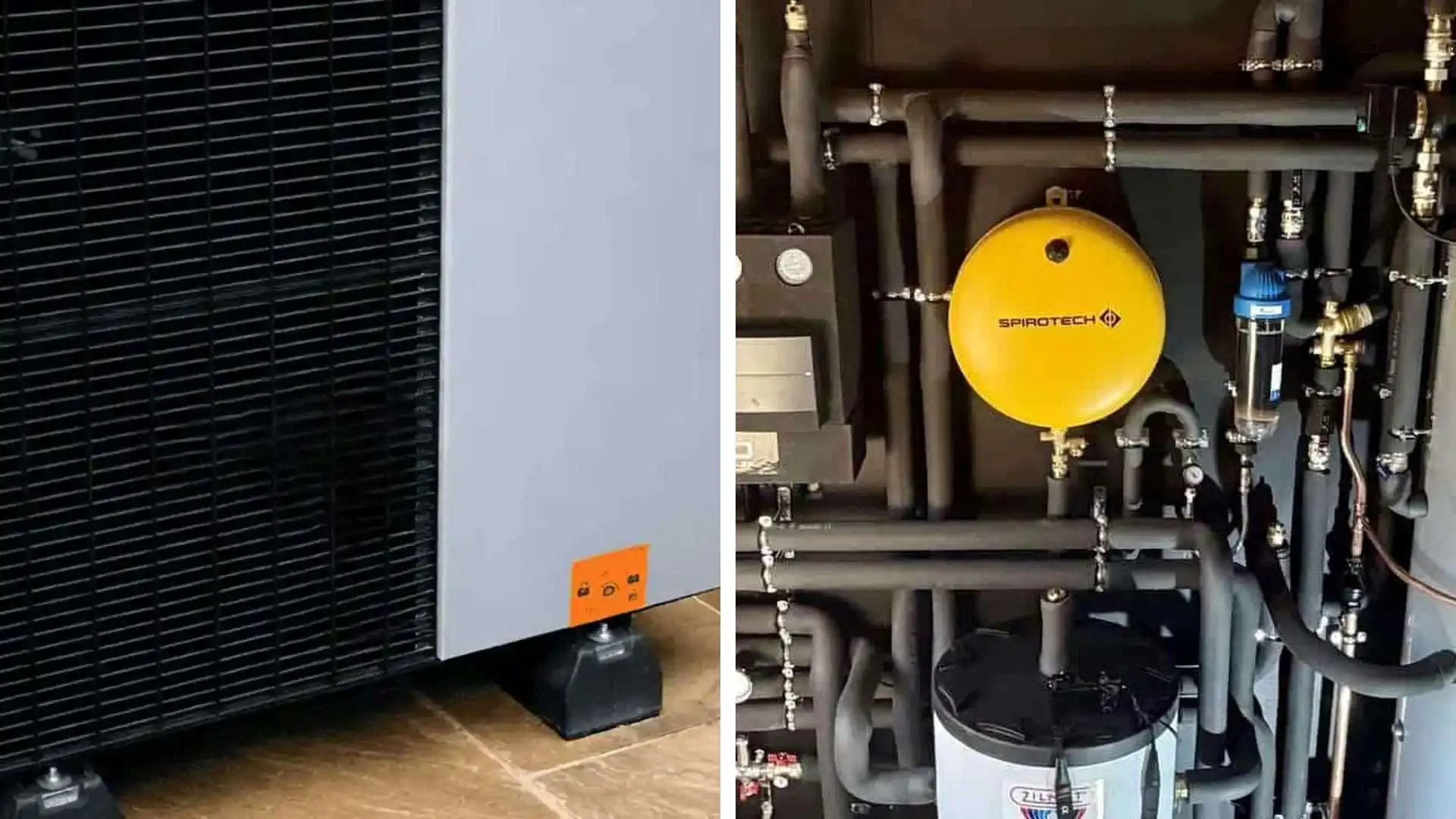
Weather compensation is a small outdoor sensor and a rule. The rule, often called a heating curve or weather compensation curve, ties flow temperature to outdoor temperature: the colder it gets outside, the warmer the water your heat pump sends to the radiators. Mild day, cool water. Freezing night, warmer water. Nobody touches a dial.
That is how weather compensation works, and it beats any amount of thermostat fiddling because it removes the hour-by-hour guesswork. A correctly set curve gives the house exactly the heat the day demands and no more. The room thermostat stops being the engine of the system and becomes a safety net.
A badly set curve is easy to feel. Too steep, and upstairs turns stuffy while consumption creeps. Too shallow, and rooms never quite arrive at temperature, so someone “helps” by cranking the stat, which makes it worse. The curve is set at commissioning and proven in season, against real winter data rather than a summer of guessing.
A Compensation Curve Drawn From Your Heat Loss
Get the curve explained for your own house rather than in the abstract: the Blueprint sets out the heat loss, flow temperatures and curve logic for your property before anyone fits anything.
“He is very knowledgeable in this area and clearly explained the benefits of installing a heat pump, along with the options available and the steps that would be involved. He has made himself available at short notice to answer any of my stupid questions, of which there were a lot.”
Ben Finnie, Google Review
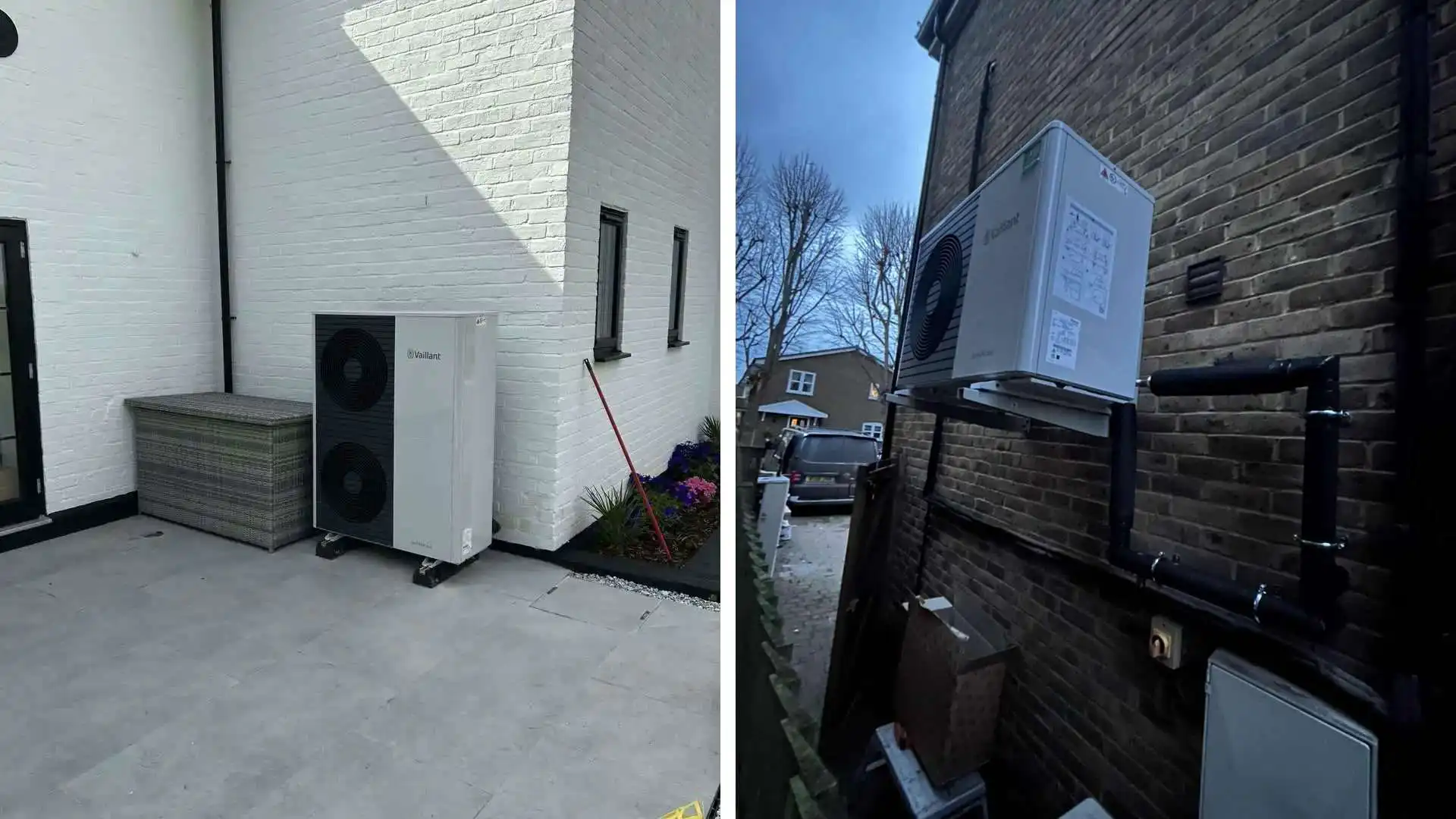
Flow temperature is the temperature of the water leaving your heat pump for the radiators or underfloor loops, and it is the single number that decides how hard the compressor works. Lifting heat from the outside air to 55°C takes far more electricity than lifting it to 40°C, so every degree shaved off the flow temperature buys efficiency, roughly 2 to 3 percent per degree.
2 to 3 percent
Roughly the efficiency gained for every degree shaved off the flow temperature, because lifting heat to 55°C takes far more electricity than lifting it to 40°C.
A well-designed system typically holds between 35 and 45°C in normal winter weather, rising only when the curve demands it. Getting that low is a design outcome, not a settings trick: it takes emitters with enough surface to heat each room on cooler water. That decision is made before installation day, which is why the design stage of an air source heat pump installation outweighs any dial.
One distinction worth keeping: flow temperature is not flow rate. Flow rate is how many litres per minute the pump moves around the circuit, it is balanced at commissioning, and it is not a homeowner setting. If rooms still lag with the curve set right, the cause usually sits in the design rather than the settings, and it needs an installer’s eyes, not a warmer dial.
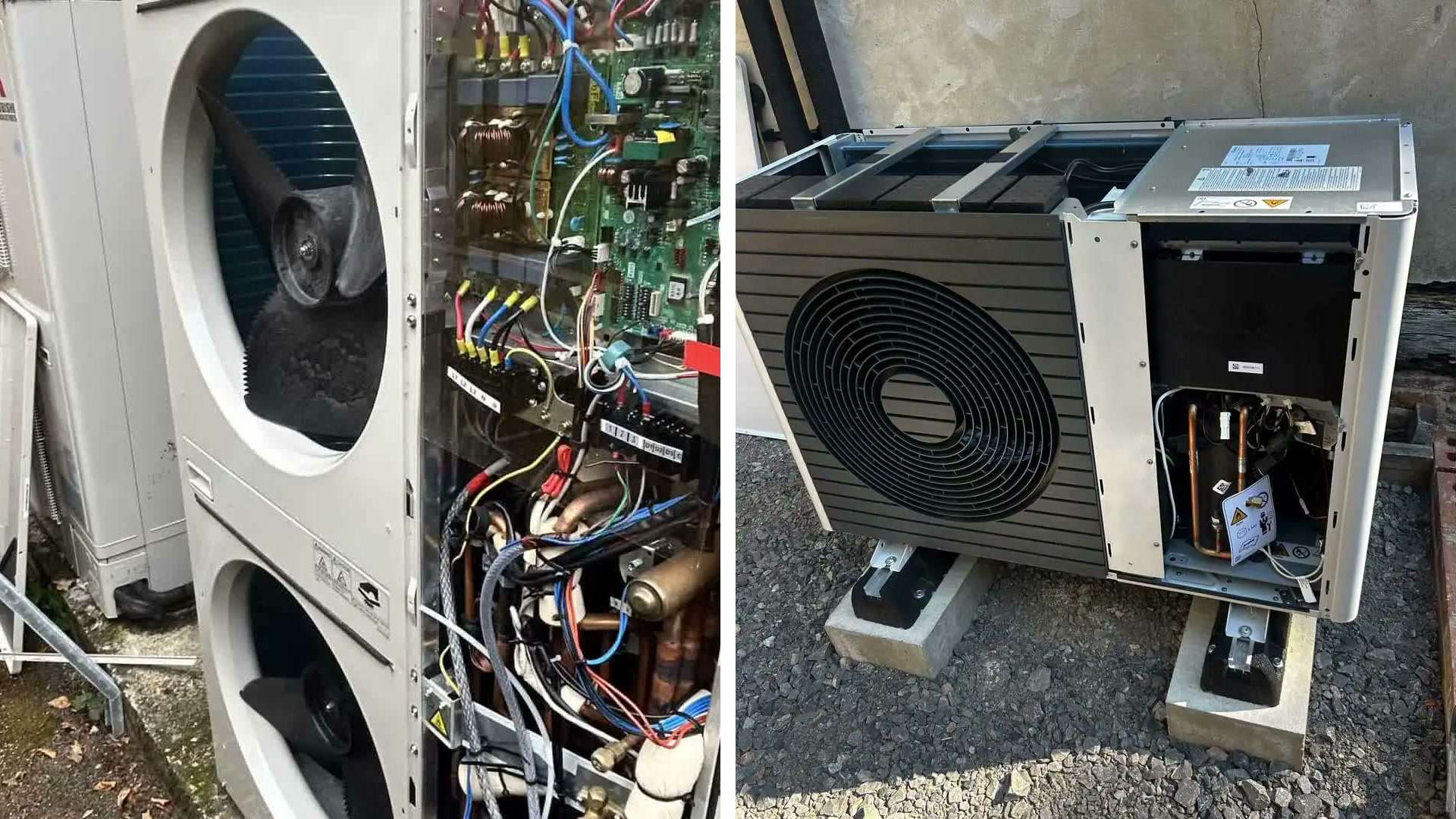
Heat pump controls confuse boiler-trained instincts because two different numbers are in play. The room setpoint is yours: the temperature you want the room to sit at. The flow temperature belongs to the curve. Turning the thermostat up to 25°C does not heat the house any faster, it just tells the system to keep going for longer; a heat pump delivers at one gentle rate either way.
What that means in practice:
Some systems are commissioned to run on pure weather compensation, with the room stat acting only as a limiter. Most heat pump thermostat settings questions dissolve once that two-number split is clear: choose the room temperature you want, set a small night setback, and let the curve do the rest.
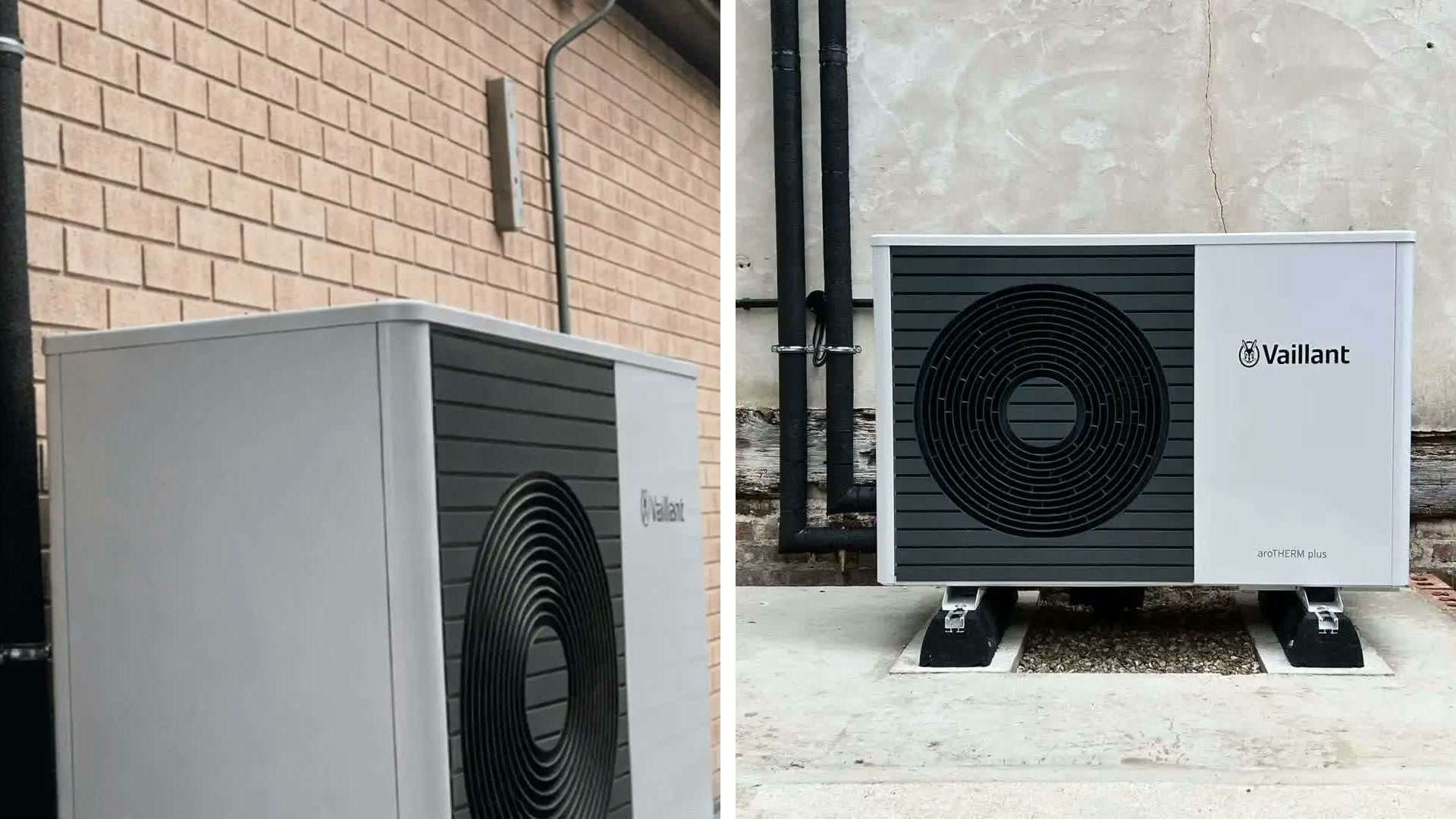
COP, coefficient of performance, is a moment: units of heat delivered per unit of electricity at one set of conditions. A COP of 4 means four kilowatt-hours of heat from one of electricity. SCOP is the same ratio averaged across a whole heating season, cold snaps, defrosts and mild spells included. When you ask how efficient air source heat pumps really are, SCOP is the honest answer.
| Measure | COP | SCOP |
|---|---|---|
| What it is | Heat delivered per unit of electricity at one set of conditions | The same ratio averaged across a whole heating season |
| What it covers | A single moment | Cold snaps, defrosts and mild spells included |
Design and commissioning move SCOP more than brand choice does. Two identical units can finish a winter with very different seasonal figures depending on the curve, the flow temperature and how often they cycle, which is exactly the ground the sections above covered. Frequent stopping and starting drags the average down and adds wear; long gentle runs lift it.
What a given SCOP means for your bills is a pounds question, and we keep every pound figure in one place: our breakdown of heat pump running costs. This page stays on behaviour, because behaviour is the part you control after handover.
Seasonal Efficiency You Can Check on Paper
Before you commit to any installer, ask to see the seasonal efficiency logic behind the design; the Blueprint puts our heat loss numbers and target figures in your hands so you can compare quotes on evidence rather than promises.
“I contacted a number of companies and had read up extensively on heat pumps before going ahead with Adam of Eco Renewables so I was confident in choice of installer… Anyway two months in and the house is warm and the scop is looking good.”
Andrew Symes, Google Review
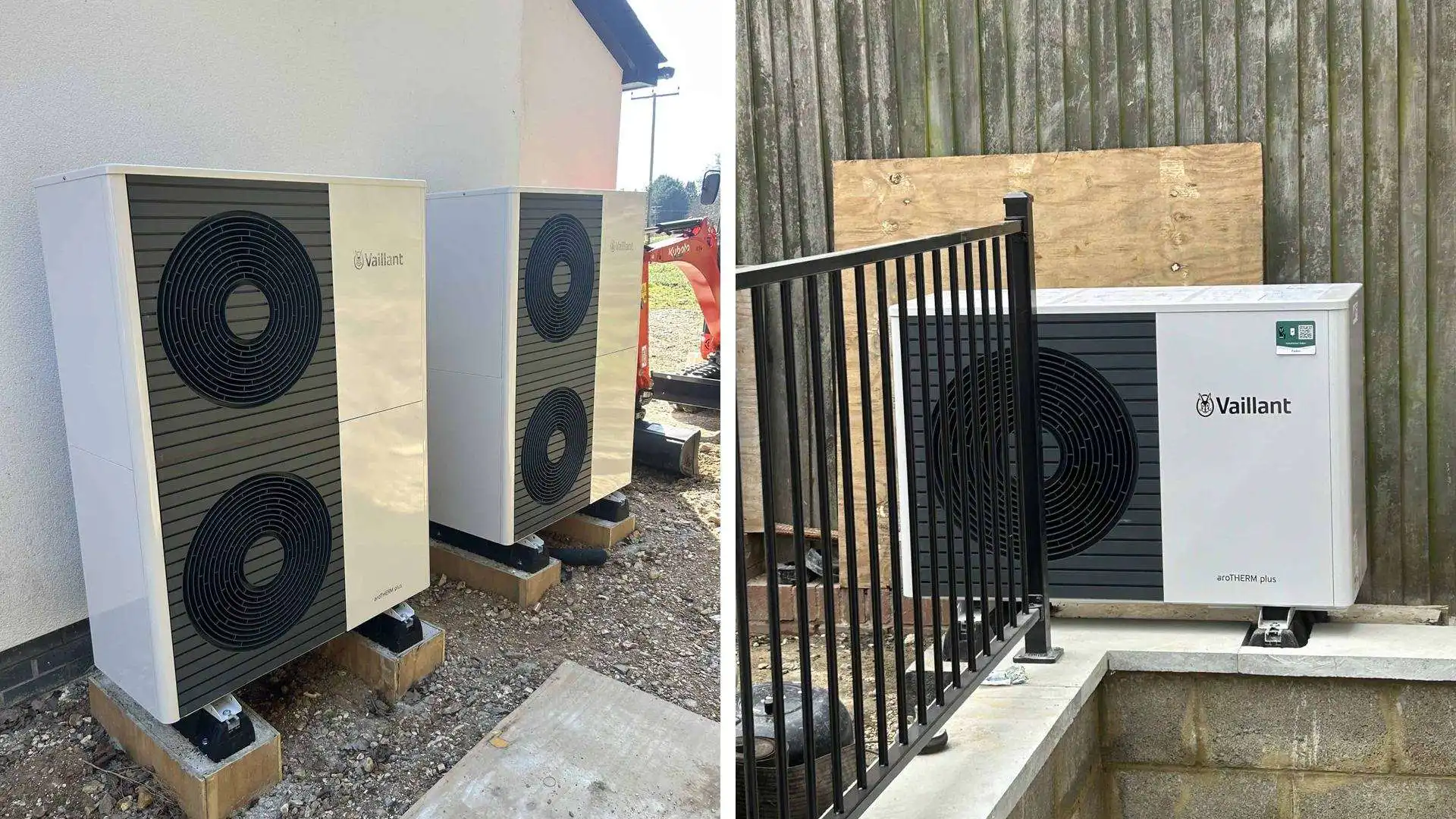
Do heat pumps work in cold weather? Yes, and not as a marginal case. Every system we design is specified against a local design temperature, the kind of cold this area sees a handful of nights a year, so a proper freeze is built into the plan from the start. Efficiency dips in the coldest weeks and recovers either side; SCOP already accounts for that.
Winter also brings the sight that generates the most panicked calls: steam and a puddle at the outdoor unit. That is a defrost cycle. Frost builds on the outdoor coil in cold, damp weather, the unit briefly reverses to melt it, and the cloud of vapour looks dramatic while meaning nothing. An air source heat pump in winter is supposed to do this. It is not a fault.
The efficient move in a cold snap is restraint. The compensation curve is already raising the flow temperature as the outside temperature falls, so cranking the thermostat or flipping to a manual mode only stacks demand onto the hardest days. Independent advice from the Energy Saving Trust points the same way: set it up properly, then leave it running steady.
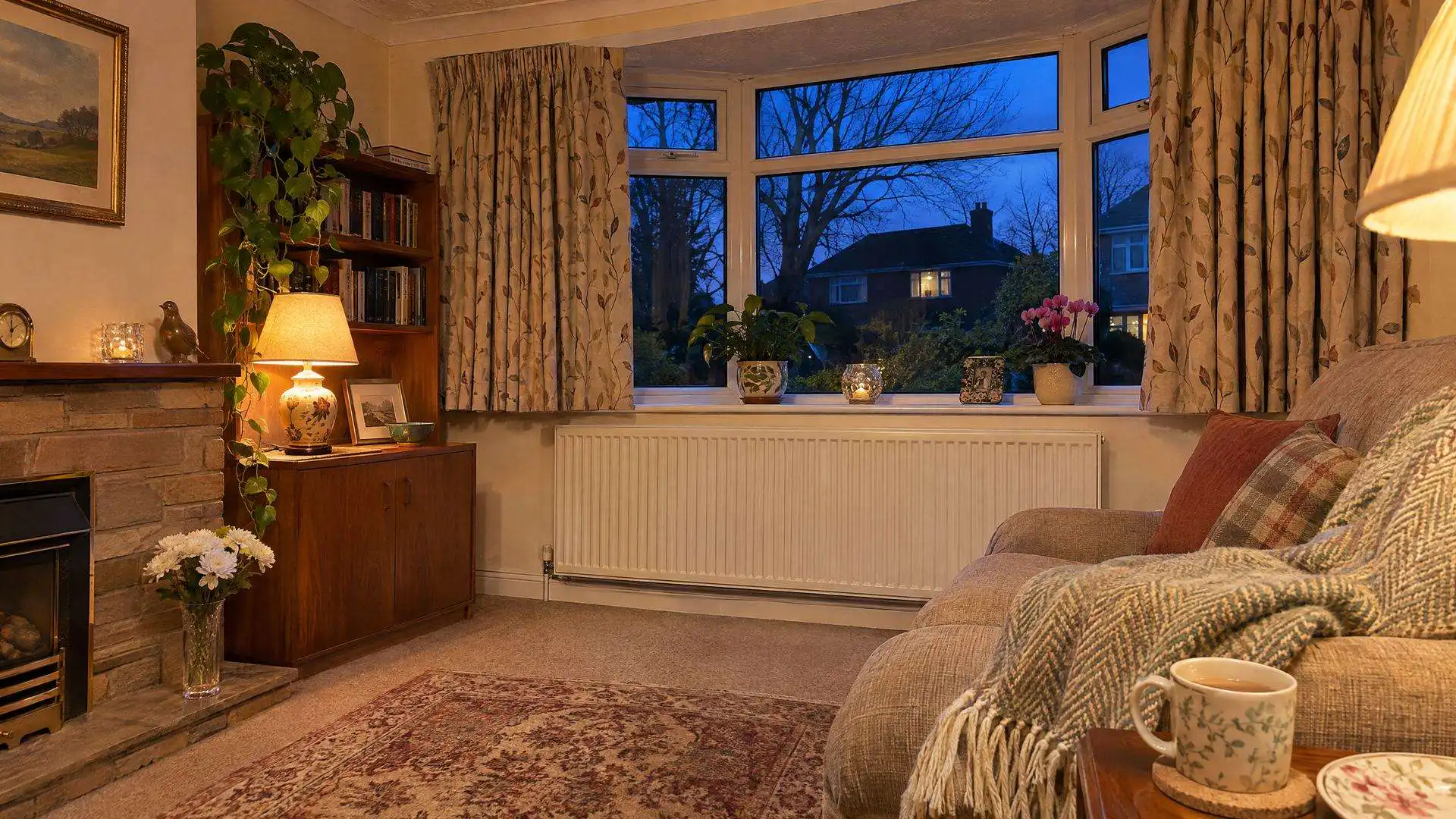
You do not need a special heat pump electricity tariff, but time-of-use tariffs reward the way a well-set system already behaves. They price electricity differently through the day, with cheap windows overnight and premium hours in the evening. A house with decent thermal mass can be warmed gently through a cheap window and then coast through the expensive one without the rooms noticing.
That is scheduling, not sacrifice. A small lift in the setpoint before the cheap window closes, a small setback through the peak, and the fabric of the house does the storage. Solar households hold a second lever, running the pump on their own daytime generation, and pairing a heat pump with solar panels covers how the two systems share that work.
The best tariff for a heat pump is the one that fits your household’s real pattern, and you can only see that pattern once the system has run steady for a few weeks. Around here, where an EV on the driveway already makes time-of-use pricing the norm, the order still matters: settings first, tariff second. Rates change too often to print; the behaviour never does.
Settings drift as seasons change, which is why the curve is worth adjusting against your system’s real data rather than set-and-forget. We cover exactly what handover involves in our guide to what happens after your heat pump is installed.
Can Your House Ride Out the Peak Hours?
The Blueprint gives you the room-by-room heat loss and flow temperatures, so any tariff plan for your home starts from real numbers.
“Creating first a detailed heat loss report and then a system design to meet the requirements, he wanted to ensure that I understood the different way that heat pumps work to old gas boiler technology… After almost 2 months of operation the new system is working as intended with Adam fielding any questions I might have.”
Stephen Saunders, Google Review
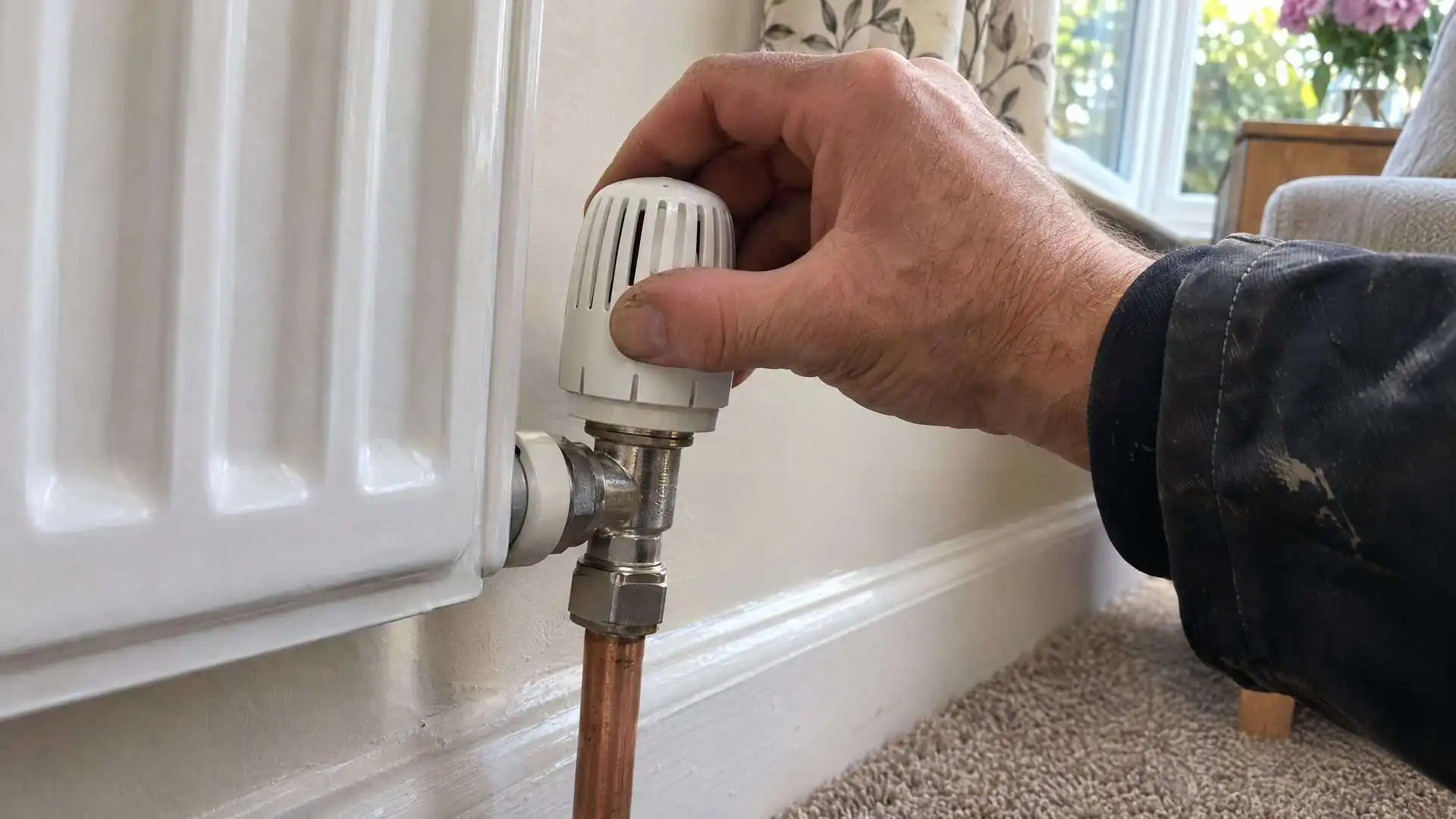
Through the heating season, effectively yes. Steady low-temperature running beats on-off bursts for both comfort and efficiency. Rather than turning the heat pump off at night, use a small setback of 1 to 2°C; a switched-off house costs more to recover in the morning than the off hours ever saved.
Two numbers, two owners. You choose the room setpoint, typically somewhere between 19 and 21°C, and keep it steady. The flow temperature is governed by the weather compensation curve set at commissioning, commonly in the 35 to 45°C range on a well-designed system, and it is not a number to adjust day to day.
SCOP is seasonal efficiency: total heat delivered across a heating season divided by the electricity used. Well-designed UK systems commonly achieve a SCOP between 3 and 4, meaning three to four units of heat for every unit of electricity. Design quality and commissioning drive that figure far more than the brand on the unit.
Yes. Systems are designed against the local design temperature, so cold-snap capacity is planned rather than hoped for. Steam or water at the outdoor unit in freezing weather is a normal defrost cycle clearing frost from the coil, not a fault, and the system manages it automatically.
Weather compensation links the flow temperature to an outdoor sensor, so the water going to your radiators warms as the outside temperature falls and cools as it rises. It is the one setting that does most of the efficiency work. It is configured at commissioning and best fine-tuned with mid-winter data.
No. A heat pump runs on any tariff. Time-of-use tariffs suit heat pump households well, because gentle pre-heating in cheap windows lets the house coast through expensive hours, but get the settings right first: a badly set system loses more than any tariff can claw back.
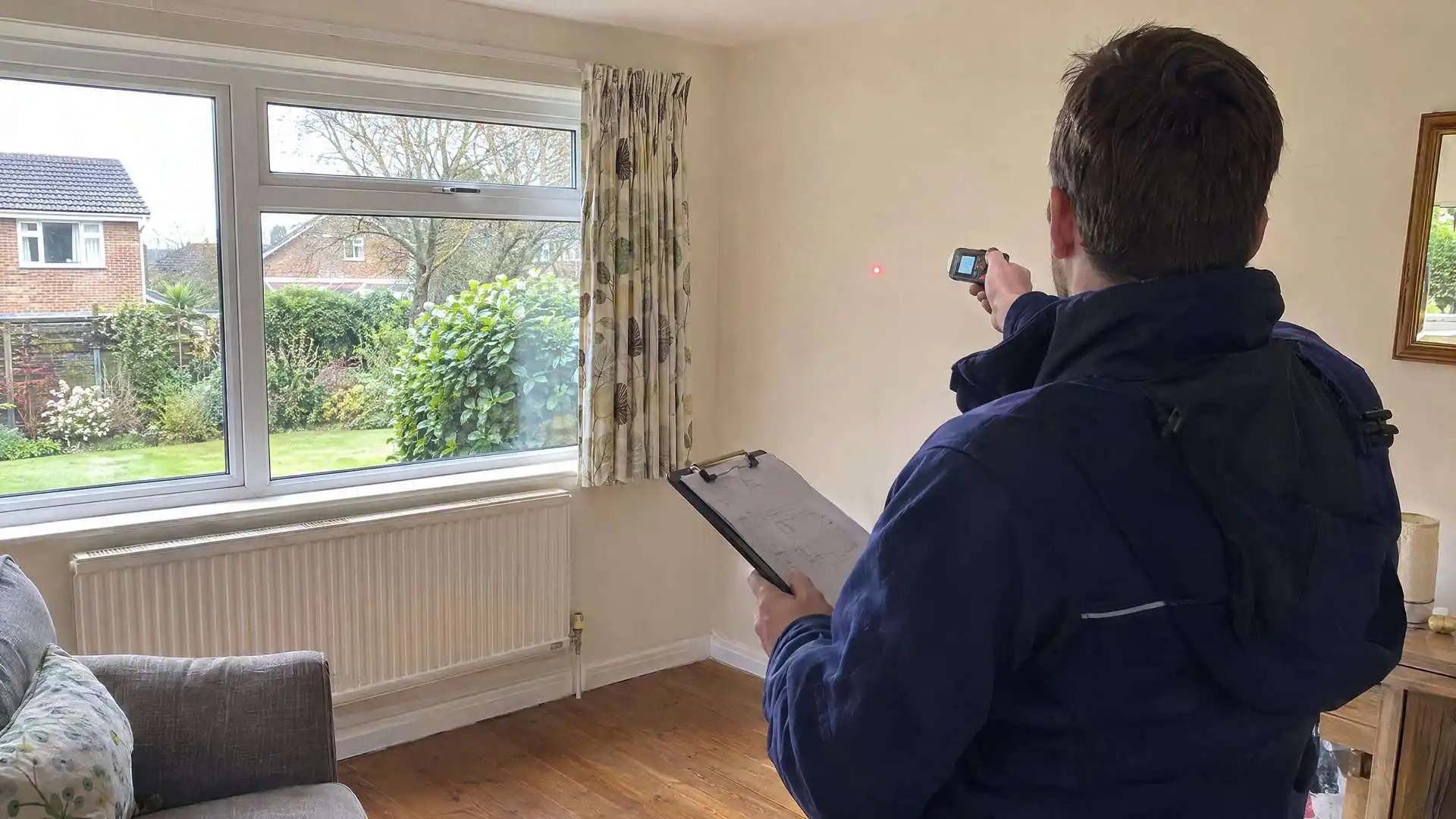
Every figure on this page is a range, because every property answers differently: a 1960s detached house with mixed insulation does not share a curve with a tight new build. Running a heat pump efficiently starts with a design that fits the building, and it stays efficient when the settings are tuned against real winter data.
That is what the Heat Pump Blueprint exists for: a room-by-room heat loss study and the flow temperature logic before you commit, then commissioning to turn the ranges above into your numbers.
More guides from the Eco Renewables blog on the same topic.
24 November 2026
Read the guide
24 November 2026
Read the guide
24 November 2026
Read the guideEco Renewables are trusted by homeowners throughout Berkshire and the South East to provide high-quality heat pump heating system installations.
If you're considering a heat pump, the survey is where it starts. We assess the property, run the heat loss calculations, and tell you exactly what the system would look like.
Get My Free Heat Pump Blueprint


