



Solar
In-Roof Solar Panels and Solar Roof Tiles in Berkshire and Surrey: Looks, Cost and When They Make Sense
By Adam Dare
Heat Geek trained installer
Updated 13 November 2026
Reading time
🎉 Named South East Heating Installer of the Year 2026
In-roof solar panels take the place of a patch of roof tiles and sit level with the covering around them, which suits owners in Berkshire and Surrey who care how the house looks. On a sound existing roof they cost more to fit and give up a little output. On a roof that is coming off anyway, the sums change.
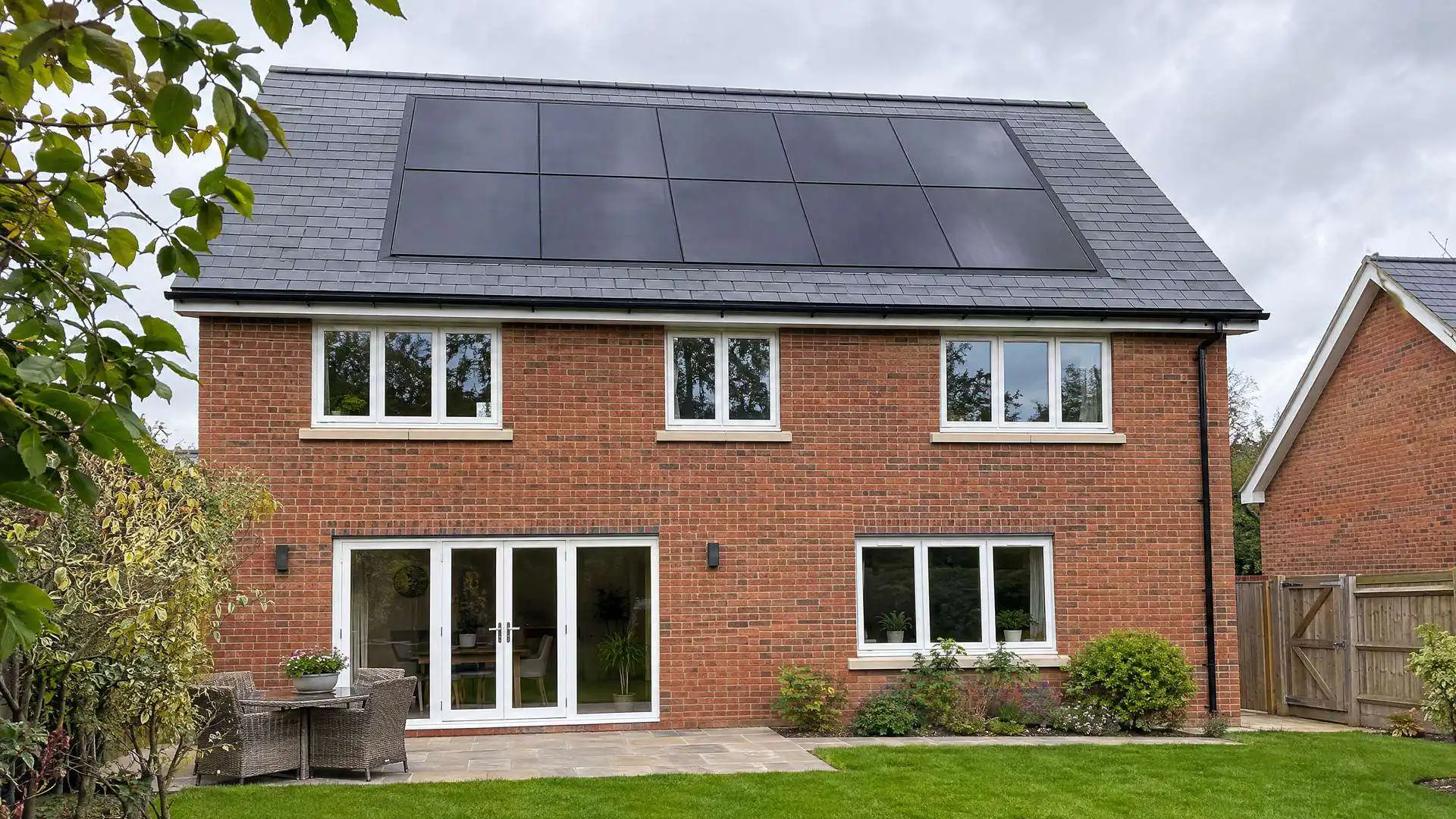
With in-roof, timing counts as much as looks. On a new roof the panels go on before the tiles, while a retrofit means lifting tiles from a roof that was watertight the day before.
Standard on-roof mounting leaves the tiles where they are. Roof hooks screw to the rafters and pass between the tiles, aluminium rails run across the hooks, and the panels clamp to the rails above the covering. The tiles stay the weather layer, with an air gap between them and the glass.
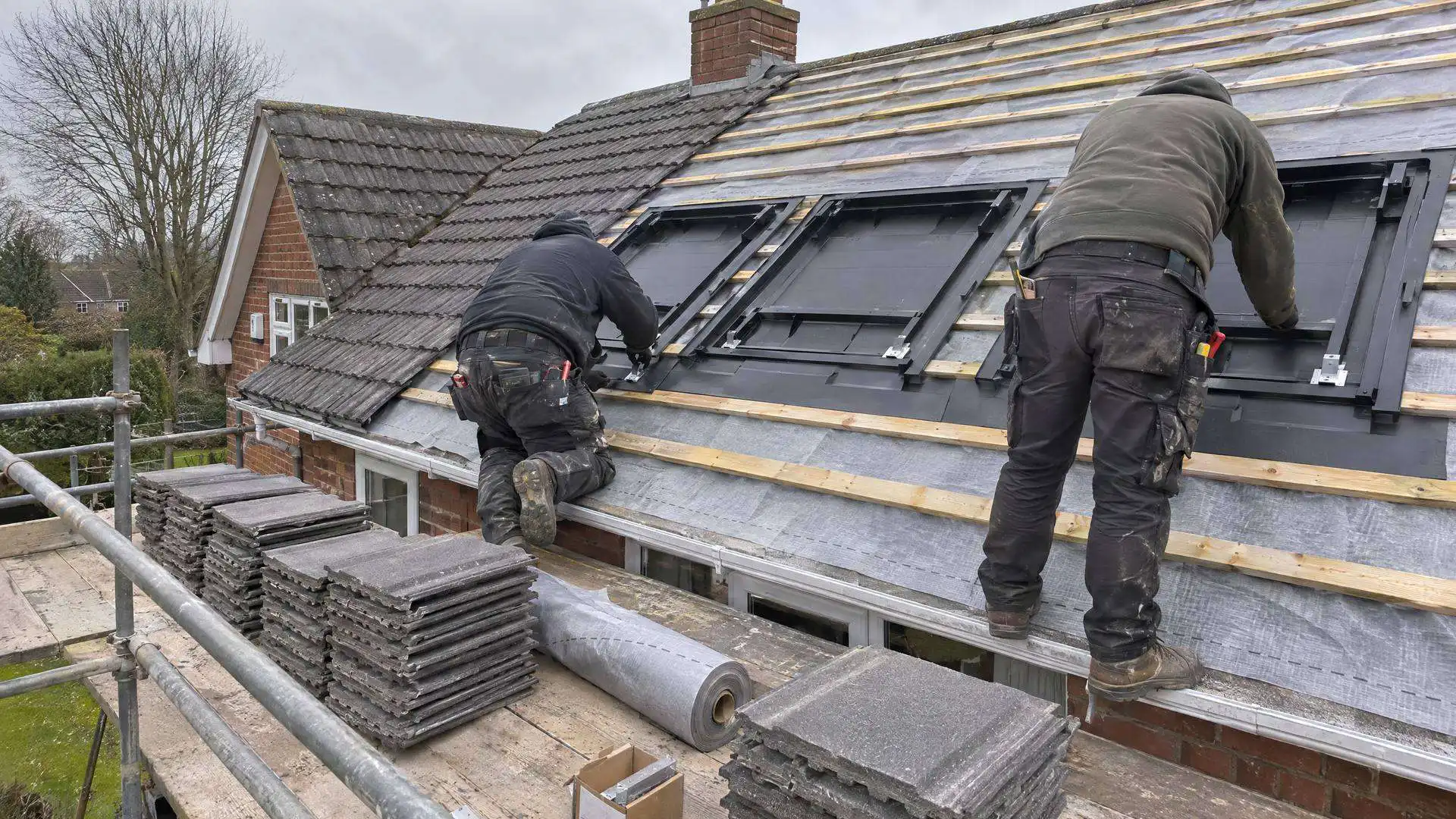
An in-roof kit removes that layer under the array. The installer strips a rectangle of tiles, fixes the kit to the battens and rafters, clips the panels in and laps metal flashing kits under the surrounding tiles. Rain runs over the glass and flashings and onto the tiles below. Viridian’s five flashing kits combine into any rectangular array; Marley’s panels push-fit together, with flashing kits supplied in colour-coded boxes.
Strip the tiles
The installer strips a rectangle of tiles where the array goes.
Fix the kit
The kit fixes to the battens and rafters.
Clip in the panels
The panels clip into the kit.
Lap the flashings
Metal flashing kits lap under the surrounding tiles, so rain runs over the glass and flashings onto the tiles below.
MCS installers fit mounting kits certified under MCS 012, the Solar Mounting (Product) Standard, wherever one exists for the roof. It covers in-roof as well as above-roof systems and tests them for wind uplift, external fire and wind-driven rain. Each certificate lists the types of roof covering the kit suits and its minimum roof pitch, and your roof has to fall within both.
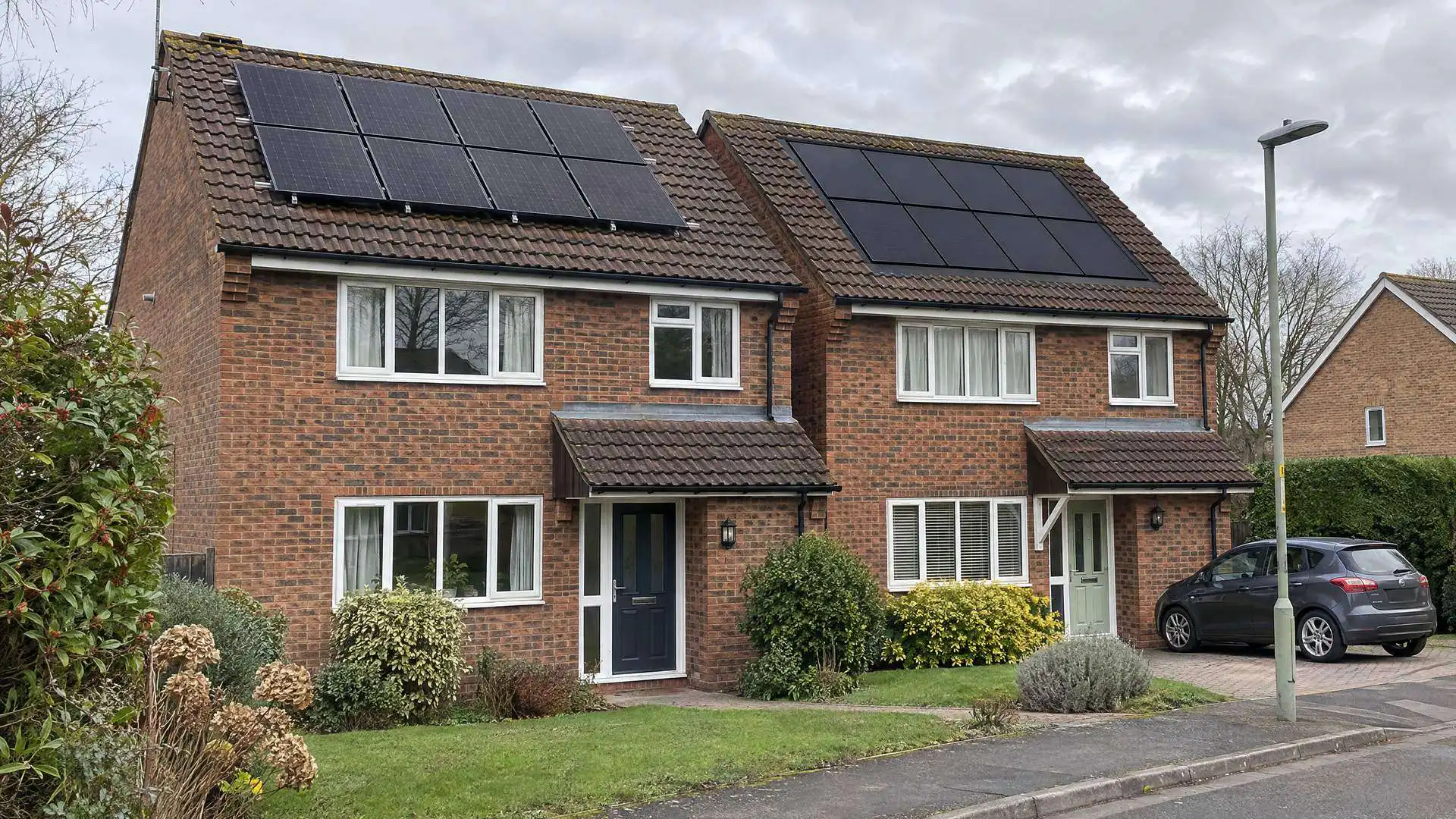
Some makers design their in-roof kits around their own panels, and the remaining differences come from where the glass sits:
Replaces part of the tiled covering and sits in the roof plane.
Hooks and rails hold the panels above the tiles, which stay the weather layer.
For a sound roof with years of life left, a standard solar PV installation on rails keeps the existing covering intact and costs less.
Design for the Roof You Will Have
Have any building plans to hand for your Solar Design Pack survey, so we can draw the design for the roof you will have after the building work.
The solar contractor we worked alongside on a heat pump job:
“Their team were professional, knowledgeable, and communicated clearly throughout.”
Leon Shead, Google Review
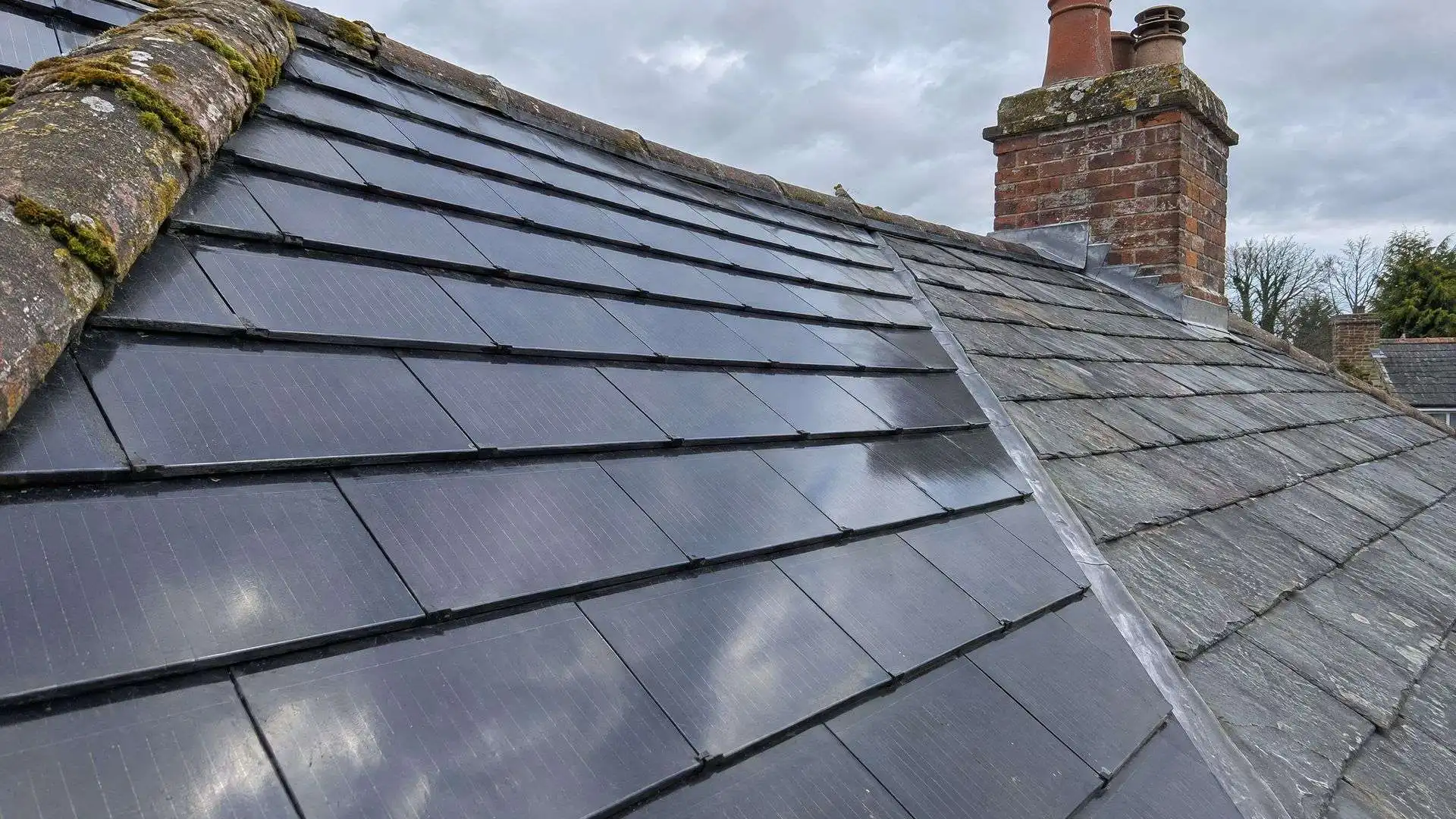
UK suppliers sell two kinds of product as solar roof tiles. The first is a panel-sized integrated system under a roof-tile maker’s name: Marley SolarTile lists a 445Wp panel at 23.6 percent efficiency and works with Marley’s concrete and clay tiles. The second is a tile-format module laid in courses with ordinary tiles. Solartyle offers its MCS-certified tiles in anthracite and red, and FP McCann makes concrete tiles to match.
Tile-format products suit a buyer who wants an unbroken roof finish and is specifying the whole covering at once, on a self-build or a full re-roof. Solartyle’s 2025 brochure describes its tiles as comparable in cost with leading in-roof systems and backs a full roof package with a 15-year insurance-backed warranty.
Solar roof tile figures from the suppliers
445Wp
Marley SolarTile panel
23.6%
Marley SolarTile panel efficiency
15-year
Solartyle insurance-backed warranty on a full roof package
Ask any supplier of tile-format modules how a single failed tile is found, lifted and replaced, and whether the roofer or the solar installer does that work.
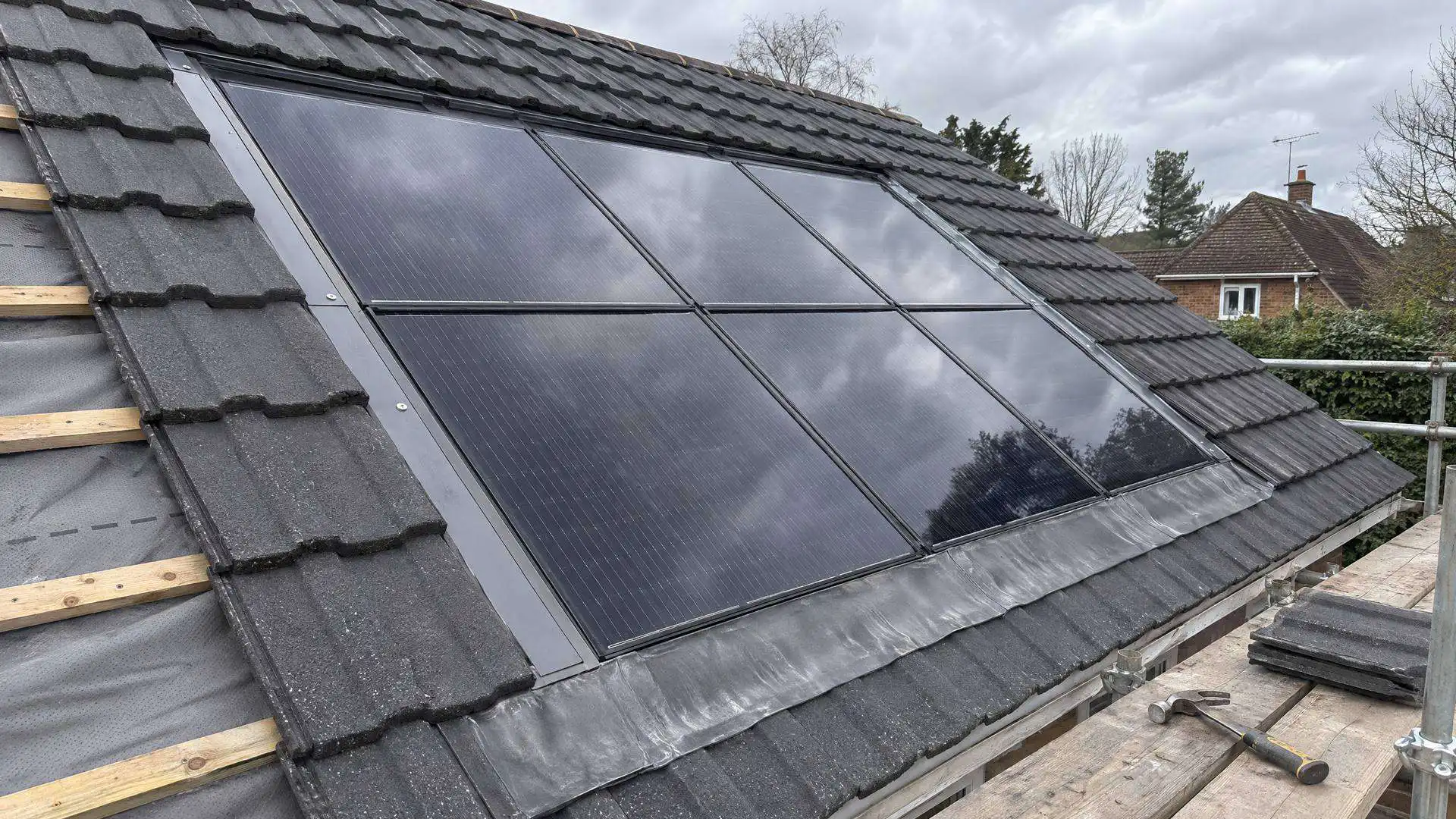
Viridian describes the new-roof sequence: panels and flashings go on first, then the roofer tiles around them. The array stands in for tiles you would otherwise buy and lay, and the scaffold the roofer needs serves the solar work as well, so the extra cost of integration shrinks to the kit and the coordination.
The projects that open that window are a loft conversion with a new rear slope, a pitched-roof extension, a self-build, and a full re-roof when old tiles reach the end of their life. Each one has a roofer on site with the covering off, which makes it the moment to decide, before the tiling dates are fixed.
Projects that open the in-roof window
The roofer and the solar installer share that programme. Marley notes that its panels can be fitted without MCS certification, while an MCS-certified installer has to make the electrical connection and sign the system off.
Book Around the Roofer’s Programme
If you have a re-roof or loft conversion booked, ask for a Solar Design Pack survey while the roofer’s programme can still change.
“We were fitting a heat pump as part of a ground floor renovation. Adam was great at working around the project, putting pipework in while ceilings were down, liaising with builder and being flexible with dates.”
Lucy Grainger, Google Review
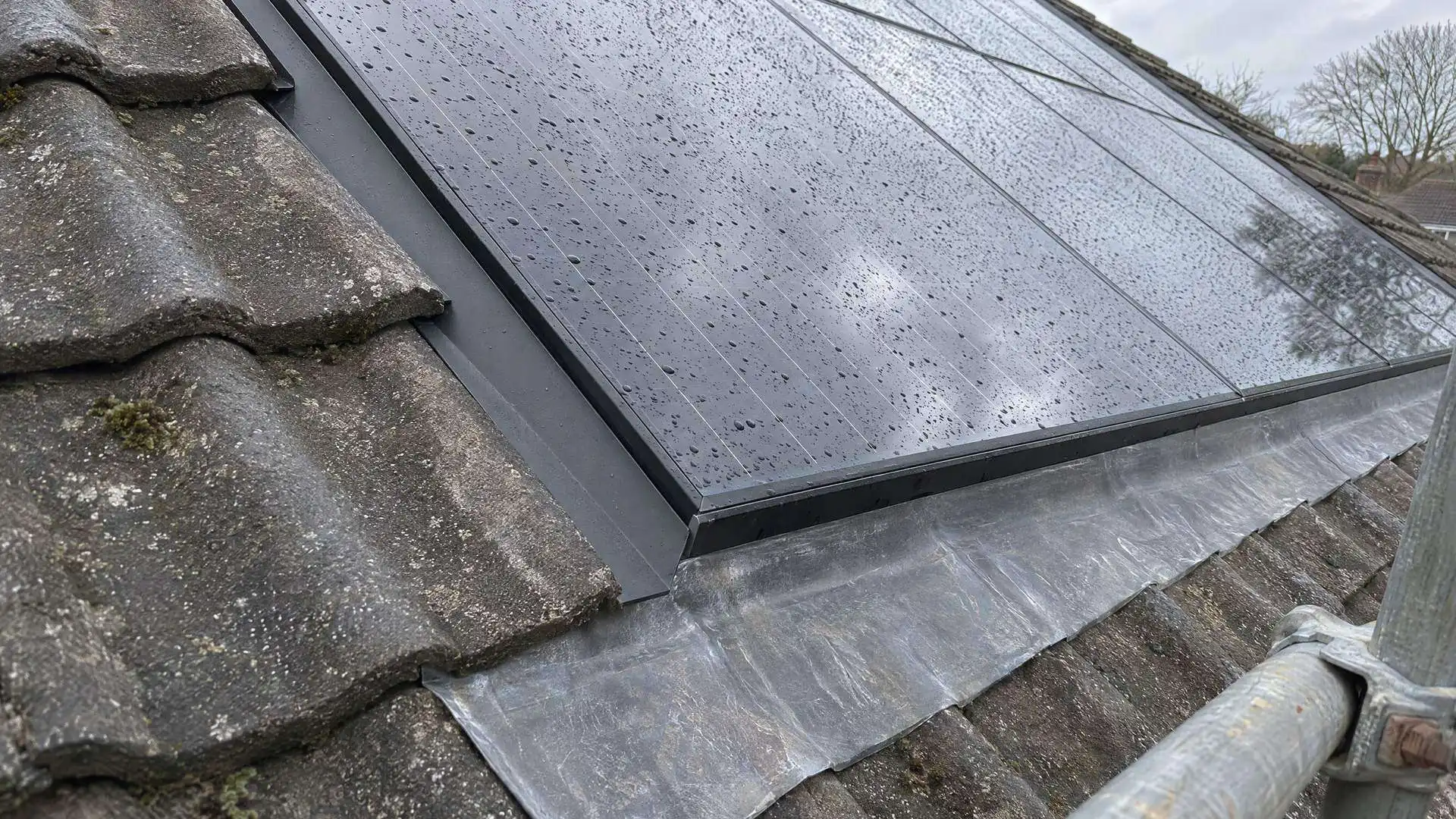
Panel output falls as the cells warm, and an in-roof array loses the air gap that cools an on-roof one. Viridian’s figure of about 3 percent is the size of that trade. Direction weighs more: when we ran PVGIS on 26 October 2026 for a 35-degree roof near Reading, an east-facing slope came out about 20 percent behind a south-facing one across a year.
Yearly yield lost against the better option
In-roof instead of on-roof
About 3 percent
East-facing instead of south-facing
About 20 percent
Viridian’s research with Cambridge University, and our PVGIS run for a 35-degree roof near Reading on 26 October 2026.
Warranties come in two layers on an integrated roof. The panel carries a power warranty: Marley gives its 445Wp panel 95 percent of rated output at 10 years and 87 percent at 30. The kit carries a 15-year system warranty from Marley for compatibility and weathertightness, because the panels are now part of the roof.
On-roof arrays keep those questions apart, since the tiles underneath stay the weather layer whatever happens to a panel. With in-roof, get the roofer’s guarantee, the kit warranty and the solar installer’s workmanship cover in writing, and check that between them they cover the flashings.
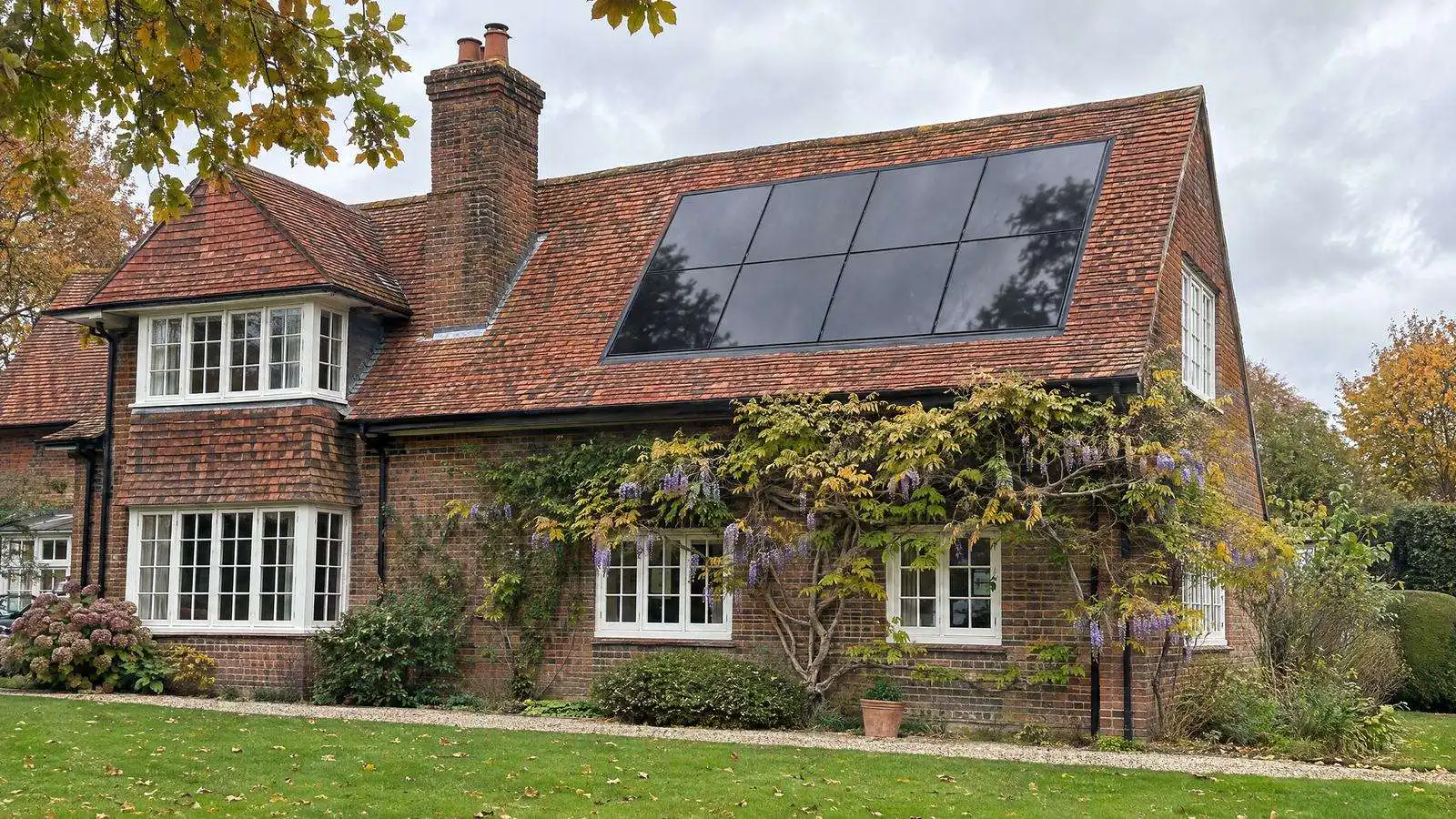
Berkshire and Surrey streets mix 1960s to 1980s detached houses, new-build estates and big village renovations, and in-roof makes its case on the renovations. When a refit takes the covering off a detached house, plan the array before the roofer orders tiles.
Shade decides more than mounting on wooded plots. Our page on solar panels in Sunningdale describes large detached homes on pine-lined plots, where we check first where the trees throw shadow, and an in-roof kit changes none of that.
Period houses, conservation areas and listed buildings follow their own planning and fixing rules, which we cover in our guide to solar panels for older homes.
Plan the Array Before the Tiles Are Ordered
Planning a refit in Berkshire or Surrey? Book a Solar Design Pack survey and we will set out the layout and expected generation for the roof you are rebuilding.
“Highly recommended for heat pump design and installation.”
Stephen Saunders, Google Review
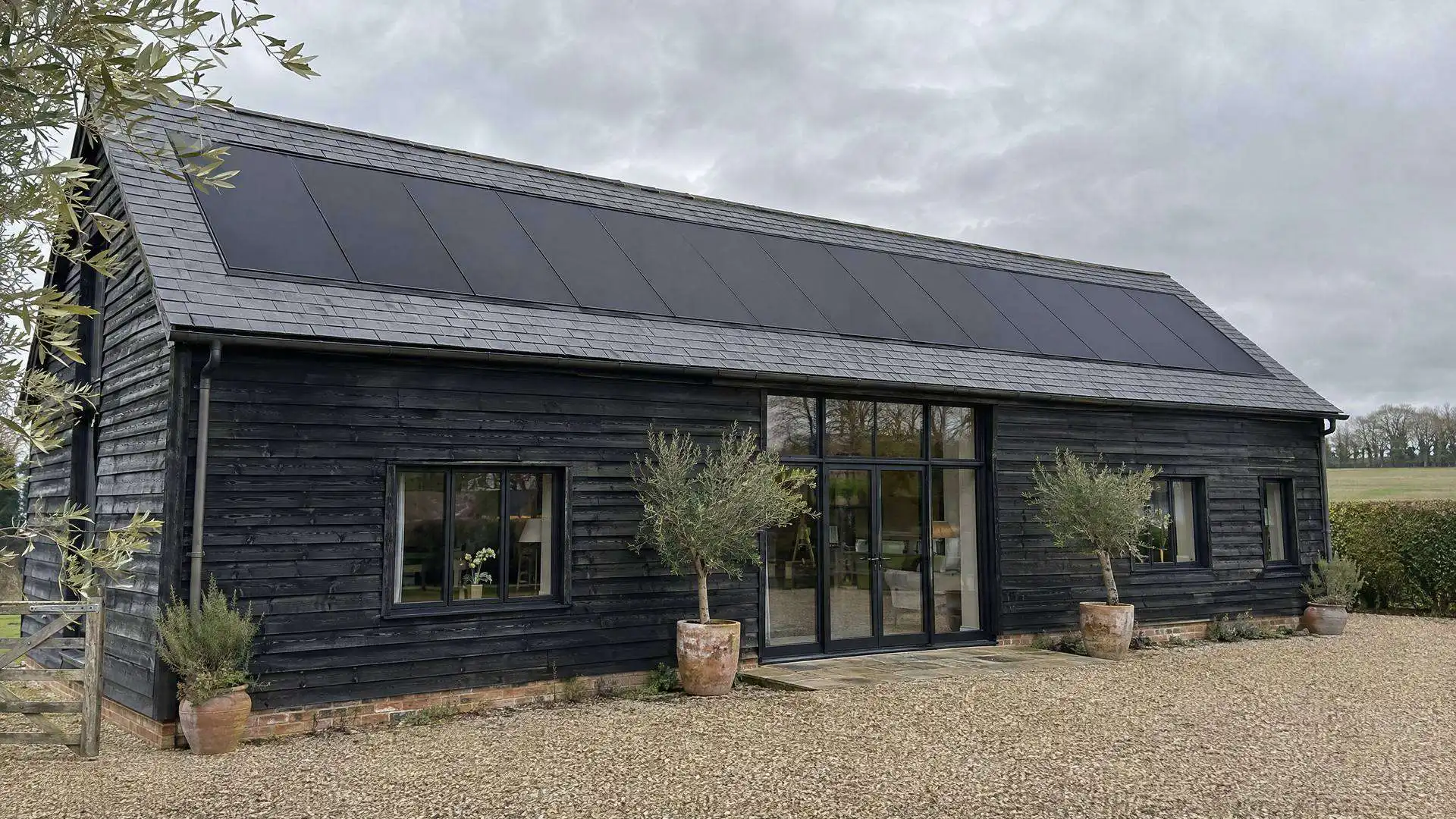
On an existing roof, yes: in-roof means extra roofing labour plus a flashing kit on top of the solar work. On a new roof or re-roof the gap narrows, since the array takes the place of tiles you would have paid for and the scaffold is already up. Our solar panel cost guide covers price ranges.
A little. With no air gap behind them, integrated panels run warmer, and Viridian Solar’s research with Cambridge University put the yield reduction at about 3 percent. In our own PVGIS run for a roof near Reading on 26 October 2026, facing east instead of south cost around 20 percent.
A certified kit fitted to the manufacturer’s instructions is designed to stay watertight: MCS 012 tests mounting kits against wind-driven rain, and the flashings lap under the surrounding tiles. MCS updated its installation standard, MIS 3002, in March 2026 to make installers evidence weather-tightness where no MCS 012 certified mounting is available. Ask who warrants the flashings.
They are worth it when the whole roof covering is being replaced and an unbroken finish matters to you. On a sound roof, a standard on-roof array keeps the covering you already have and avoids paying to replace it. Our guide to whether solar panels are worth it covers the payback side.
Yes. The installer lifts a patch of tiles, fits the kit and flashings, and tiles back up to the array, and Viridian notes the lifted tiles then serve as matching spares. Your roof’s covering and pitch must fall within the kit’s MCS 012 certificate, and the battens and underlay need to be sound.
Not when the house meets the permitted development limits, which apply in Berkshire and Surrey as across England: panels must sit no higher than the roof’s highest part, excluding the chimney, and must project no more than 200mm from a pitched slope, per the Planning Portal. The rules were updated on 27 August 2026 with the pitched-roof limits unchanged. We confirm your property’s position at survey.
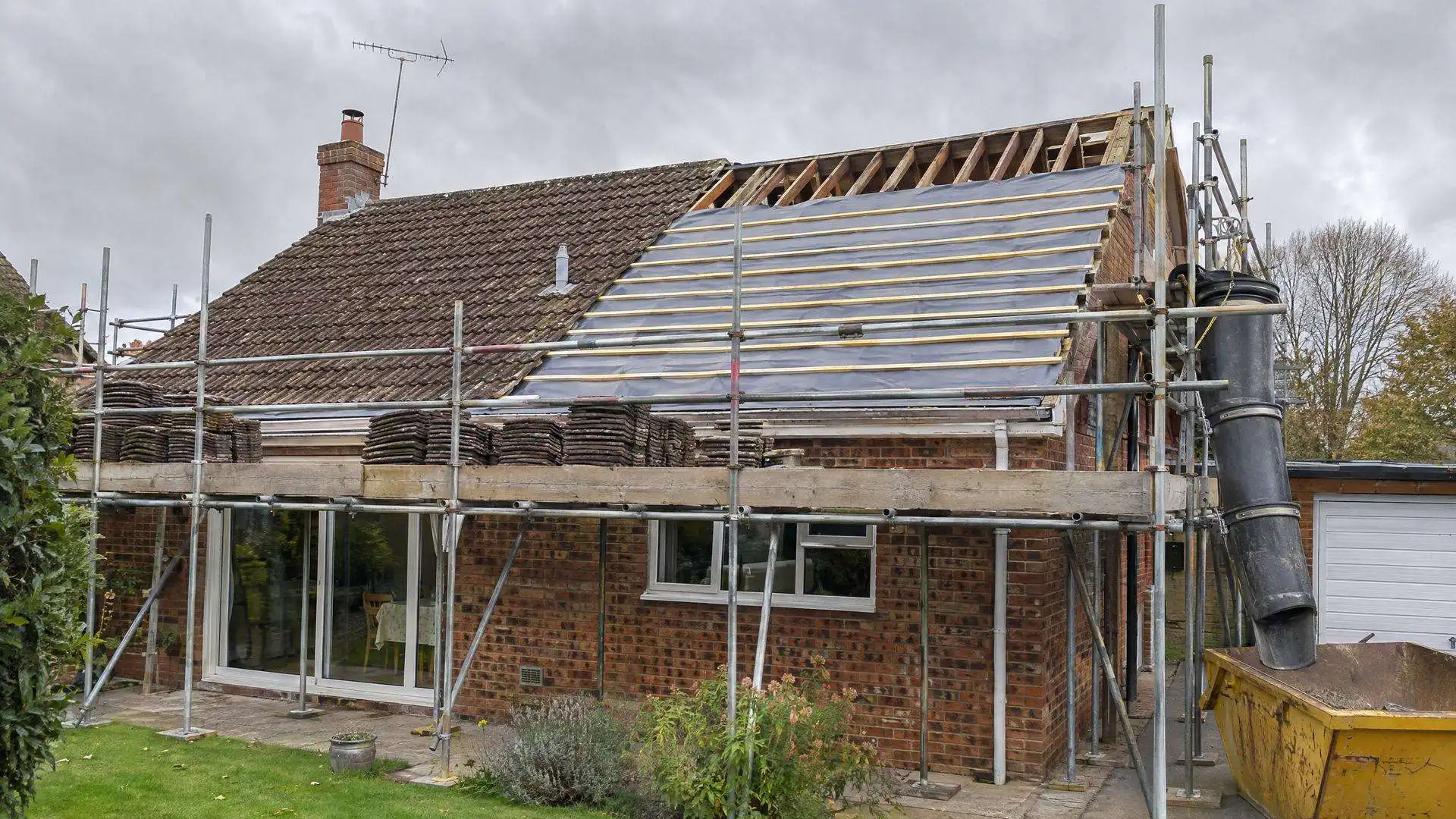
In-roof against on-roof comes down to your roof’s pitch, its tiles, its condition and the year a roofer next strips it. At your Solar Design Pack survey we model what an array on your house would generate, so you can weigh the two routes on your own roof’s numbers.
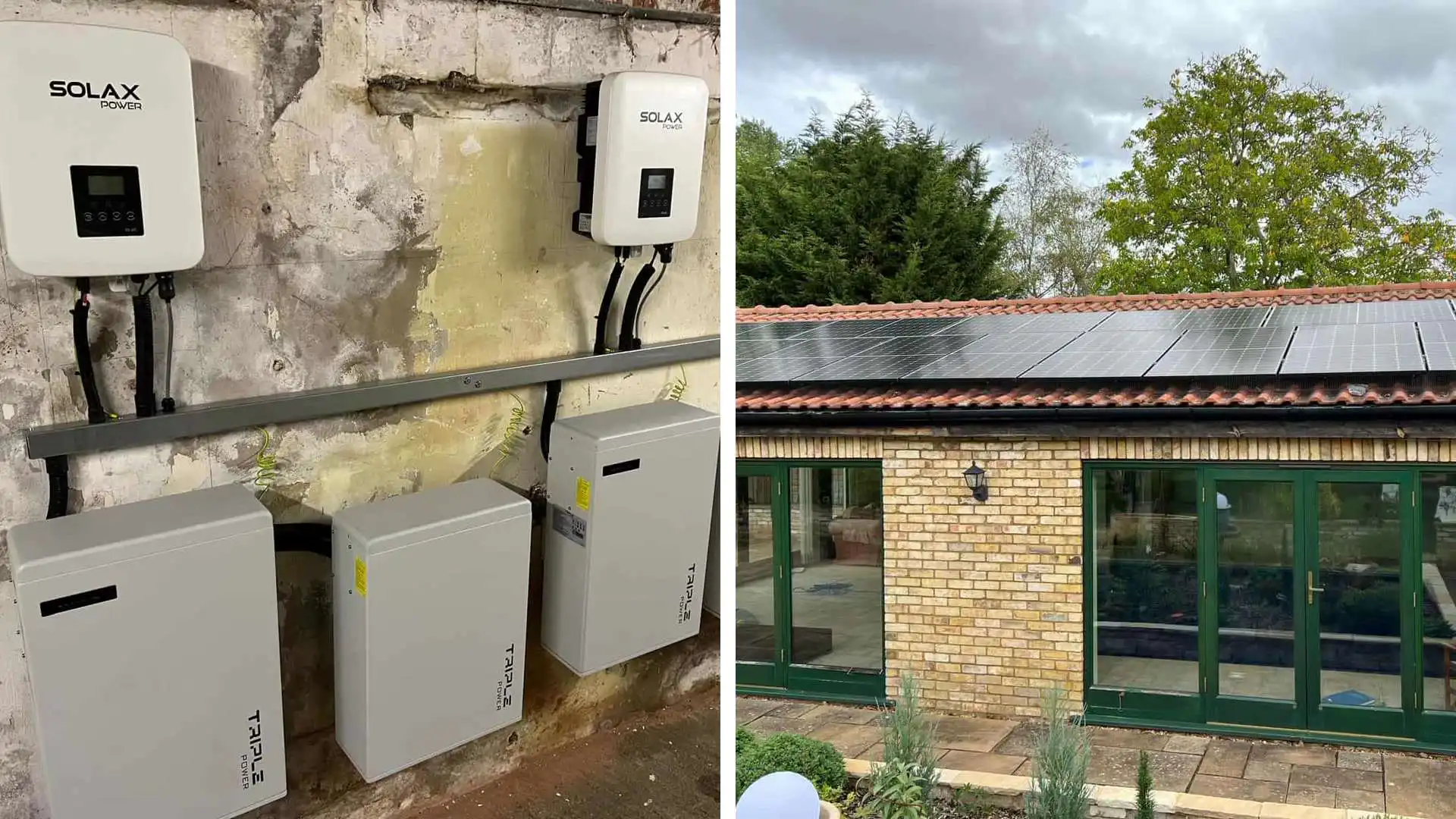
More guides from the Eco Renewables blog on the same topic.
24 November 2026
Read the guide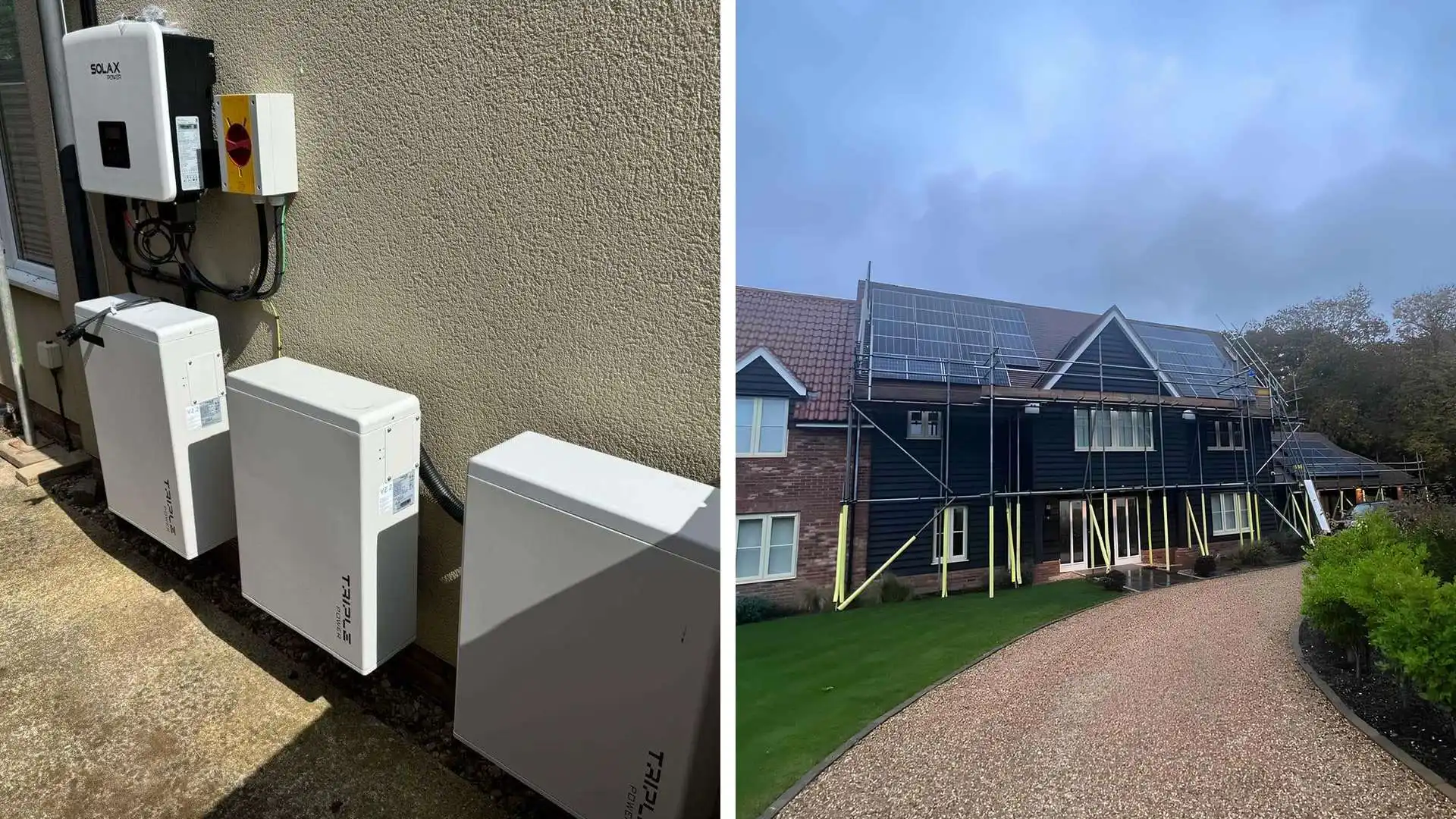
24 November 2026
Read the guide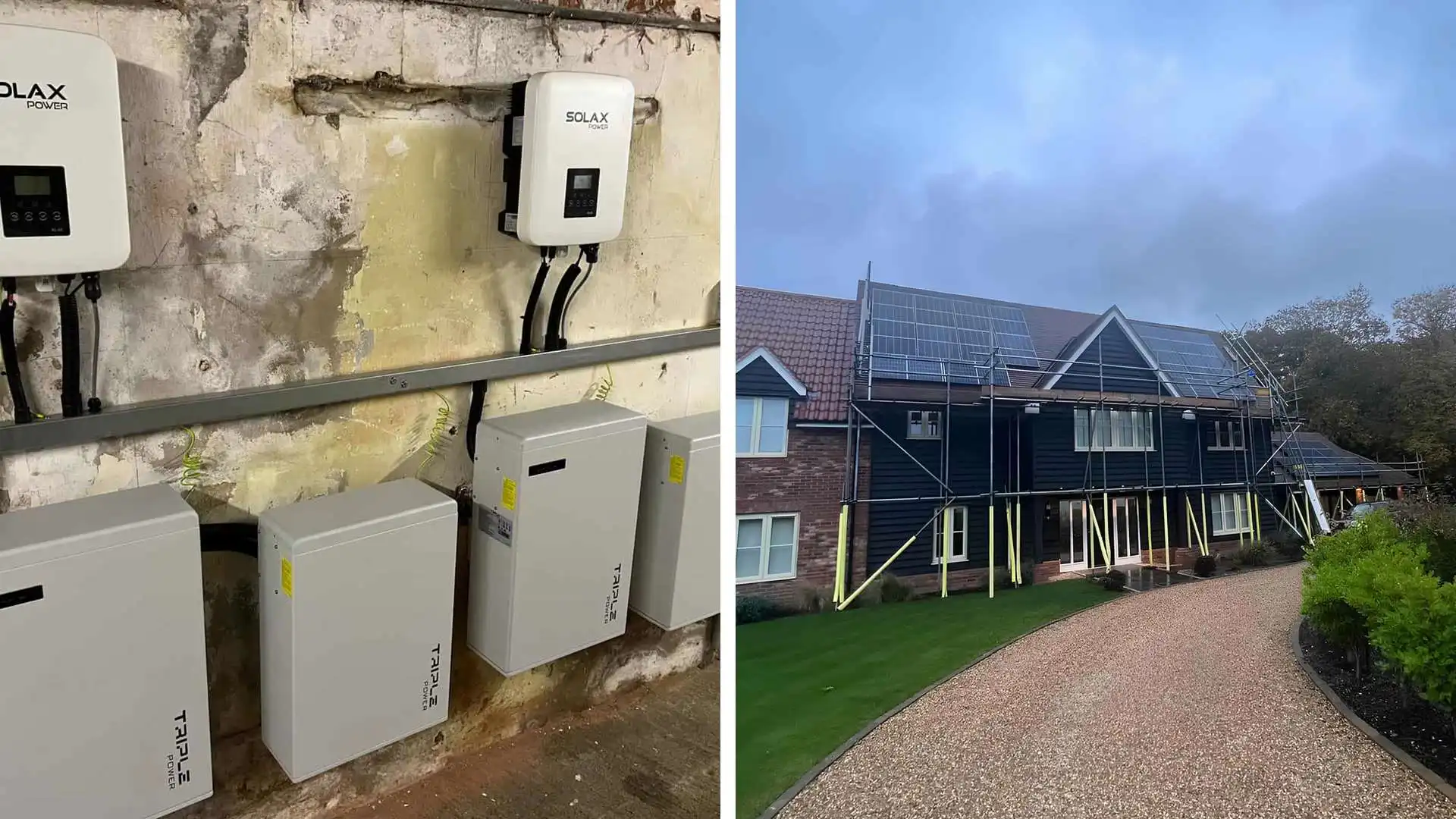
24 November 2026
Read the guideEco Renewables are trusted by homeowners throughout Berkshire, Surrey, and the South East to provide high-quality solar system installations.
If you're considering a heat pump, the survey is where it starts. We assess the property, run the heat loss calculations, and tell you exactly what the system would look like.
Get My Free Solar Design Pack


