



Heat Pumps
Air Source vs Ground Source Heat Pump for Berkshire and Surrey Homes: Cost, Space and Performance
By Adam Dare
Heat Geek trained installer
Updated 12 November 2026
Reading time
🎉 Named South East Heating Installer of the Year 2026
Choosing between an air source vs ground source heat pump for a large detached house in Berkshire and Surrey comes down to land, budget and how much heat the house needs on the coldest day. Know where we stand first: Eco Renewables designs and installs air source heat pumps only. We don’t fit ground source, and where it is the better answer, this guide says so.
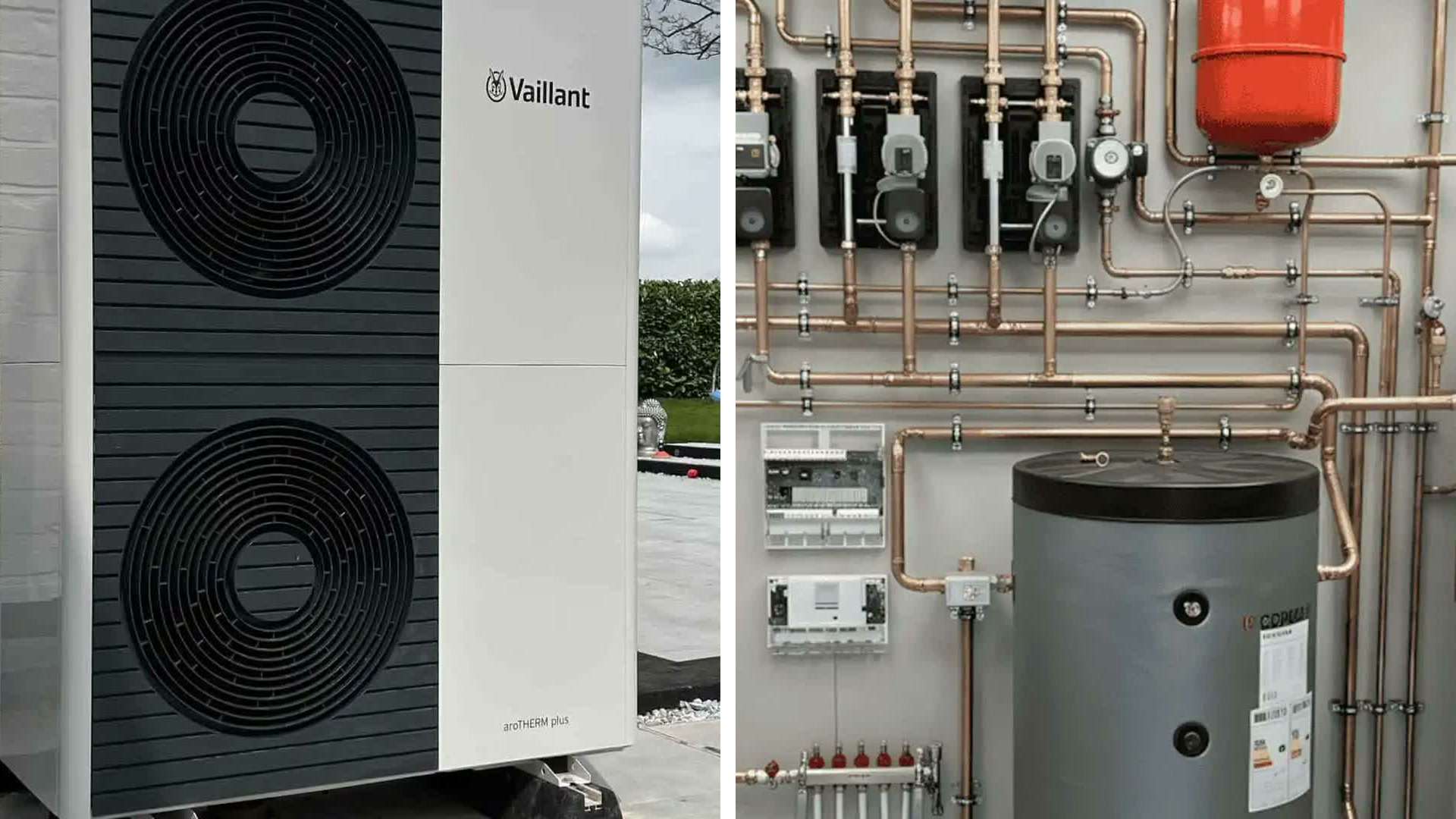
Both types do the same job indoors, feeding radiators or underfloor heating and a hot water cylinder. The difference sits outside: where the heat comes from, how much garden the system takes, and how much digging stands between you and a warm house.
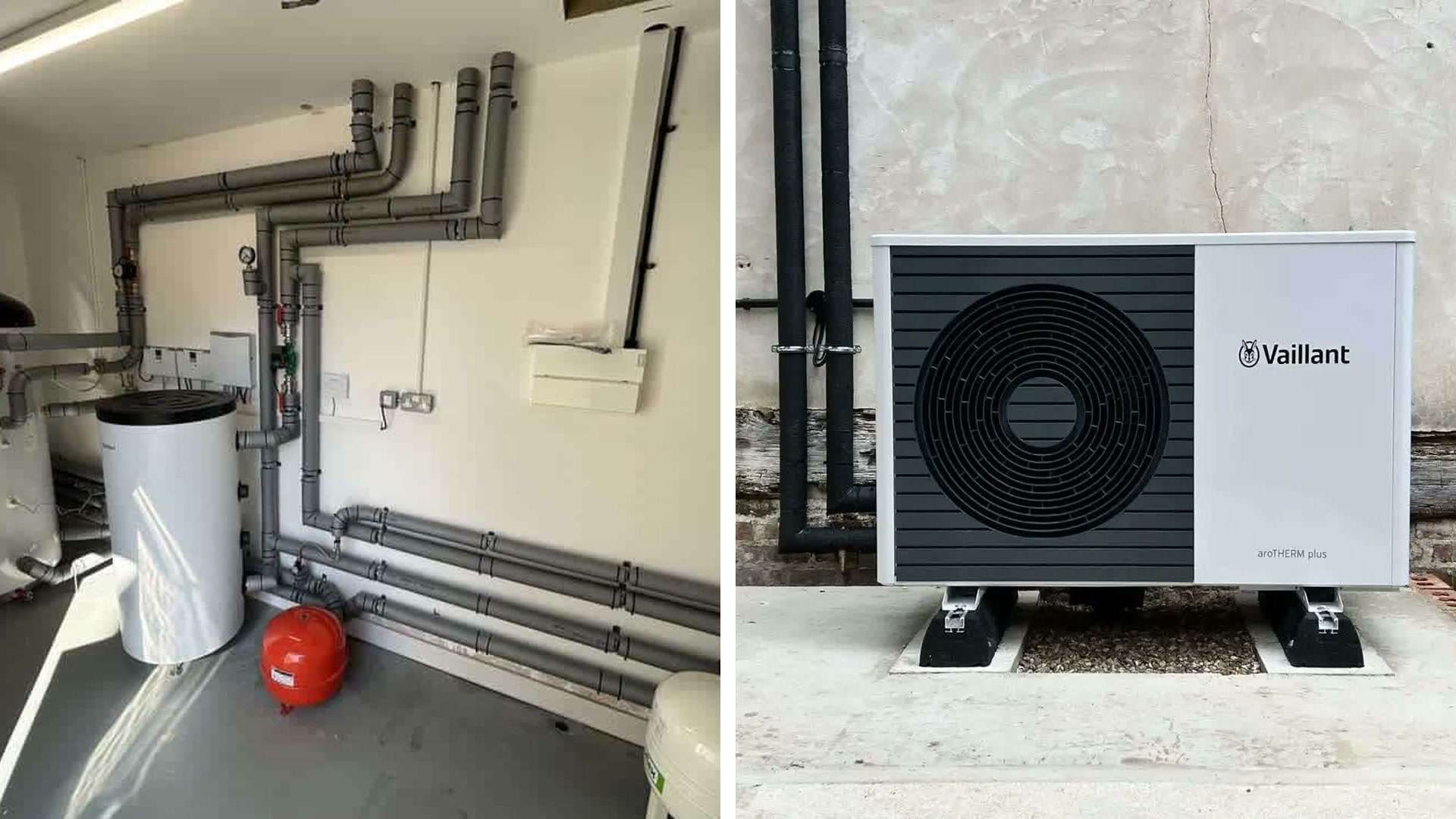
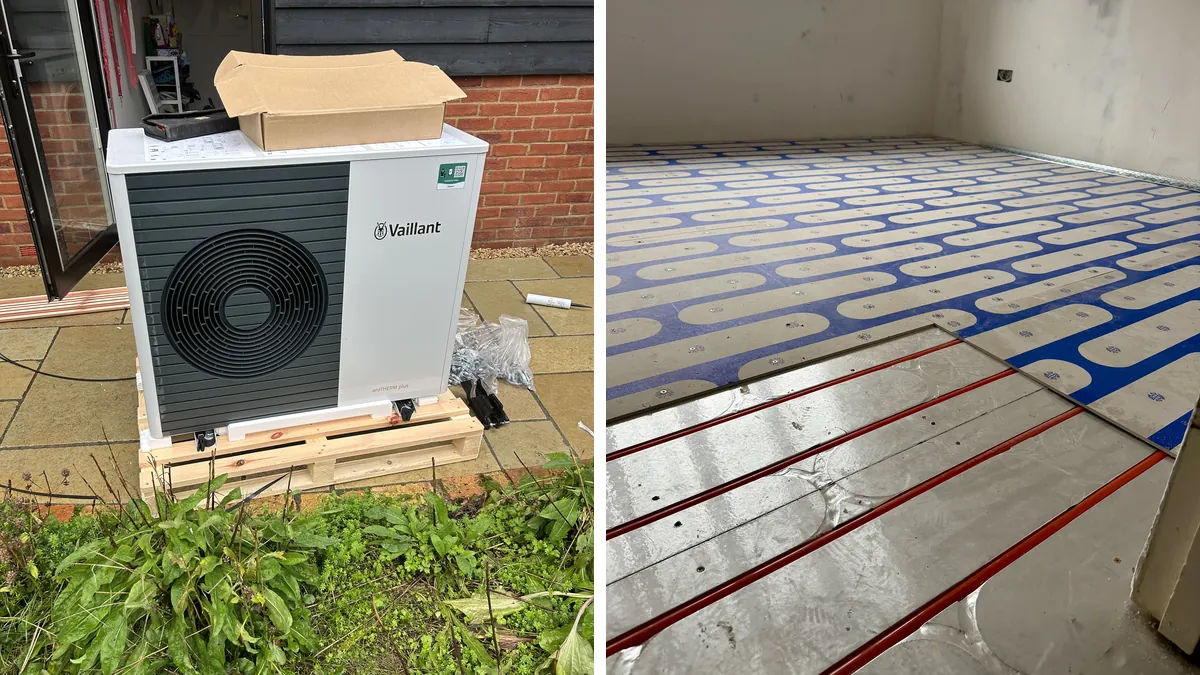
An air source unit stands beside the house and draws heat from the outside air through a fan. A ground source system draws it from the soil through a loop of pipe filled with water and antifreeze, laid in trenches or dropped down a borehole. Both then raise that heat to a useful temperature and pass it into the house.
| Factor | Air source | Ground source |
|---|---|---|
| Heat comes from | Outside air, through a fan unit | Soil, through buried pipe |
| Kit outdoors | One unit beside the house | No outdoor unit |
| Land needed | Room for the unit | Trenches or boreholes, reached by machinery |
| Typical installation cost | Less expensive (Energy Saving Trust) | Around £15,000 with trenches |
| Installation work | Much less disruption | Digging or drilling in the garden |
| Grant in England and Wales | £7,500 | £7,500 |
Air source is the most common type in the UK, and the Energy Saving Trust links that to its lower cost and much lighter installation. Every air source heat pump installation we design starts from a room-by-room heat loss calculation, the same figure a ground source designer needs before sizing a loop.
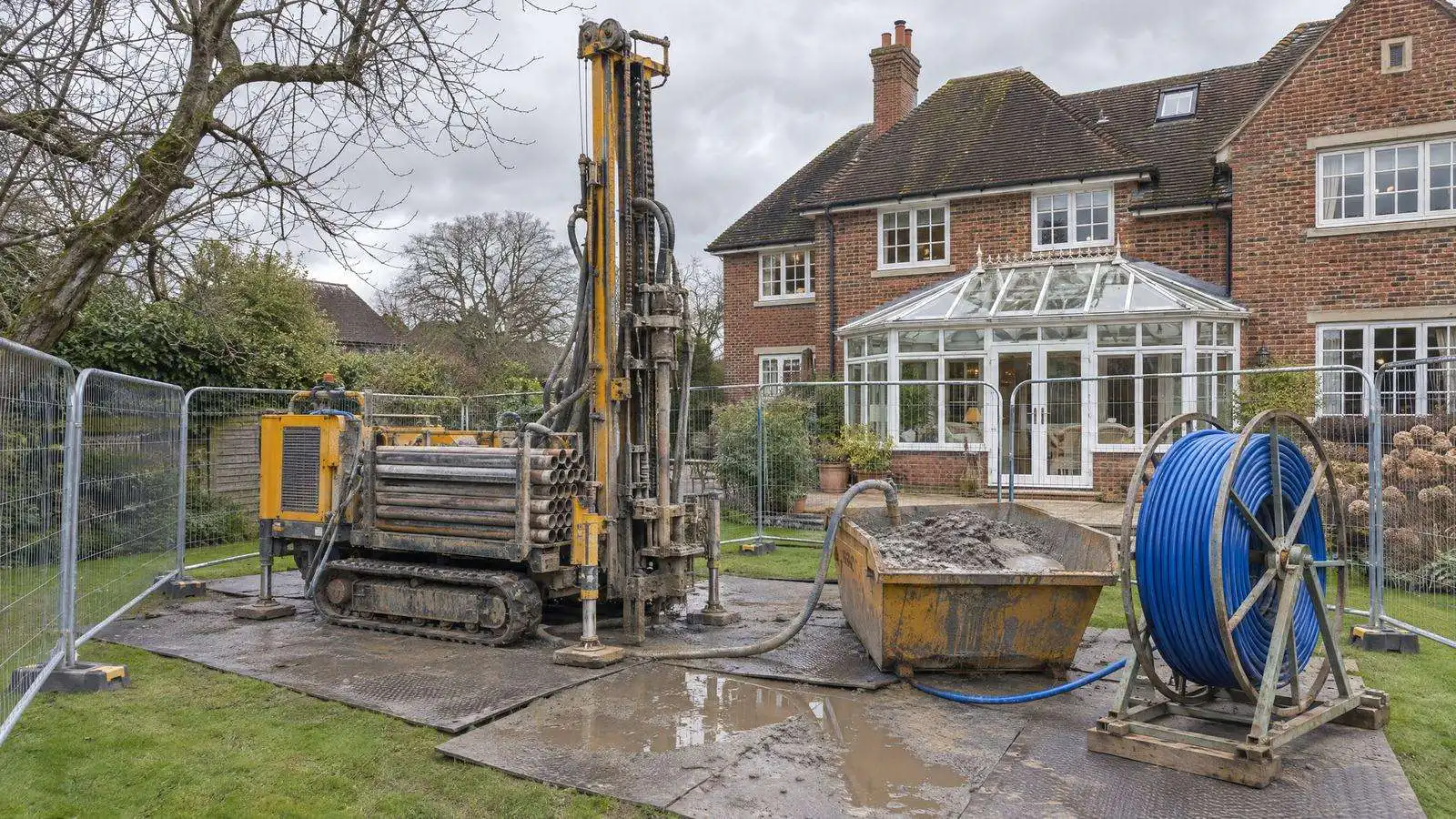
The Energy Saving Trust’s guide, updated 20 October 2026, puts a ground source heat pump installation at typically around £15,000 with the ground loop in trenches. A borehole costs considerably more. Ground access, the size of the house and any radiator or underfloor heating upgrades all move the final ground source heat pump cost.
Air source costs less to install, the Trust says, partly because there is no trenching or drilling. We keep our air source prices in one place, our guide to heat pump installation cost, so the figures stay current. Any price only means something once a heat loss figure sits behind it, because that figure sets the size of the unit, the pipework and the cylinder.
Price Air Source From Your Own Heat Loss
The Blueprint gives you that room-by-room heat loss for your house, the number an air source price should be built on.
“From initial contact through final hand-over Adam was attentive and punctual. Creating first a detailed heat loss report and then a system design to meet the requirements, he wanted to ensure that I understood the different way that heat pumps work to old gas boiler technology.”
Stephen Saunders, Google Review
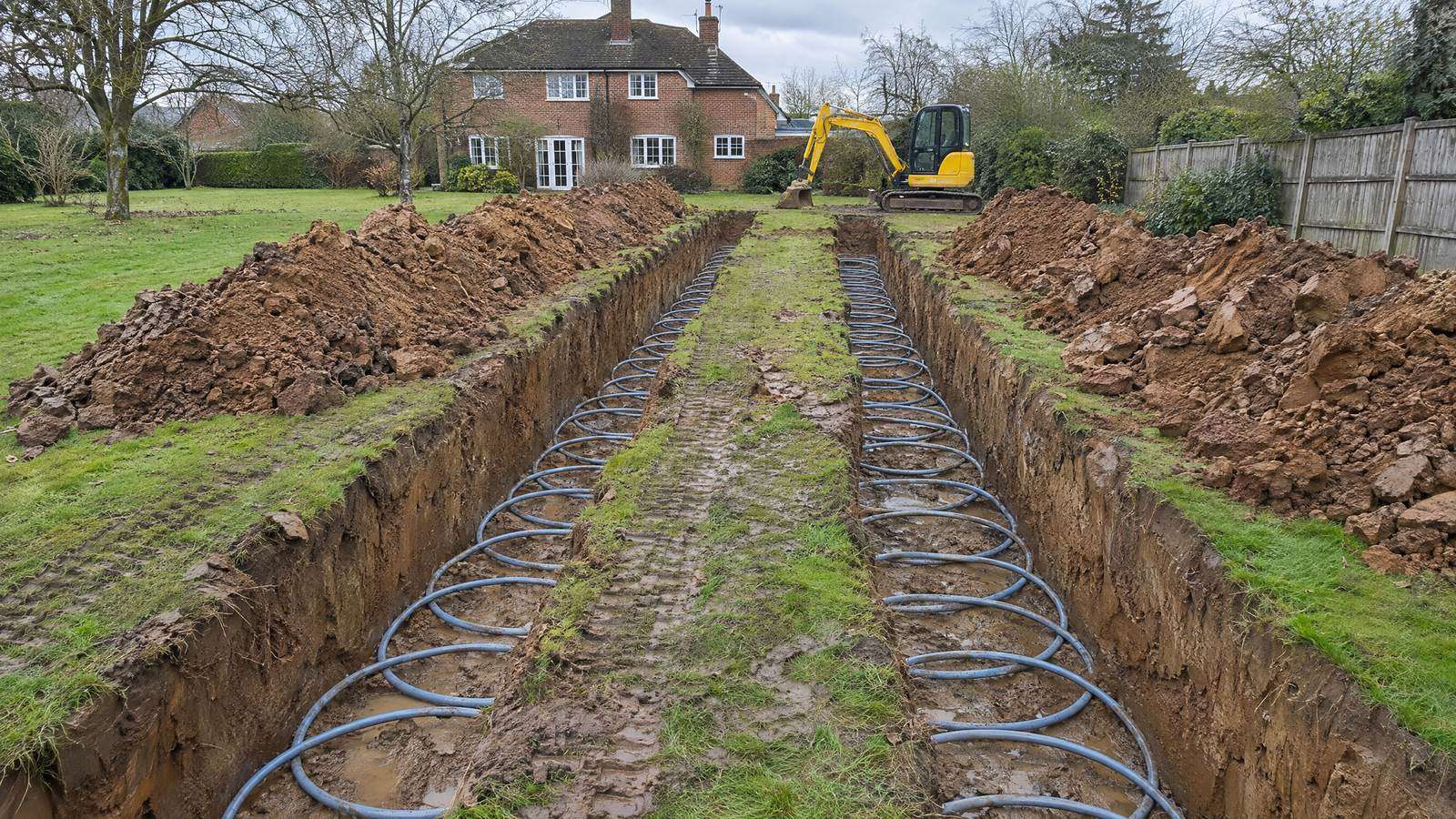
A ground source heat pump needs land near the house that a digger can reach from the road, clear of trees, whose roots cause problems when trenching. For a new-build three-bedroom house the Energy Saving Trust expects two trenches of 30 to 40 metres. A larger or less well insulated house needs a longer loop. Where space is tight, boreholes replace the trenches, after a specialist ground survey.
Two trenches of 30 to 40 metres
Ground loop for a new-build three-bedroom house
75 to 200 metres
Depth of a borehole
About 20cm
Width of a borehole
Source: Energy Saving Trust, ground source heat pump guide, updated 20 October 2026
A borehole is only about 20cm wide but 75 to 200 metres deep, so the deepest would reach further down than the 135-metre London Eye stands tall. Air source asks far less of the garden: one outdoor unit, sited for airflow and for the neighbours. Ground source moves the bulk indoors, into a unit about the size of an American-style fridge, roughly 120cm by 60cm by 60cm.
A heat pump works harder the colder its source, and the Energy Saving Trust’s figures show how far apart the air and the soil sit through a UK year.
Between -5°C and 25°C
Outside air for most UK homes sits between -5°C and 25°C for at least 95% of the year, the Energy Saving Trust says, while the soil a ground loop draws on doesn’t freeze and stays above 5°C for most of the year.
That gives each type its days. When the air is warmer than the ground, air source runs more efficiently, and it also skips the energy a ground system spends pumping fluid round its loop. On the coldest days, when you need the most heat, ground source can pull ahead. Across a full year, the Trust finds ground source tends to come out more efficient.
The Trust also lists three conditions that matter for either type: a good design and installation, well-sized radiators or underfloor heating, and learning to run the system well. On an air source system, the flow temperature your radiators allow decides how hard the unit works on a frosty morning.
Know Your Design Flow Temperature
Your Blueprint states the flow temperature your radiators need on the design cold day, the figure that sets how efficiently an air source system runs in your house.
“Anyway two months in and the house is warm and the scop is looking good. Adam was on time, tidy and helpful, highly recommended.”
Andrew Symes, Google Review
The grant is a tie: in England and Wales the Boiler Upgrade Scheme puts £7,500 towards either an air source or a ground source heat pump. You need to own the property, be replacing fossil fuel heating such as gas, oil, LPG or electric, and use an MCS certified installer. Since 28 April 2026 you no longer need an EPC to apply.
HMRC’s VAT notice sets 0% on the installation until 31 March 2027, and it extends that rate to the groundworks a ground source system needs. Because the grant is a flat sum, it covers a larger share of the cheaper air source installation. Our Boiler Upgrade Scheme guide covers eligibility in full.
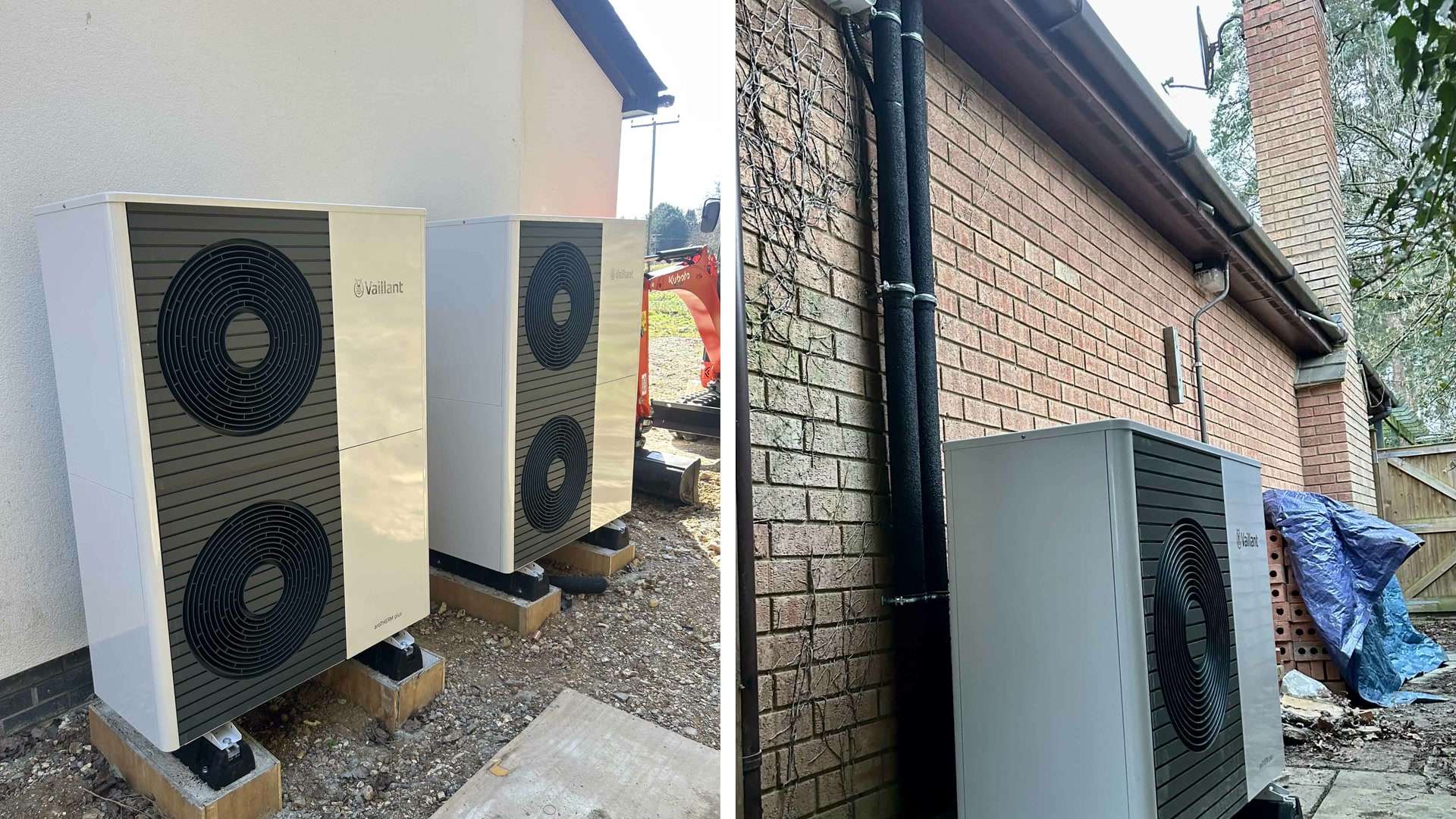
Commuter towns across Berkshire and Surrey hold many 1960s to 1980s detached and semi-detached houses on gas, typically with room for an outdoor unit. The Energy Saving Trust’s general rule is plain: if budget or space limits you, air source is more likely to suit. Large detached houses on big plots are where the comparison gets close, and our Virginia Water heat pump installation page covers air source for homes of that size.
Draws heat from the outside air through one unit beside the house
Draws heat from the soil through pipe in trenches or boreholes
A large plot, high and steady heat demand and a budget that stretches to boreholes make ground source the stronger technical answer. We don’t install it, so for that house use the MCS installer search, filtered to ground/water source heat pumps. The Energy Saving Trust advises comparing at least three quotes.
Plan the Pipework While the Ceilings Are Down
If air source suits your plot and a renovation is coming, the Blueprint lets you plan its pipework while the ceilings are down.
“Had the most fantastic experience and service – really professional and just a genuinely nice person! We were fitting a heat pump as part of a ground floor renovation. Adam was great at working around the project, putting pipework in while ceilings were down, liaising with builder and being flexible with dates.”
Lucy Grainger, Google Review
Ground source tends to be more efficient across a year, because soil holds a steadier temperature than air. It also costs more to install and needs land for trenches or boreholes. Where budget or garden space is tight, the Energy Saving Trust says air source is more likely to suit. A room-by-room heat loss calculation shows how a system would perform in your house.
The Energy Saving Trust puts a typical ground source installation at around £15,000 when the ground loop goes into trenches, and considerably more where a borehole is needed. Eligible owners in England and Wales can get the £7,500 Boiler Upgrade Scheme grant, and 0% VAT covers the installation and its groundworks until 31 March 2027.
For a new-build three-bedroom house the Energy Saving Trust expects two trenches of 30 to 40 metres, and more for a larger or less well insulated house. The land must be clear of trees and reachable by machinery from the road. Boreholes take far less surface area but go 75 to 200 metres down.
Yes. Homes in Berkshire and Surrey come under the England and Wales scheme, which pays £7,500 towards an air source or a ground source heat pump. The ownership, heating and MCS installer conditions are the same for both types.
Ground source has no outdoor unit, so nothing runs in the garden, while an air source unit runs a fan and compressor outside. Siting decides how much a neighbour hears, and our guide to heat pump noise covers placement and the planning limit.
It can be, for a large house in Berkshire or Surrey with a big plot, machinery access and a high, steady heat demand through winter. That demand suits the even soil temperature a ground loop draws on. With limited land or a tighter budget, a well-designed air source system is the likelier fit. We fit air source only, so for ground source quotes use the MCS installer search.
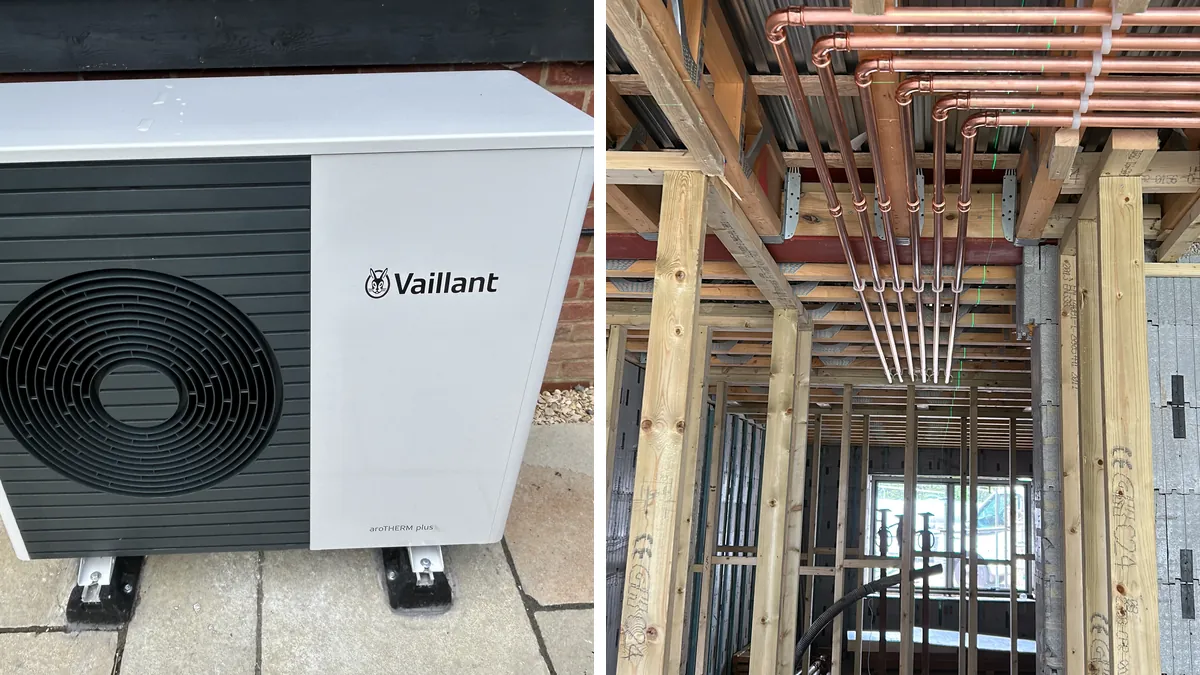
We design and install air source heat pumps only, so the question we answer is whether air source covers your house’s heat loss at a low flow temperature. The Heat Pump Blueprint sets out your room-by-room heat loss, radiator schedule, flow temperature and hot water plan. You judge the fit with your own figures in front of you.
More guides from the Eco Renewables blog on the same topic.
24 November 2026
Read the guide
24 November 2026
Read the guide
24 November 2026
Read the guideEco Renewables are trusted by homeowners throughout Berkshire and the South East to provide high-quality heat pump heating system installations.
If you're considering a heat pump, the survey is where it starts. We assess the property, run the heat loss calculations, and tell you exactly what the system would look like.
Get My Free Heat Pump Blueprint


