



Solar
Do Solar Panels Add Value to Your House in Berkshire and Surrey? What Buyers, Sellers and Lenders Look At
By Adam Dare
Heat Geek trained installer
Updated 12 November 2026
Reading time
🎉 Named South East Heating Installer of the Year 2026
Do solar panels add value to your house? A 2024 study of nearly 1.5 million UK homes listed for sale on Zoopla found that houses with panels carried a 6.1% to 7.1% price premium. For owners in Berkshire and Surrey who may sell within ten years, that premium is safest when the buyer’s solicitor and lender can check what is on the roof.
The economists behind it, from Swansea University and the University of Birmingham, found the biggest premiums in the cheapest and the dearest fifth of homes, and a premium that fell across the years they studied. A percentage premium also counts for more in pounds on a pricier house. Whether the panels repay their cost before you move is a separate sum: see whether solar panels pay back on your roof.
Three kinds of research test whether solar panels increase house value, and each measures something different. The Zoopla study isolates the panels, using machine-learning models to compare houses with and without them. Rightmove tracked 300,000 homes that sold twice with a different EPC band each time, and Nationwide compared owner-occupied homes by EPC band in June 2026.
What the research measured
6.1% to 7.1%
Premium for houses with solar panels (Energy Economics, 2024)
3%
Extra value Rightmove found for a move from EPC band D to C (Rightmove, 2023)
1.6%
Premium for an owner-occupied A or B home over a similar D in England (Nationwide, June 2026)
Sources: Asproudis, Gedikli, Talavera and Yilmaz, Energy Economics vol. 137 (2024), via the Urban Big Data Centre; Rightmove Greener Homes Report 2023; Nationwide, June 2026.
Solar panels feed the EPC route: the assessor records the array, and the rating credits the electricity it makes. Since RdSAP 10 arrived on 15 June 2025, Propertymark advises that improvements count only where the assessor sees evidence, so keep the MCS certificate to hand. Nationwide found little gap between bands C and D, and the spread from 1.6% to 7.1% shows how far the method moves the answer.
During the feed-in tariff years, which closed to new applicants on 31 March 2019, some companies fitted panels at no cost in return for a long lease of the roof. The company took the tariff payments and the household used the daytime electricity. A lease like this is where solar panels can devalue your house, because a lender has to accept it before it will lend on the property.
| Panels owned outright | Roof leased to a solar company | |
|---|---|---|
| Who owns the panels | The homeowner, then the buyer at completion | The solar company, for the length of the lease |
| Tariff or export income | Paid to the owner | Usually paid to the solar company |
| What the lender checks | The panels as part of the valuation | The lease, against UK Finance and Building Societies Association guidance plus its own terms |
| Papers the buyer’s solicitor asks for | Certificates, grid notification and warranties | All of those, plus the lease and the lender’s consent |
| Risk to the sale | Delay while missing papers are found | A buyer’s lender may refuse the lease |
UK Finance and the Building Societies Association publish guidance for solar panel providers on what lenders typically require of these leases. Lenders add their own conditions, and the Law Society warns that a buyer’s lender may refuse a lease the seller’s lender accepted. A seller with a leased roof should hand the lease to their solicitor at the start, before a buyer’s lender finds a clause it rejects.
Conveyancers in the Law Society’s Conveyancing Quality Scheme must use the sixth edition of the TA6 property information form on sales they take on from 30 March 2026. Its solar question asks whether the system is owned or leased, when it was installed and what agreements come with it, including any feed-in tariff or SEG agreement. A buyer’s solicitor then asks for the papers behind each answer.
Solar papers to gather before you list
Gather these before the house goes on the market. Ofgem requires every SEG contract to include a term telling you to inform the supplier of a change of ownership, and OVO’s help page says the contract ends at the sale, after 28 days’ notice and a closing meter reading.
Put the Layout and Price in Writing
If you are fitting panels on a house you might sell in a few years, a Solar Design Pack puts the layout, generation estimate and itemised price in writing before anything is ordered, ready to file with the certificates that follow.
“I think we have referred him to our whole neighbourhood he is that good! Can’t recommend enough!”
Adam Hewitt, Google Review
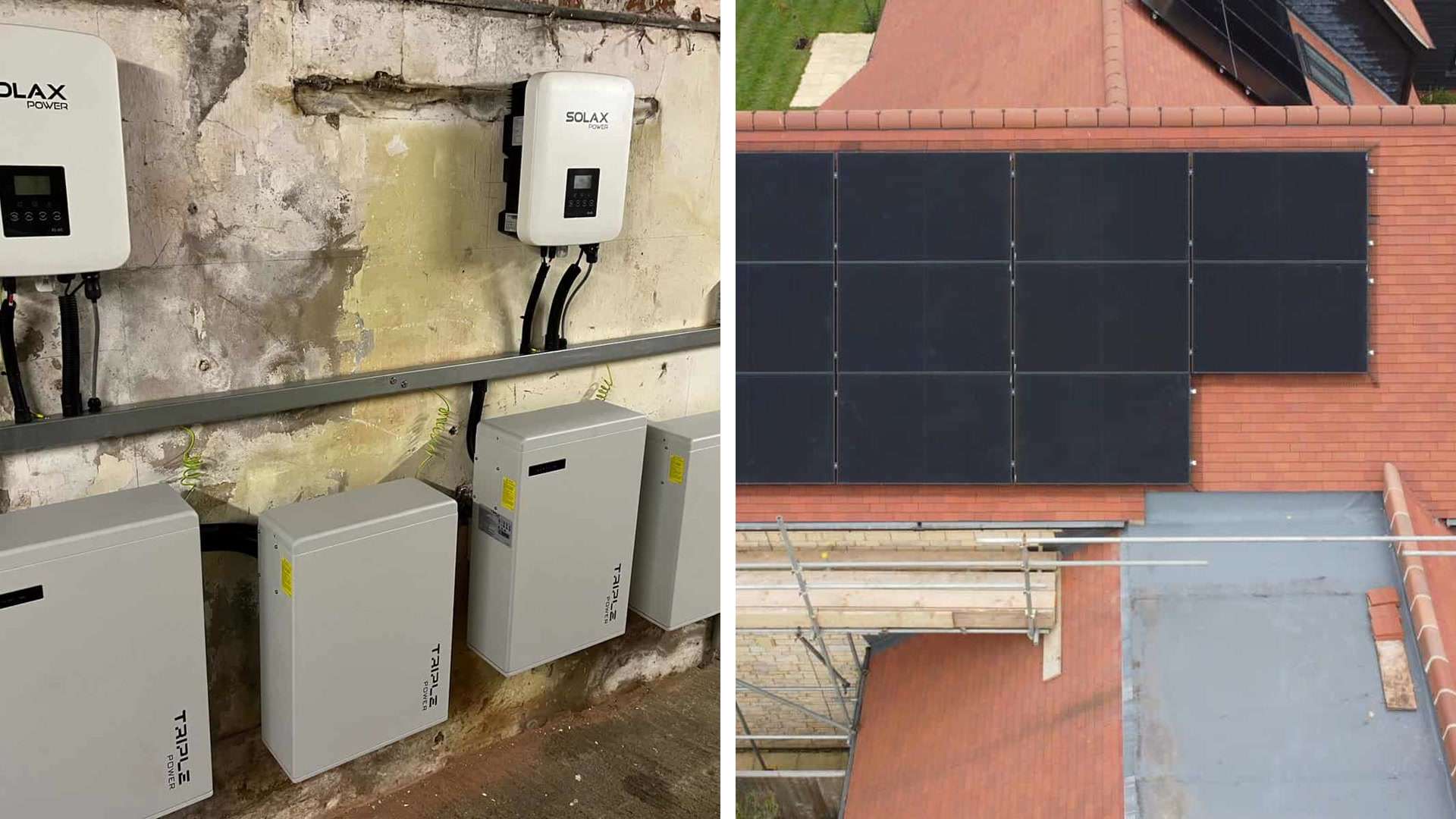
Buying a house with solar panels adds a few questions to the usual searches, and they fall in the order of the purchase. The first one, owned or leased, can decide whether your lender will lend at all, so ask it before you make an offer.
Ask the agent whether the panels are owned outright or the roof is leased, and how old the system is.
At the viewing, look at the roof around the array for slipped tiles, and check for mesh along the edges of the panels.
Have your solicitor request the MCS certificate, the G98 or G99 notification, the electrical certificate, the warranties and any lease.
Before completion, ask for the inverter details and the login to the monitoring app.
After completion, send the feed-in tariff change of ownership form, or set up your own export tariff.
Mesh matters because pigeons nest in the gap under panels and leave their mess on the roof below. We fit bird mesh on every solar job, with scaffold up on every pitched roof we work on. The seller’s export contract does not pass to you automatically, so read our guide to the Smart Export Guarantee before you pick a supplier.
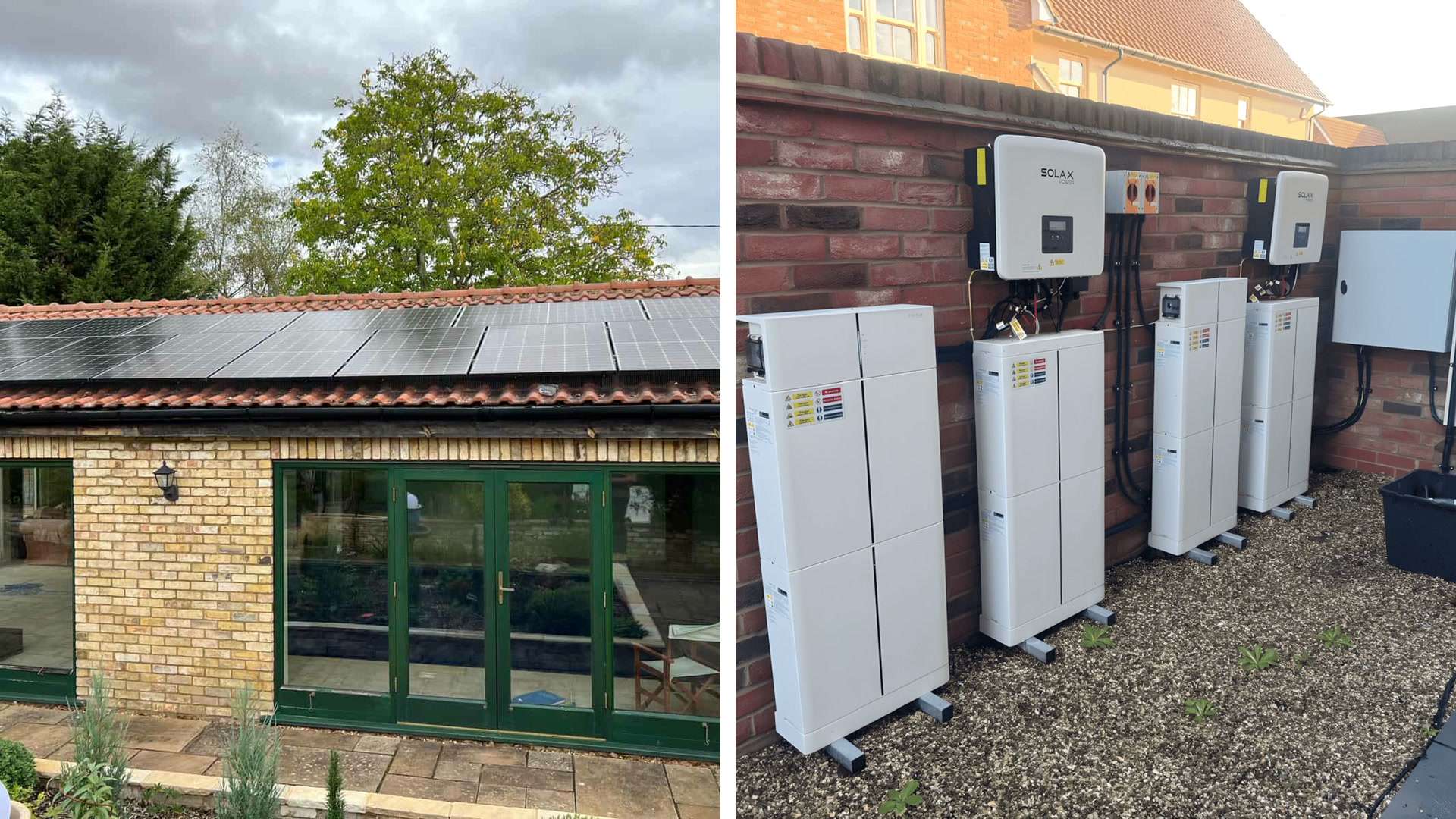
Agents are writing panels into listings: Rightmove counted almost 40% more mentions of solar panels in descriptions of homes for sale in 2025 than the same period a year earlier. In its April 2023 survey of 5,943 people, only 6% disagreed with paying more for an energy-efficient home. Our page on solar panel installation in Ascot sets out what a Design Pack covers on a roof there.
On the Victorian and Edwardian houses in Berkshire and Surrey’s town centres, a buyer’s surveyor looks at the roof covering under the array as closely as at the panels. Our guide to solar on older and period homes covers roof condition, conservation areas and listed buildings.
A heat pump raises the same buyer questions: who owns it, where the MCS certificate is and which papers came at handover. Leon Shead wrote the review below about a shared customer from the time we worked with another company on solar: his company fitted the solar PV on that job, and we fitted the heat pump.
Add the Heat Pump to the Array Sums
Tell us about any heat pump you plan to add when you ask for a Solar Design Pack, and the array plan will take its electricity use into account.
“By working together, we were able to size the solar PV accordingly and deliver a seamless, efficient setup. Their team were professional, knowledgeable, and communicated clearly throughout.”
Leon Shead, Google Review
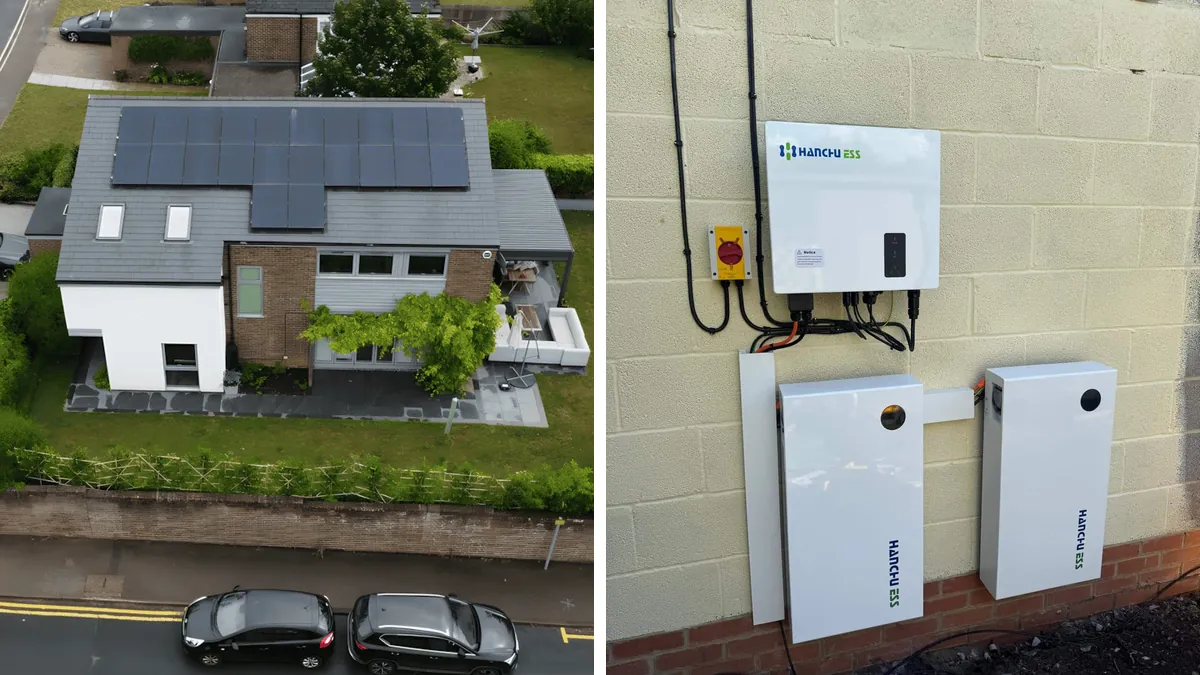
Yes, on the published evidence. A 2024 Energy Economics study of nearly 1.5 million UK listings found a 6.1% to 7.1% premium for houses with solar panels. Rightmove’s own guide puts the uplift on existing homes at around 2 to 3%, without naming a study behind it.
They can when the roof is leased to a solar company and the buyer’s lender will not accept the lease. Missing papers slow a sale too, so keep the MCS certificate, the G98 or G99 notification, the electrical certificate and the warranties in one folder.
That depends on the lender. UK Finance and the Building Societies Association publish guidance on typical lender requirements for these leases, and each lender adds its own terms. A buyer’s lender can refuse a lease that the seller’s lender accepted.
The MCS certificate, the G98 or G99 notification to the network operator, the electrical installation certificate, the panel and inverter warranties and any feed-in tariff or SEG paperwork. If the roof is leased, add the lease. The TA6 form’s solar question covers ownership, any lease and any tariff agreement, and asks for a copy of any SEG agreement.
Not automatically. A SEG contract sits between the owner and their electricity supplier, and Ofgem requires it to say the supplier must be told of a change of ownership. OVO’s help page says the contract ends when you sell, after 28 days’ notice and a closing reading, and the new owners sign up for their own. Feed-in tariff payments move by a change of ownership form instead.
No study has measured Berkshire and Surrey on their own. The 2024 Zoopla study found its biggest premiums in the cheapest and the dearest fifth of UK homes, and a percentage premium is worth more in pounds on a higher-priced house. An owned system with its papers in order keeps that premium in the sale.
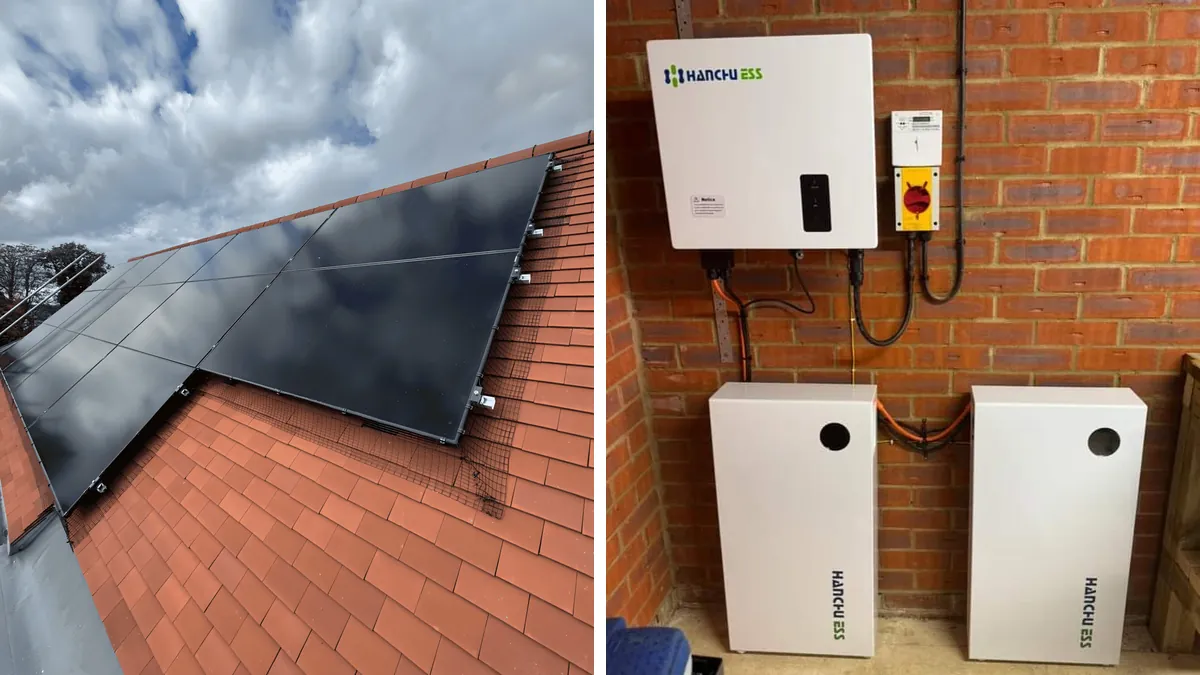
A buyer pays for a working array, an owned system and a file that answers the solicitor’s questions. Every solar PV installation we quote starts with a written layout, a generation estimate and an itemised price. Ask for yours before anyone books the scaffold.
More guides from the Eco Renewables blog on the same topic.
24 November 2026
Read the guide
24 November 2026
Read the guide
24 November 2026
Read the guideEco Renewables are trusted by homeowners throughout Berkshire, Surrey, and the South East to provide high-quality solar system installations.
If you're considering a heat pump, the survey is where it starts. We assess the property, run the heat loss calculations, and tell you exactly what the system would look like.
Get My Free Solar Design Pack


