



Solar
Is a Solar Battery Worth It in Berkshire or Surrey? Sizing & Tariffs
By Adam Dare
Heat Geek trained installer
Updated 12 November 2026
Reading time
🎉 Named South East Heating Installer of the Year 2026
Is a solar battery worth it? Sometimes, and the conditions are knowable before you spend anything. Storage earns its place when it can absorb a genuine daytime surplus and hand that electricity back during the hours your Berkshire or Surrey house is actually drawing power. That makes it a question about your consumption pattern and your tariff, not a question about your roof. The array decides how much surplus exists. Everything after that is arithmetic on your own meter data.
One calculation decides the whole thing. Take what you pay to import a kilowatt-hour, subtract what you would have been paid to export it, multiply by the number of units the battery can realistically cycle in a year, then knock off the energy lost in the round trip. Set that against the installed cost and you have your answer. The rest of this post is about the inputs: what storage actually changes, how to size it, why your tariff can outweigh your roof, and the situations where the honest recommendation is to skip it.
Solar generation peaks around the middle of the day. Domestic demand does not. It peaks at breakfast and again from late afternoon into the evening, when the array is winding down or already dark. Without storage, the surplus produced in between leaves the property and is sold to your supplier at a rate well below what you pay to buy electricity back a few hours later.
A battery closes that gap in time. It fills from the midday surplus and discharges into the evening load, which raises self-consumption: the share of your own generation that you use yourself instead of exporting. That single percentage is what a battery is buying you. Nothing else.
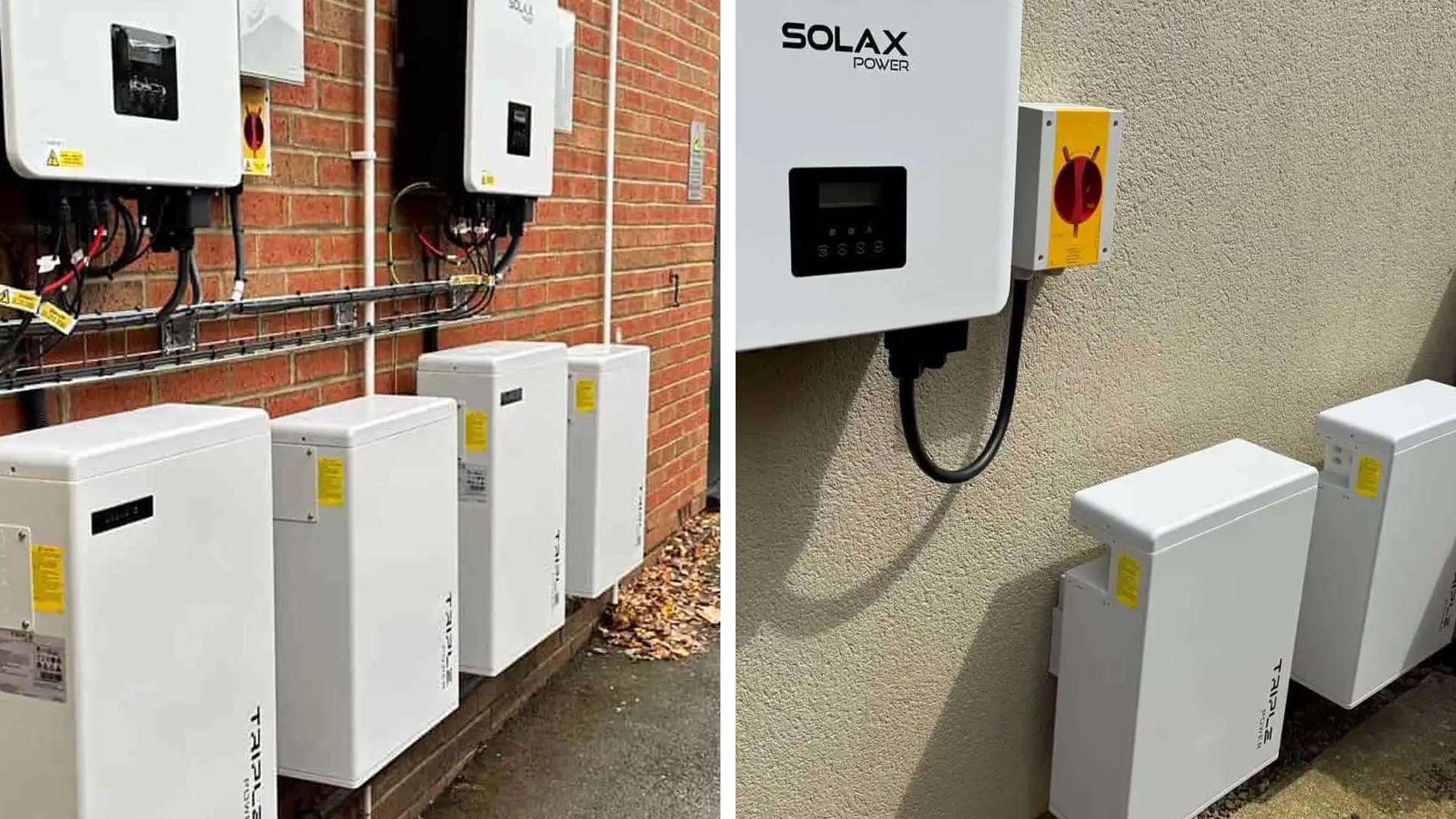
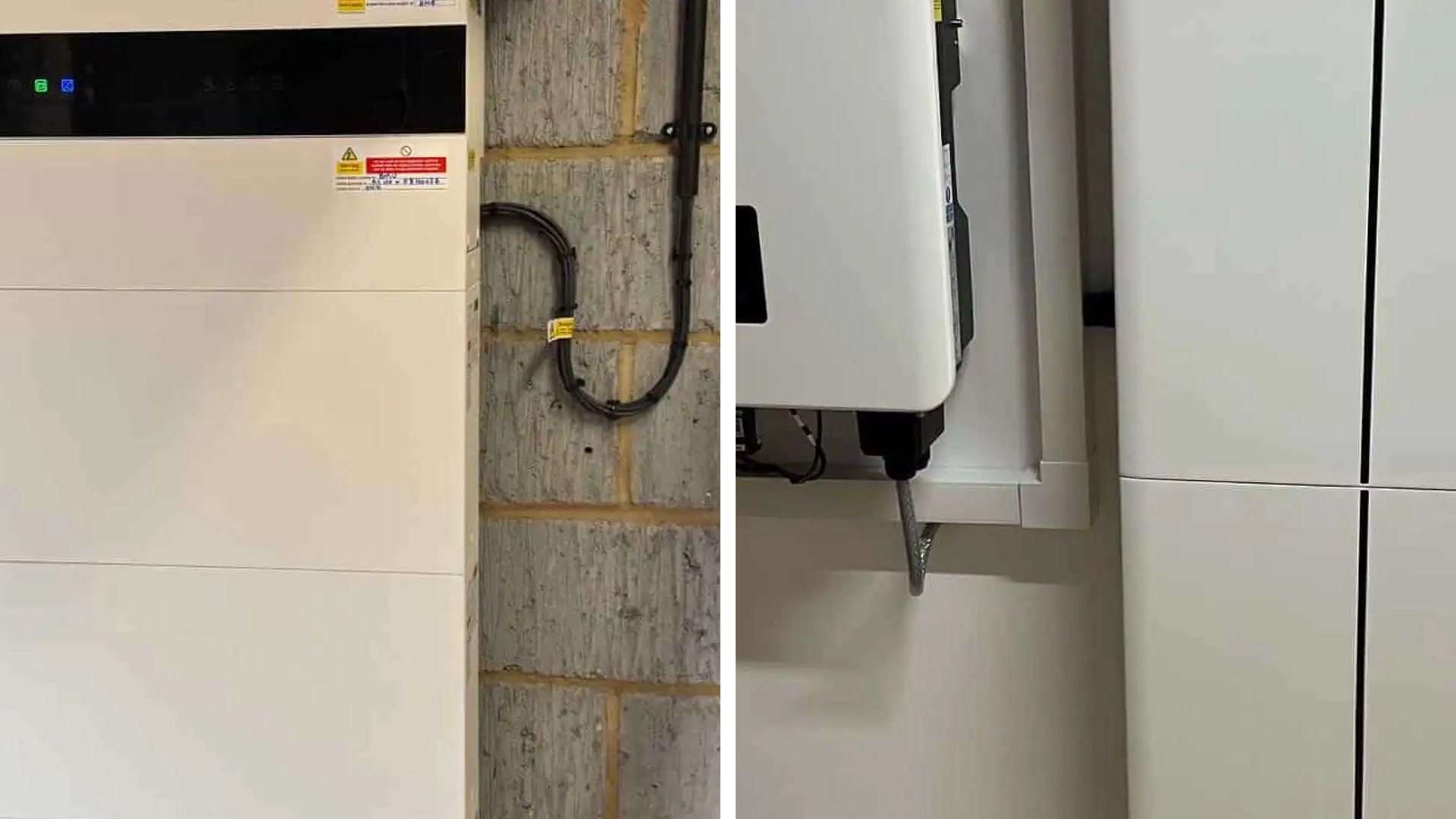
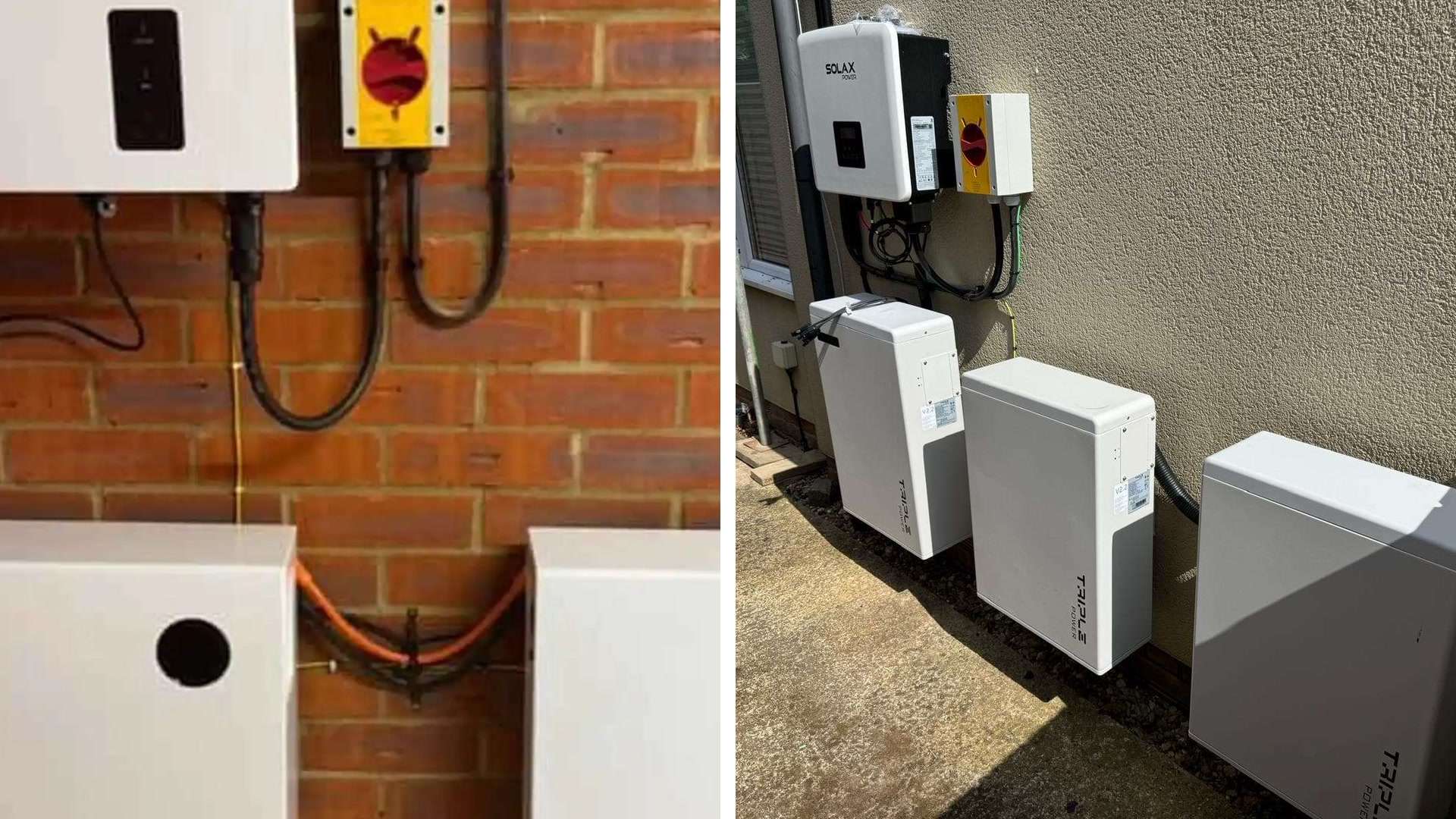
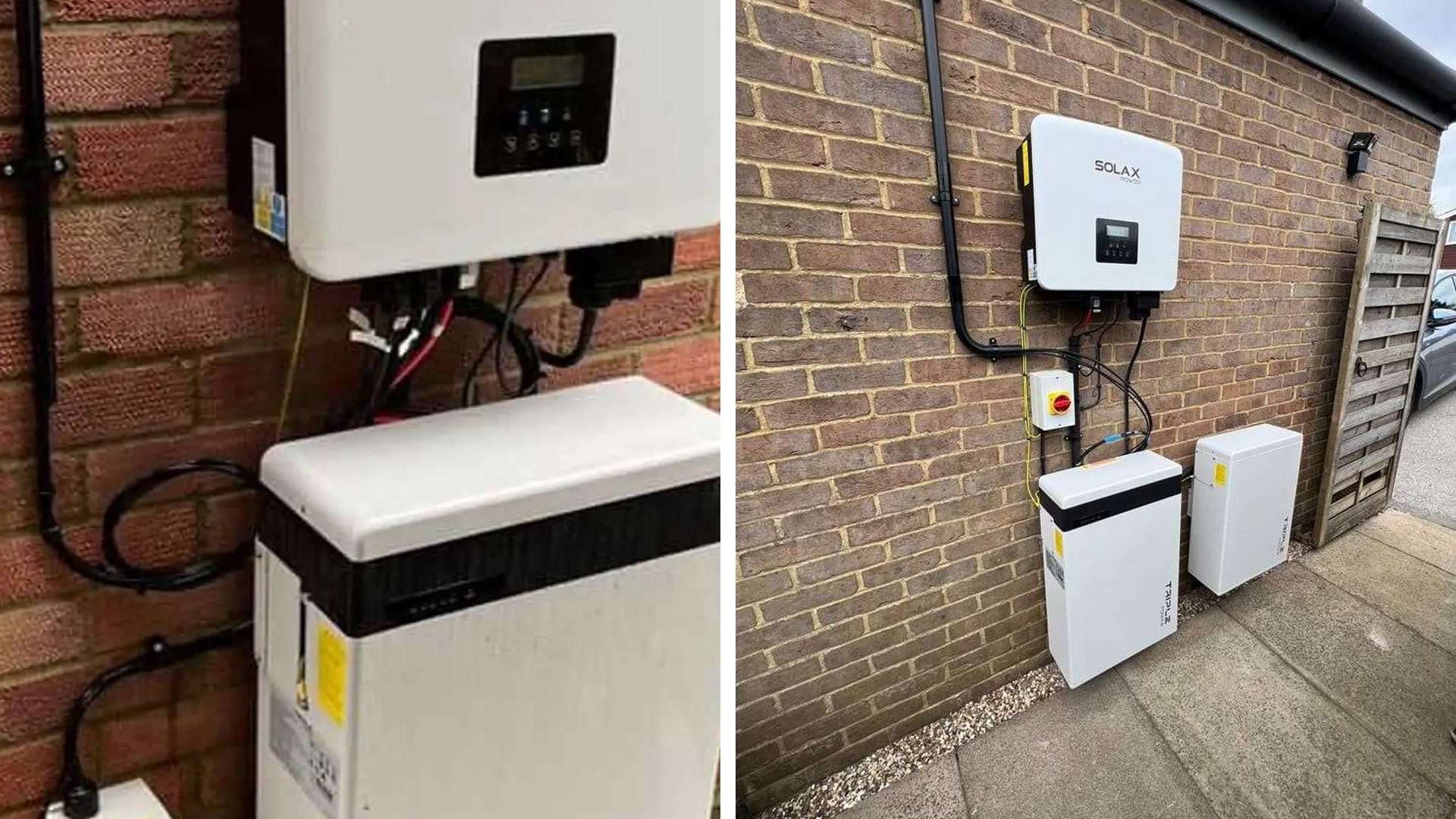
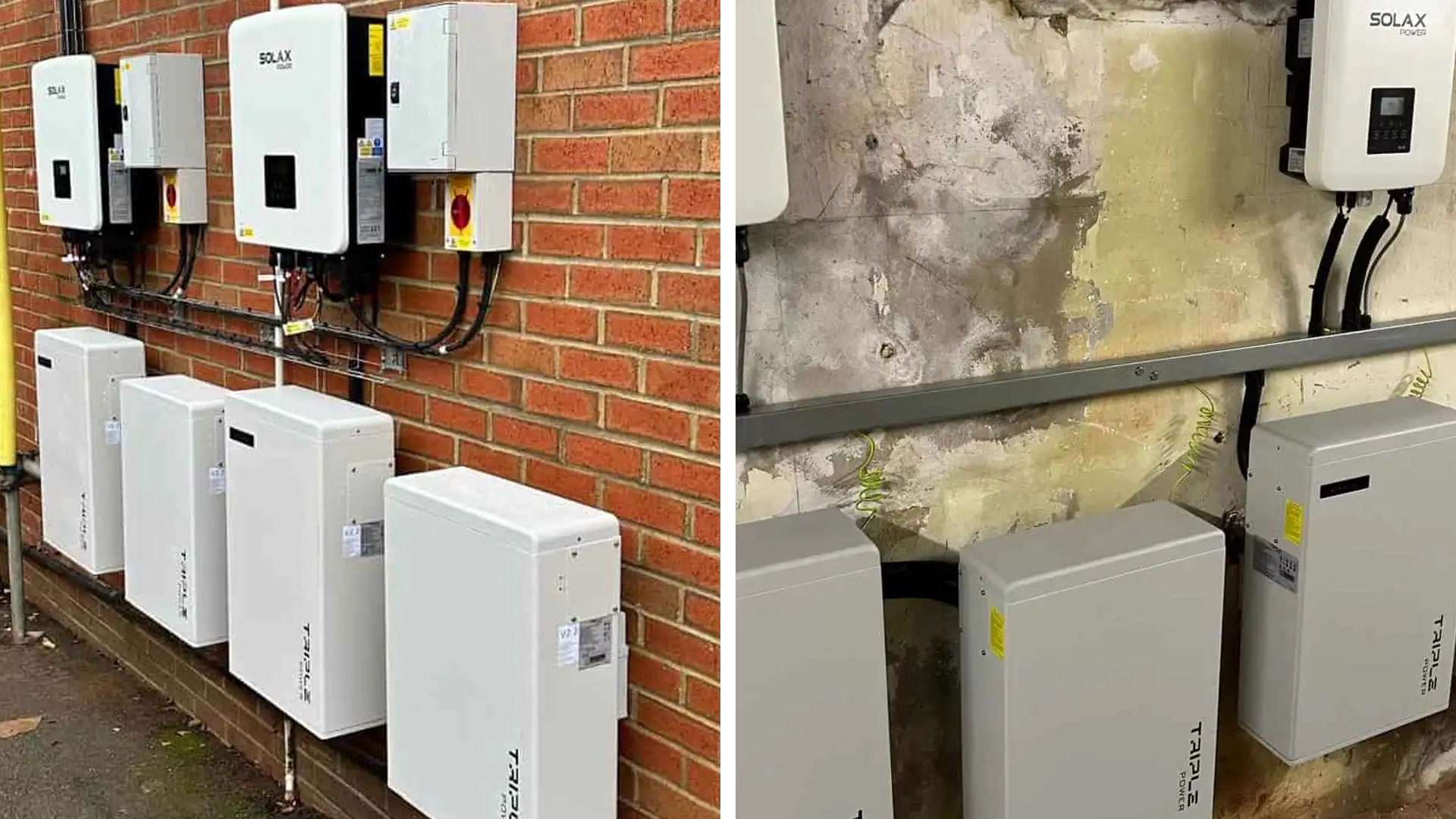
Two units get muddled at quoting stage, and separating them makes the rest of this readable. kWp is the array’s peak capacity, a rating of how much power the panels can produce in ideal conditions. kWh is energy, the quantity a battery holds and the unit your bill is measured in. A 5kWp array and a 5kWh battery have nothing in common except the number, and sizing one from the other appears on quotes more often than it should. The hardware options and how we specify them sit on our solar battery installation page.
The input for battery sizing is not the roof. It is your half-hourly consumption data, which your smart meter already records and your supplier can release to you.
Two numbers come out of that data. First, usable capacity in kWh: how much electricity you draw between the point generation stops covering the house and the point it picks up the next morning. For many family households that evening and overnight block sits somewhere around 4 to 8 kWh outside the depths of winter, which is why 5kWh and 10kWh products dominate the domestic market. Second, power rating in kW: how much the battery can deliver at once. A unit holding plenty of energy but rated modestly for power will not carry an oven, an induction hob and a car charger together, and it will quietly import the difference.
4 to 8 kWh
The evening and overnight draw for many family households outside the depths of winter, which is why 5kWh and 10kWh products dominate the domestic market.
Sizing shifts again on two details most quotes skip over. Usable capacity is not the same as nominal capacity, because lithium batteries are not run to empty, so check which figure a quote is using. And storage can only hold surplus that exists: on a modest array in a house with strong daytime usage there may be very little left over to fill it. That is why we size the array and the storage from one consumption profile in a single exercise rather than treating them as two purchases, the same principle behind every solar PV installation we design.
Capacity beyond what your daily pattern requires sits part empty for most of the year. Capacity you never cycle earns nothing.
Battery Size Set by Your Meter Data
The sizing exercise is unglamorous work, and it is where the money is either made or wasted, so we do it from your meter data before recommending a single kWh.
“We’ve been using Adam for a couple of years now. He’s a friendly, approachable and honest chap, who’s always done a good job and is willing to explain whats needed and why.”
Family Burrell, Google Review
This is where the answer swings hardest, and it has nothing to do with your property. On a flat-rate tariff the battery has exactly one job: store your own surplus and displace evening import at the standard unit rate. Useful from spring to autumn, largely idle in December, when a domestic array in the South East produces a small fraction of its June output.
Move onto a time-of-use import tariff and the same hardware gains a second job. It charges from cheap off-peak electricity overnight and then covers the expensive daytime and evening hours from storage instead of the grid. That works in January, precisely when a solar-only battery would be sitting still. Off-peak windows on smart tariffs currently price electricity at a fraction of the daytime rate, and solar battery storage is worth it in rough proportion to how wide that gap is.
One job: store your own surplus and displace evening import at the standard unit rate.
A second job: charge from cheap off-peak electricity overnight, then cover the expensive daytime and evening hours.
One caution. Tariffs are commercial products and they change. A battery bought on the strength of one supplier’s current off-peak rate is a bet on that rate surviving. Specify hardware that can be controlled flexibly, size it to your real load, and treat the tariff as a strong tailwind rather than the foundation of the case.
The Smart Export Guarantee obliges larger suppliers to pay for the electricity you export, and any MCS-certified installation is eligible to register. Rates are set by suppliers rather than by government, and the spread between the weakest and strongest offers is wide. Ofgem keeps the current picture, and export is metered half-hourly through your smart meter.
Now the arithmetic that decides whether storing beats exporting. Every kilowatt-hour the battery keeps at home is worth the import price you avoid, minus the export payment you gave up by not selling it. On typical domestic pricing, importing costs somewhere around 25p and exporting on a flat-rate deal earns about 2p to 15p, so each stored unit is worth roughly the difference: call it 10p to 23p, before you account for the 10 to 15 percent of energy lost in charging and discharging.
Pence per kilowatt-hour, typical domestic pricing
Importing from the grid
Around 25p
Exporting on a flat-rate deal
About 2p to 15p
Value of each stored unit
10p to 23p
Stored-unit value is before the 10 to 15 percent of energy lost in charging and discharging.
Multiply that by the units a battery can realistically cycle across a year and you have the return. It also exposes the case most sales conversations skip. Land an unusually generous export rate and the spread narrows, round-trip losses eat into what remains, and storage becomes much harder to justify. That is a different question from whether the panels themselves pay back, which we worked through in our honest look at solar payback.
Your Tariff Decides Where the Money Sits
Run the import and export spread against your own tariff and your own usage instead of a national average, and the answer stops being a debate.
“Couldn’t fault Adam. His work truly speaks for itself.”
Ben Miles, Google Review
An installer who cannot describe the cases where their own product loses money should not be trusted on the cases where it wins. Ours:
Very low consumption. A household getting through 2,000 kWh a year has little evening load to cover and little surplus worth keeping. The fixed cost of the battery and its inverter does not shrink to match.
A small array with nothing spare. Storage can only shift electricity that was heading for export. If the array is modest and daytime usage already absorbs most of what it makes, self-consumption is high before you spend a penny, and the battery has nothing to do.
An imminent move. Storage does not reliably return its cost in a sale price, and the payback runs over years.
No sensible location. Batteries want a stable temperature, sensible cable runs and clearance around the unit, which in practice means a garage, utility room or plant space. Compromising on siting to close a sale is how systems end up underperforming or looking wrong on a wall.
Money that would do more elsewhere. On some properties the next thousand pounds buys more in additional panels, loft insulation, or a cylinder that can absorb surplus generation as hot water.
Then there is hardware life, stated honestly. Domestic batteries carry a manufacturer warranty, usually with either a guaranteed remaining capacity or a limit on the total energy cycled through them, and they lose a little capacity each year. Any payback figure that quietly assumes full capacity for two decades is wrong. Households running a heat pump or charging an EV are the clearest exception to most of the list above, because their demand keeps a battery busy year round, and we covered how that demand behaves in our guide to running a heat pump alongside solar.
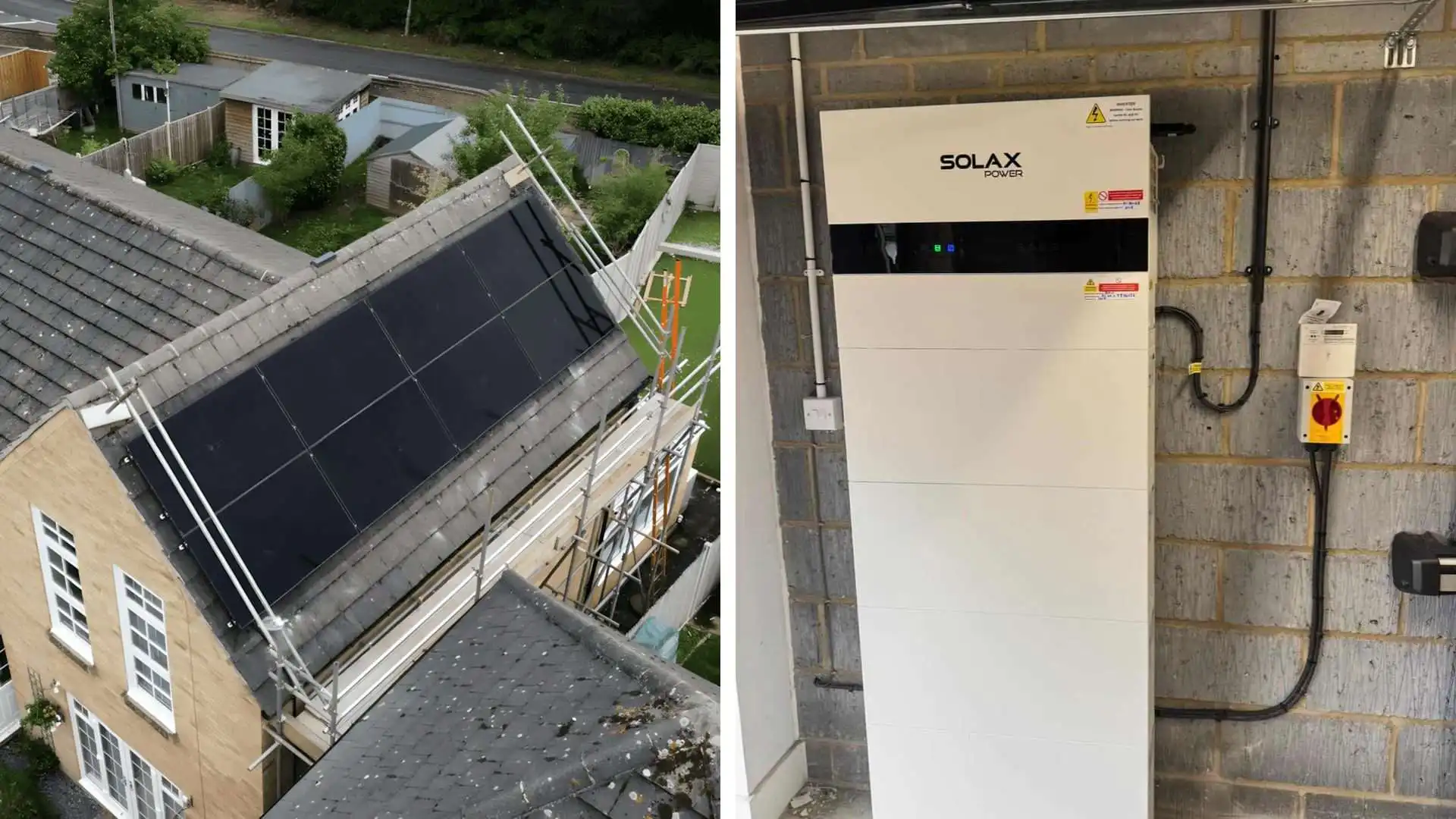
Already have panels? Storage can be added. Buying both together gives you a choice worth understanding, and it comes down to where the battery meets the rest of the system.
DC coupled. The battery sits on the same direct-current side as the panels and shares a single hybrid inverter with the array. Electricity from the roof goes into the battery as DC and converts once on its way into the house, which is marginally more efficient. It is the natural choice when panels and battery are designed together, because the inverter is specified for both from the start.
AC coupled. The battery has its own inverter and connects on the alternating-current side, downstream of whatever inverter your panels already use. Surplus is converted from DC to AC by the solar inverter, back to DC to charge the battery, then to AC again on the way out. That extra conversion costs a few percent in efficiency, and in exchange you get a retrofit that leaves a working solar installation untouched.
| Coupling | DC coupled | AC coupled |
|---|---|---|
| Inverter | Shares one hybrid inverter with the array | Its own inverter, downstream of the solar inverter |
| Efficiency | Marginally more efficient | Extra conversion costs a few percent |
| Natural fit | Panels and battery designed together | Retrofit that leaves a working solar installation untouched |
Neither is correct in the abstract. Retrofitting an existing array, AC coupling is usually simpler and cheaper than scrapping a healthy inverter. Specifying a new system, DC coupling is normally the cleaner build. Doing both at once also collapses the admin into one job: one Distribution Network Operator notification, one scaffold, one commissioning visit, one set of Smart Export Guarantee paperwork. Systems up to 3.68kW per phase are notified to the network operator after commissioning under G98, while larger ones need approval before they are energised under G99, and a battery inverter counts toward that threshold.
Retrofit or a Single Designed System?
Deciding between a retrofit and one designed system takes a short conversation once someone has looked at your existing inverter and your usage data, and that assessment is part of the design work.
“Eco Renewables recently installed a heat pump for my customer and aligned it perfectly with my company’s solar PV system… The installation quality was excellent, and my customer is already seeing improved comfort and energy savings.”
Leon Shead, Google Review
It turns on three things: how much electricity you use in the evening and overnight, how much daytime surplus your array genuinely produces, and the gap between your import price and your export rate. A wide gap plus real evening demand, and it pays. Low consumption plus a small surplus, and it does not.
Size it in usable kWh from your half-hourly consumption data, covering the load between the point generation stops and the following morning. Check the power rating in kW too, because that decides whether it can cover heavy appliances without pulling from the grid.
Yes. An AC coupled battery brings its own inverter and retrofits alongside your existing solar inverter without replacing it. A DC coupled battery shares a hybrid inverter with the array, so on an existing system that route usually means changing the inverter.
Domestic lithium batteries carry a manufacturer warranty, usually with either a guaranteed remaining capacity at the end of the term or a cap on total energy cycled through the unit. Capacity fades gradually rather than failing suddenly, and a payback figure should assume that fade. Our guide to how long solar panels and batteries last sets one published battery warranty beside two panel warranties.
Storing usually wins, because avoiding a unit at the full import price beats selling it for a fraction of that. On an unusually generous export rate the margin narrows, and round-trip losses of 10 to 15 percent make the storage case considerably weaker.
Battery storage qualifies for 0% VAT on qualifying installations through March 2027, including a battery retrofitted to an existing array. There is no grant for solar or storage: the £7,500 Boiler Upgrade Scheme applies to heat pumps in England and Wales only.
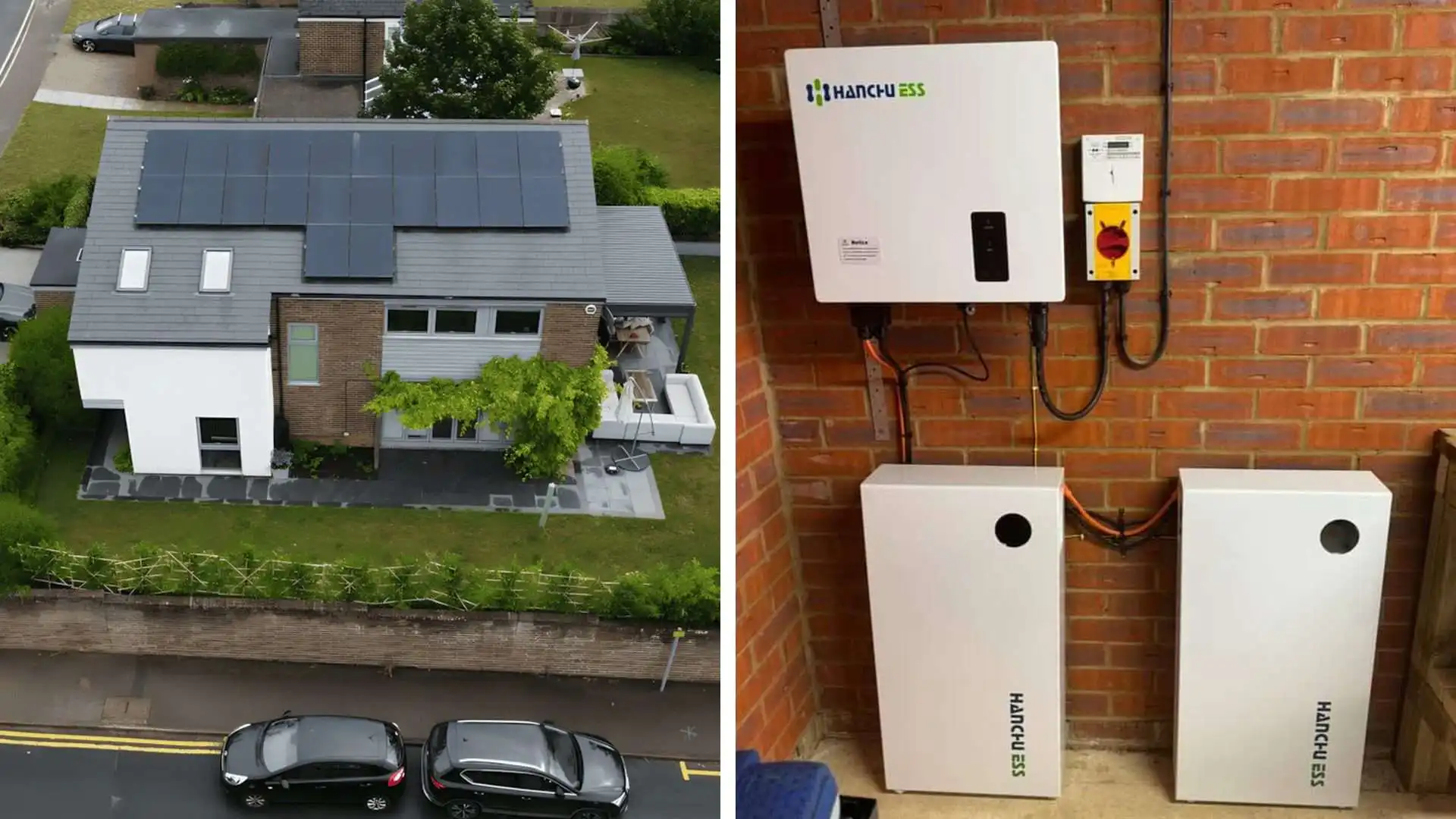
Is a solar battery worth it? For a Berkshire or Surrey household with real evening demand, a decent daytime surplus and a time-of-use tariff, usually yes, and more so each year as heat pumps and EVs push household consumption upward. For a low-usage home with a small array, often no, and nobody should be selling you one regardless.
Telling those two apart requires no guesswork. Your half-hourly consumption data, your tariff, your export rate and your array’s projected output produce a number between them. We run that number as part of the design work, and sometimes the recommendation is to leave the battery out and revisit it when your consumption changes.
More guides from the Eco Renewables blog on the same topic.
24 November 2026
Read the guide
24 November 2026
Read the guide
24 November 2026
Read the guideEco Renewables are trusted by homeowners throughout Berkshire, Surrey, and the South East to provide high-quality solar system installations.
If you're considering a heat pump, the survey is where it starts. We assess the property, run the heat loss calculations, and tell you exactly what the system would look like.
Get My Free Solar Design Pack


