



Solar panel calculator
Solar Panel Calculator: Generation, Savings and Payback for Your Roof
Our solar panel calculator works from your roof, your electricity use and sunlight data for Bracknell. It estimates a year of generation, the share you’d use at home, what the rest earns as export and a simple payback range. Already have a quote? Type it in and the payback runs on your price.

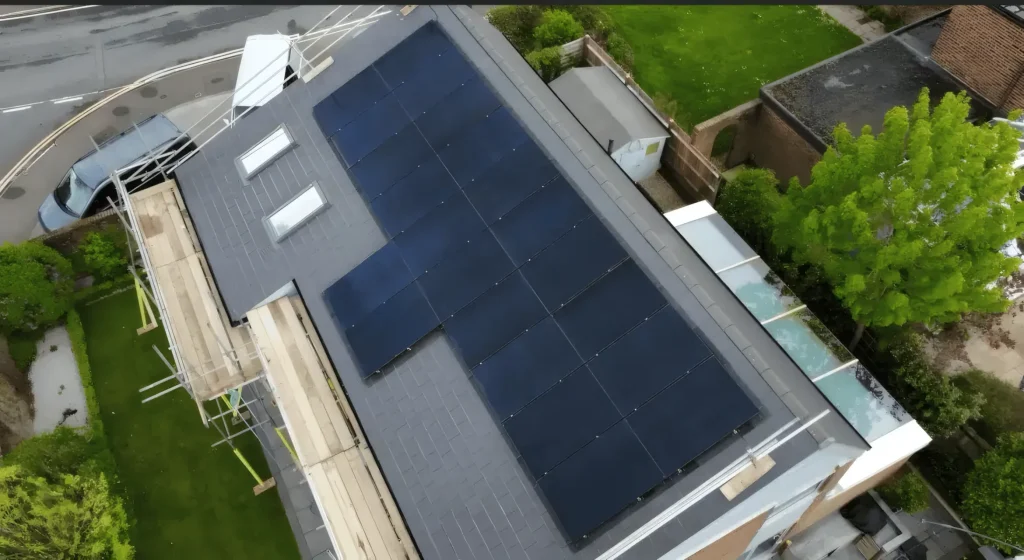











Calculator
Try the Solar Panel Calculator on Your Own Roof
Pick a panel count or a roof area, tell us which way the roof faces and when someone’s home, and the figures update as you type. The same solar calculator gives a payback range: put your installer’s price in the quote box, or leave it blank to use our price bands.
How we worked this out
Generation (what the panels produce)
This solar PV calculator uses PVGIS 5.3 sunlight data from the European Commission’s Joint Research Centre for Bracknell (51.41 N, 0.75 W), with crystalline panels, 14% system losses and a fixed mount. Each roof direction and pitch has its own figure in kWh per kWp a year, from 551 on a 35° north roof to 1,023 on a 35° south roof. Where one option covers two directions, such as east or west, we use the lower of the two. Shade takes off 10% for some and 25% for significant.
How much you use at home
Panels produce most around midday, so the share you use yourself depends on who is in. We use averages for homes like yours (someone in most of the day, half the day or out most of it) and cap self-use at 95% of your yearly use. A battery adds what it can store from spare daytime power, up to 250 full charges a year at 90% efficiency, and the 10% lost in storage counts as neither use nor export. These are averages for typical homes, so treat them as a guide for yours.
Bill saving and export income
Each unit you use from the panels saves the price you pay for electricity, 32.78p by default. Each unit you export earns your export rate, 12p by default. Both figures cover year one, with no price rises and no allowance for panels ageing.
Simple payback
Payback is the system cost divided by the year-one bill saving plus export income. We show a range: the low end assumes 10% more benefit and the high end 10% less. With no quote typed in, the cost side works like a solar panel cost calculator, reading our 2026 prices in a straight line (between our published size bands): from about £4,000 at 1.7 kWp, £6,000 to £7,500 at 4 kWp, £8,500 to £10,500 at 6 kWp and £11,000 to £14,000 from 8 to 10 kWp. A 5 kWh battery adds £4,000 to £5,500 and a 10 kWh battery £6,500 to £8,500. Above 10 kWp the payback uses your quote only.
Rates and dates
Electricity price: 32.78p, the Ofgem price cap unit rate for the Southern England region (all of Berkshire) by Direct Debit, 1 January to 31 March 2027. Much of Surrey sits in Ofgem’s South Eastern England region at 33.29p. Export rate: 12p, Outgoing Octopus variable, Southern region, in force from 1 March 2026. Typical use: Ofgem’s 2026 figure of 2,500 kWh a year for a medium home.
Rates last checked 12 November 2026.
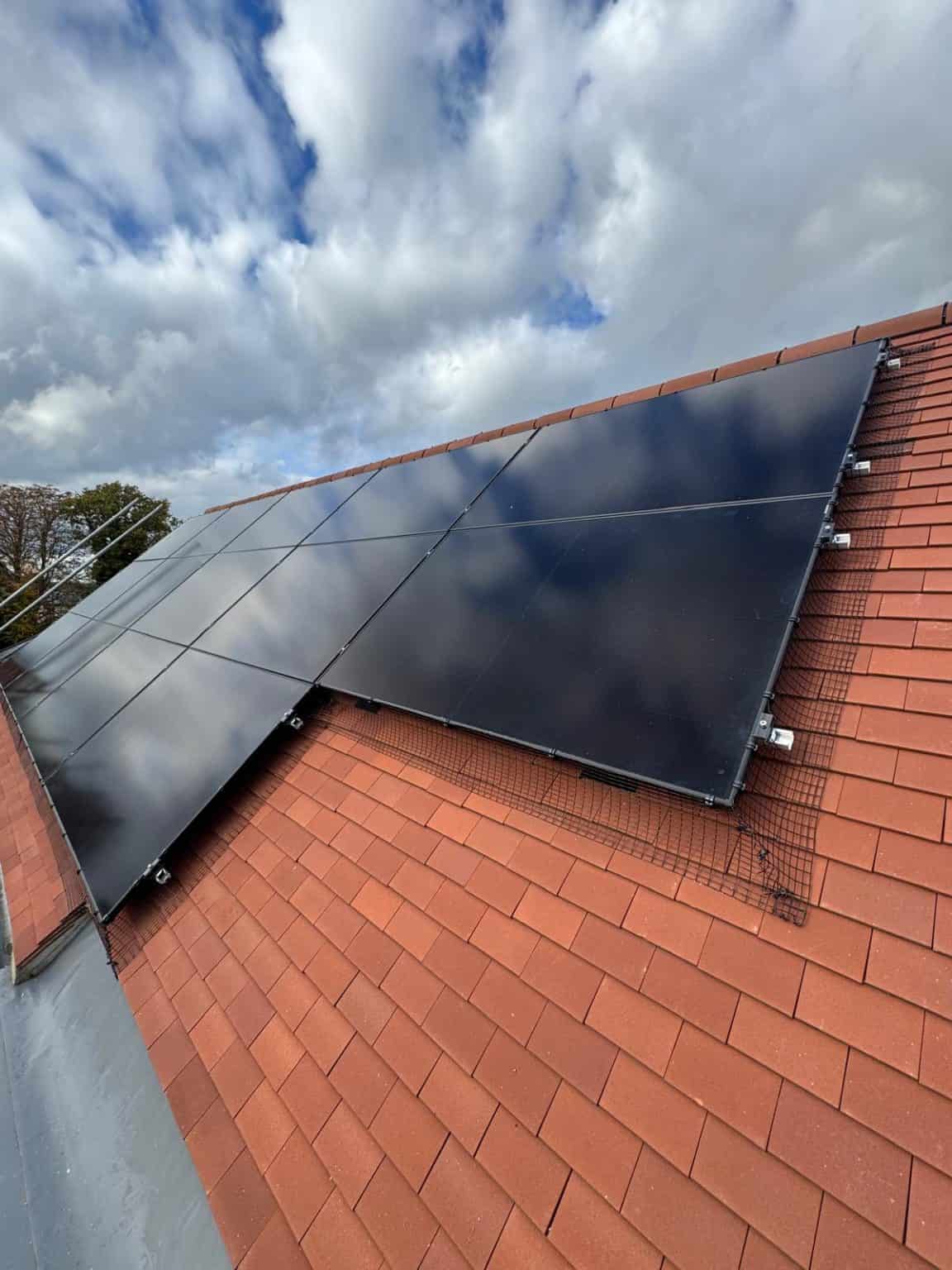
Before you buy
Why Some Solar Panels Earn Less Than They Could
Panels stay on your roof for decades, and the design decides what they save you.
You may be wondering:
Why is our electricity bill still high with panels on the roof?
Was the system sized for our roof and the way we use power?
Is export income worth much on a low tariff?
They're fair questions, and all three come down to how the system was designed for your roof and the way your household uses power. That's why every job starts with a Solar Design Pack, where we work through each one for your roof before anything is ordered.
Why Eco Renewables
Solar Panels Designed Around Your Roof and Your Usage
Adam surveys every solar roof himself, and each design starts from your real electricity use before a single panel is ordered.
Solar Design Pack
Your panel layout, predicted generation, self-use share and an itemised price, on paper before anything is ordered.
Our own roof survey
We no longer pass solar jobs to an outside solar company. Adam checks the roof, the shade and the cable route.
Scaffold on every pitched roof
Every pitched-roof job is worked from scaffold, from the first roof hook to the last panel.
Bird mesh on every array
We fit bird mesh around every array to keep pigeons from nesting underneath.
Follow the Power From Your Roof to Your Sockets
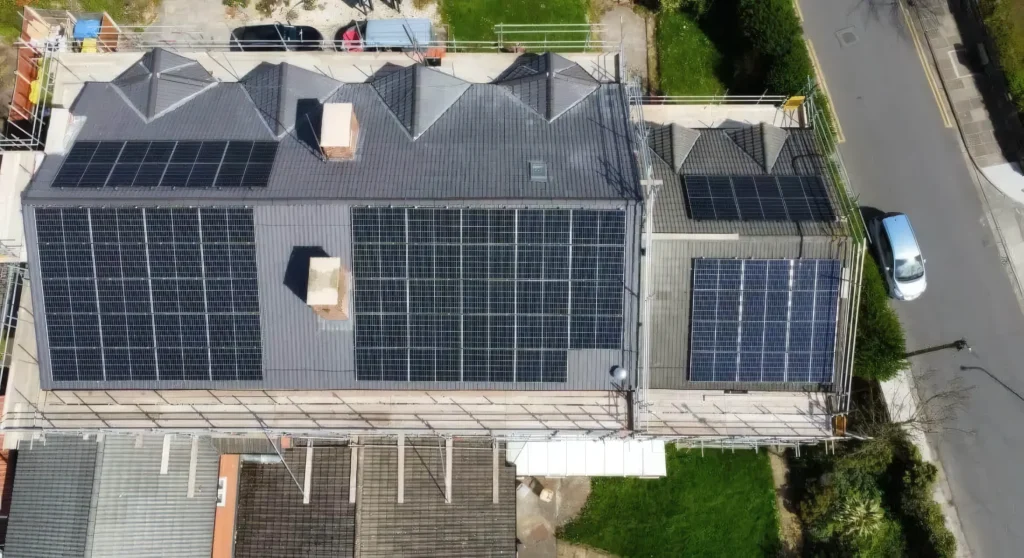
One array on the roof feeds the whole house. Scroll to follow the power from the panels, through the loft and garage, into your home.
- March
- May
- July
- September
- November
- January
Panels on the sunny side
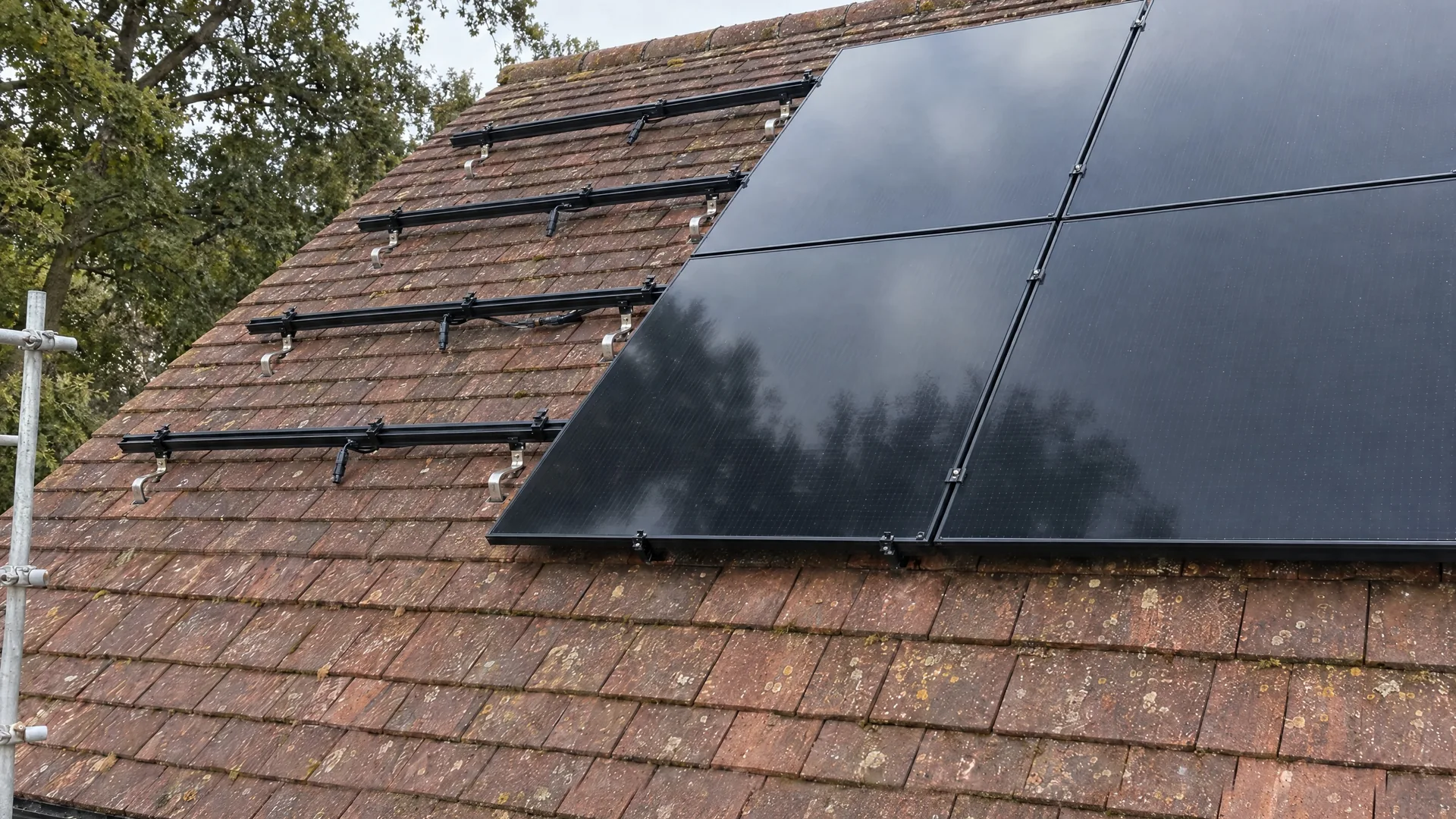
Install day, seen from the scaffold. The panels go on the roof plane that gets the most sun, in the rows your layout fixes before any work starts.
What holds each panel
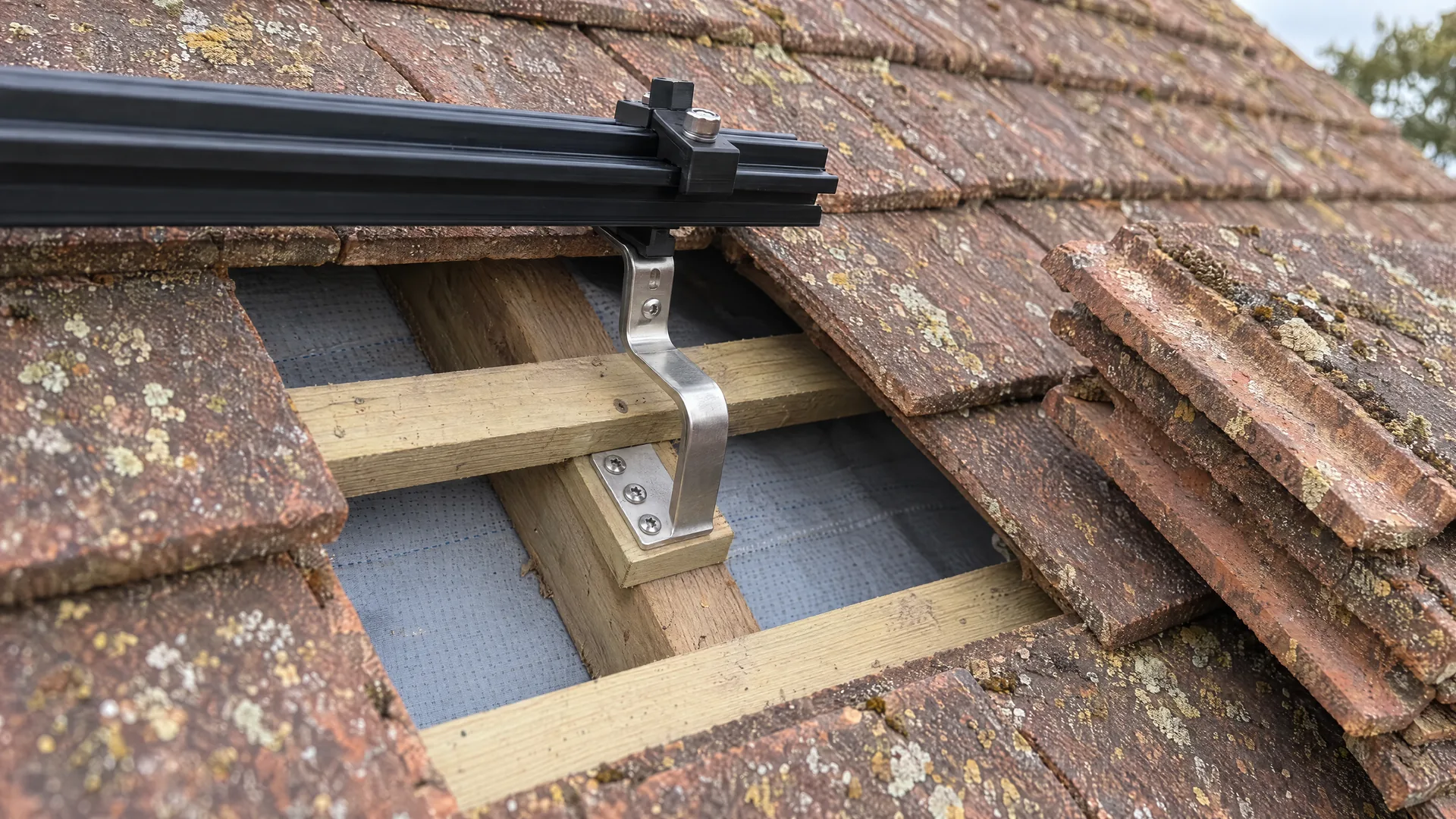
Aluminium rails run across the roof. Clamps grip each panel frame to the rails, and the panel cables clip along them, plugged panel to panel.
Hooks into the rafters
Under each rail, a stainless hook is screwed into the rafter below the tiles. The tiles go back over it, trimmed to sit flat, so the roof stays watertight.
One sealed way in
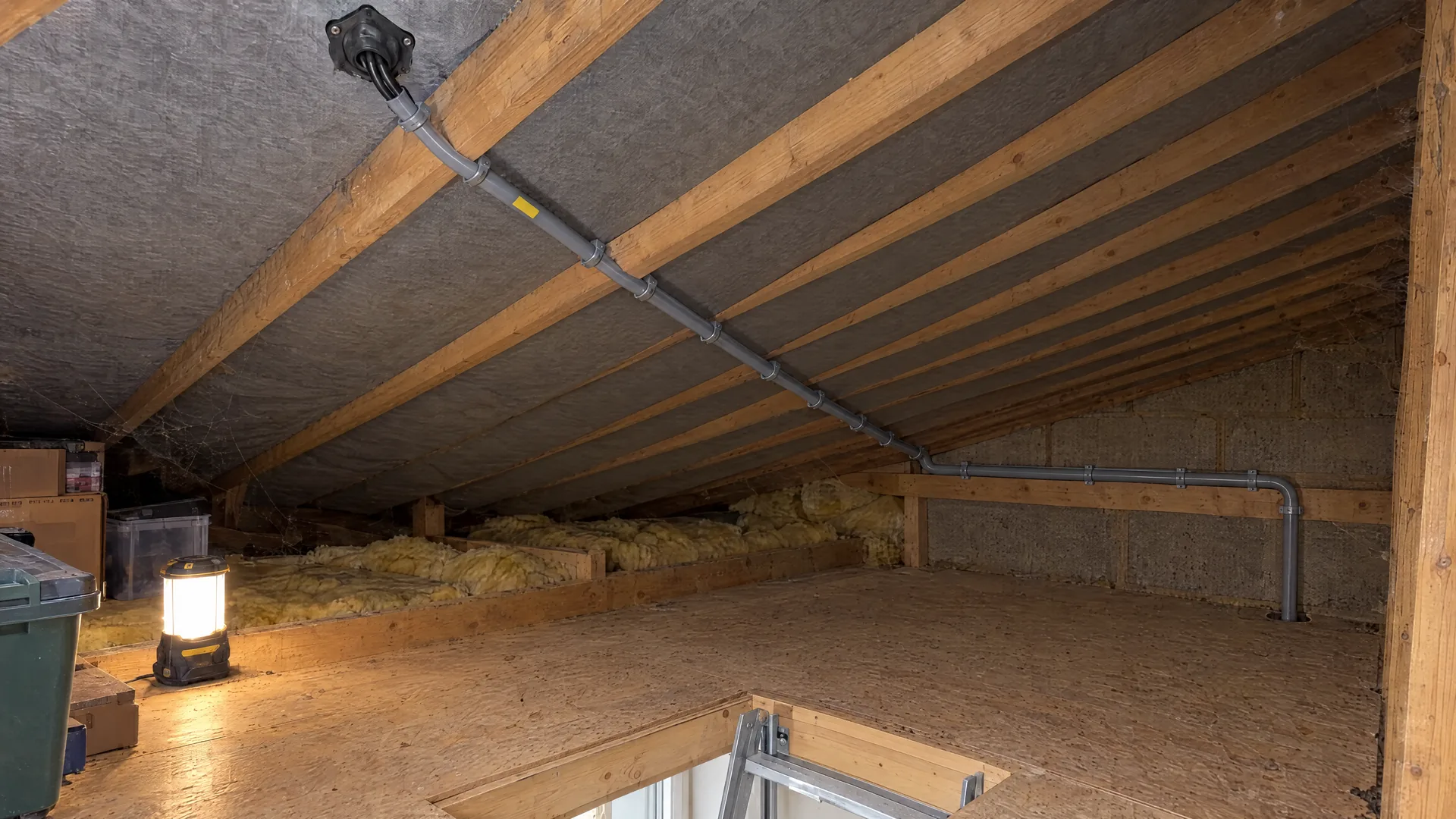
The panel cables come through the roof at a single sealed entry and go straight into protective conduit.
Down to the garage in conduit
The conduit is clipped along the rafters and down the wall, then drops through the floor on the route planned at survey.
Roof switch and inverter
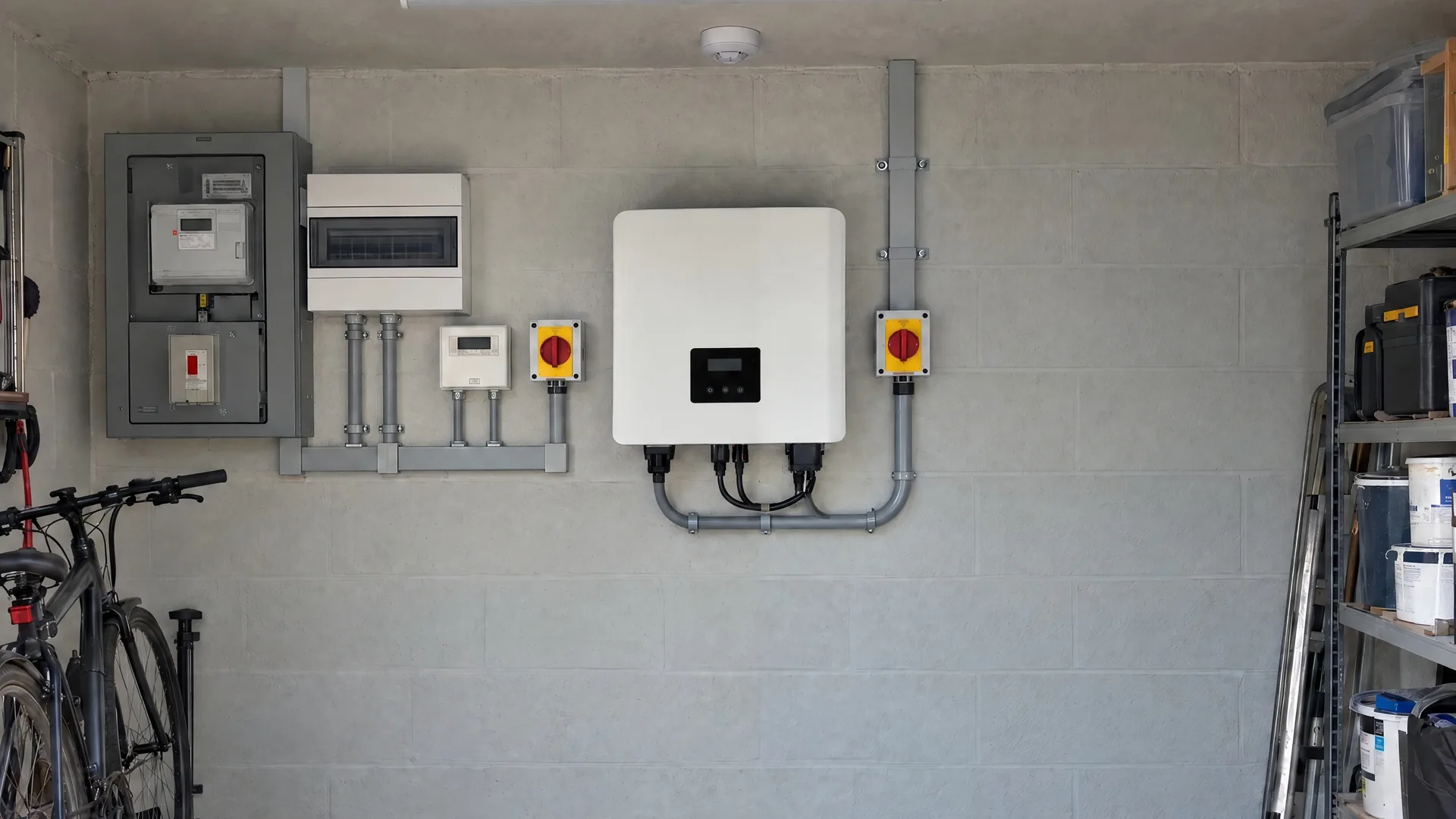
The red and yellow switch isolates the roof so the system can be worked on safely. The inverter beside it turns the panels’ power into the kind your sockets use.
Meter and fuse board
A second switch isolates the inverter. The generation meter counts every unit the roof makes, then the power joins your fuse board: the house uses it first and exports the rest.
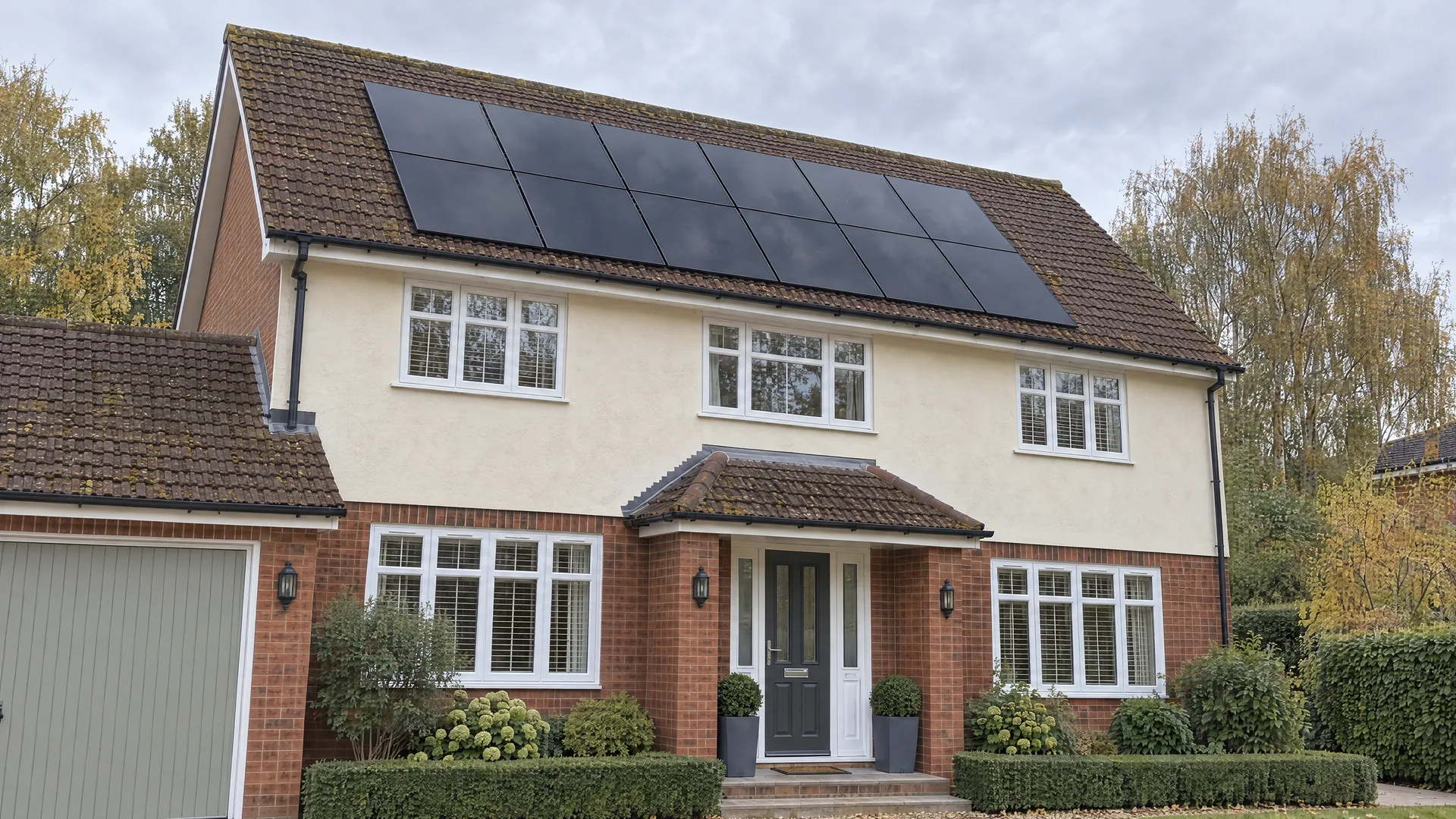
Scaffold down, job done
Twelve panels sit flush with the roof, with clear tile margins at the ridge, the edges and the eaves. From the lawn you see the array, not the fixings.
Your Solar Design Pack
We draw the panel layout, predict what your roof will generate, work out how much you’d use at home and itemise the price. You see all of it before you commit.
Designed for your roof
See the whole system planned before you commit
Your survey sets the panel layout, inverter position and cable route from your electricity use and a plane-by-plane roof survey, with an itemised price before anything is ordered.
What Our Clients Say
Homeowners across Berkshire and the South East trust us with their renewable energy installations.


Yearly output per kWp at a 35° pitch, Bracknell
South
1,023 kWh
South-east or south-west
956 kWh
East or west
801 kWh
North-east or north-west
625 kWh
North
551 kWh
Source: PVGIS 5.3 (SARAH3), 14% system losses, pulled 11 November 2026. Rows that cover two directions show the lower one.
Roof direction and shade
Yearly Generation by Roof Direction and Shade
A south-facing roof at about 35° gets the most from Berkshire sunlight: 1,023 kWh a year for every kWp of panels, by PVGIS data for Bracknell. Turn the same panels to face east or west and they still make 801 to 823 kWh per kWp, about four fifths of the south figure.
North roofs drop to 551 kWh per kWp at 35°, and lower again on steeper pitches. Shade needs more care than direction. A chimney shadow across a few panels can pull down the output of the panels wired with them, so we check shade across the day before anyone draws a layout.
Using more of your own power
Solar Panel Savings Grow With Each Unit You Use at Home
A unit from your own roof saves you 32.78p at the 1 January 2027 price cap rate for our region. Export it on a 12p tariff and it earns less than half that, so the hours your household runs things decide a big part of the saving.
What one unit from your roof is worth
32.78p
saved for each unit you use at home
12p
earned for each unit you export on Outgoing Octopus
Ofgem price cap unit rate for Southern England, Direct Debit, 1 January to 31 March 2027; Outgoing Octopus variable, Southern region.
Three ways to use more of it
Run the big loads in daylight
Put the washing machine, dishwasher and tumble dryer on timers between late morning and mid afternoon, when the panels peak.
Heat water at midday
With a heat pump or an immersion heater, a midday hot water slot sends the panels' output into your cylinder.
Match the calculator to your week
Working from home three days a week? Pick "About half the day" in the calculator and see how the self-use share moves.
Export rates
What Your Spare Solar Units Earn
Your electricity supplier pays for exported units under the Smart Export Guarantee, provided the system holds the certification that makes it eligible, and rates vary a lot between tariffs.
The calculator starts at 12p, the Outgoing Octopus variable rate for the Southern region on 12 November 2026. Type in whatever your supplier offers. A better export rate does the most for homes that are out all day, because more of their generation goes to the grid.
Export rates compared on 12 November 2026
Standard SEG tariff
about 4p
Outgoing Octopus variable, our region
Calculator default
12p
Prime Outgoing Octopus, 4pm to 7pm
16p
Prime Outgoing Octopus, other times
9p
Payback
When Solar Panel Payback Runs Longer
A long payback tends to trace back to one of four things, and the solar panel payback calculator above lets you test each one.
About ¼
of generation used at home
Out most of the day
Self-use can fall to about a quarter of generation, so more units earn the export rate instead of saving the import price.
54%
of a south roof's output
A north-facing or shaded roof
A north roof at 35° makes 551 kWh per kWp a year, about 54% of what a south roof makes.
4p
a unit on a standard SEG tariff
A low export rate
On 4p instead of 12p, each exported unit earns a third as much.
£4,000
for a four-panel array
A small array
Our price bands start at £4,000 for a four-panel array against £6,000 to £7,500 for a 4 kW system, so each kWp costs more on a small roof.
Payback past 25 years on your figures? Check the export rate and your yearly use first. For the wider question, read our guide on whether solar panels are worth it.
See Examples of Our Solar Installations
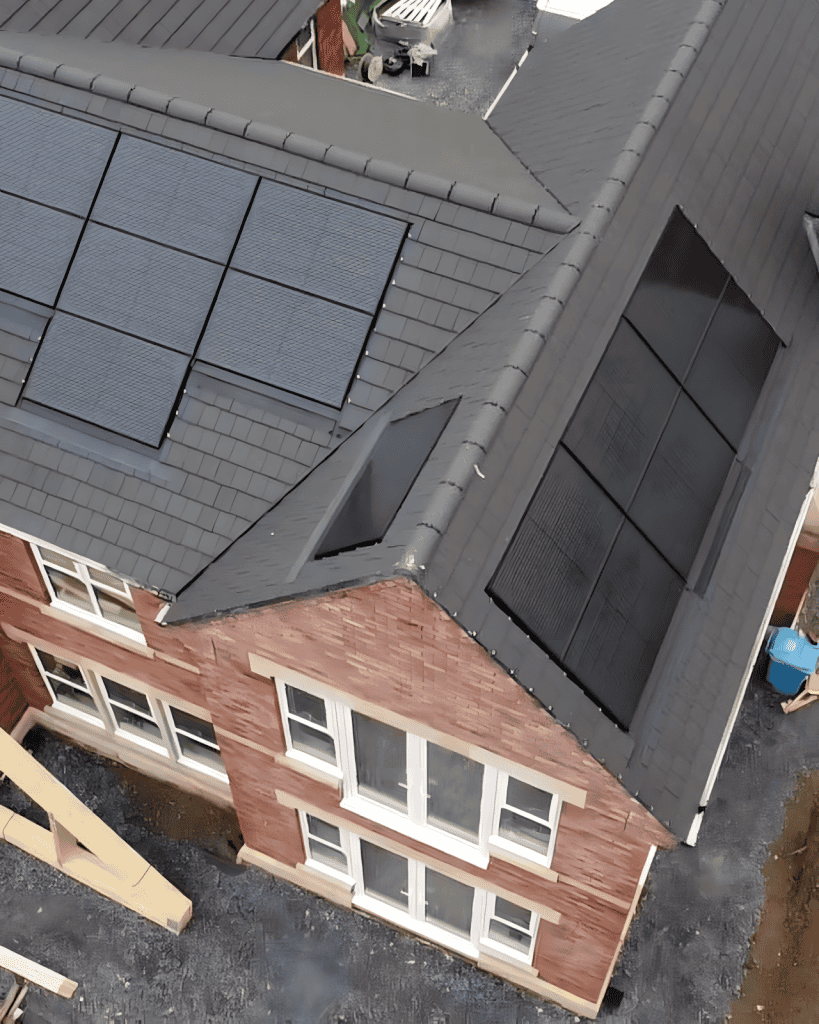
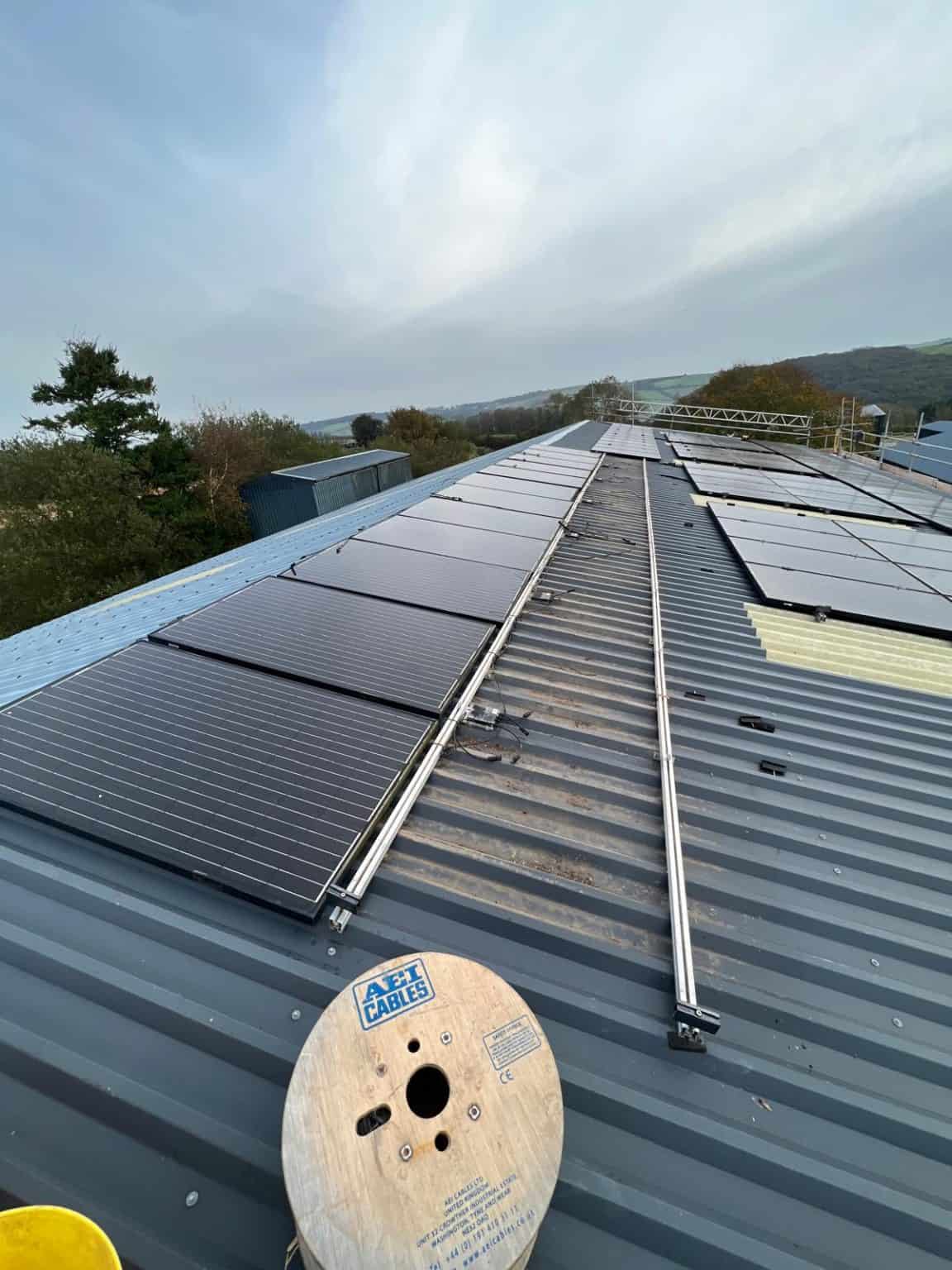
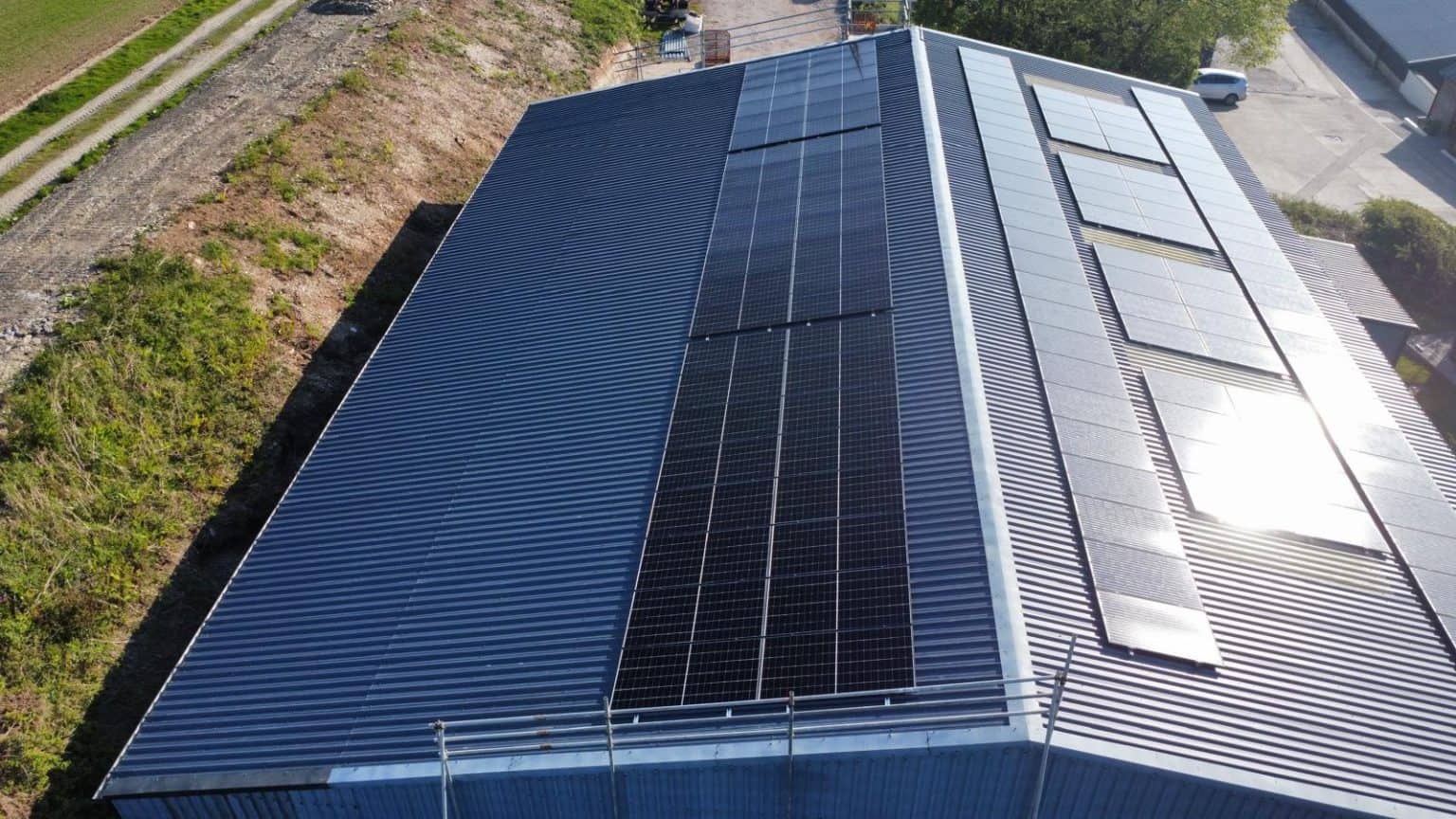
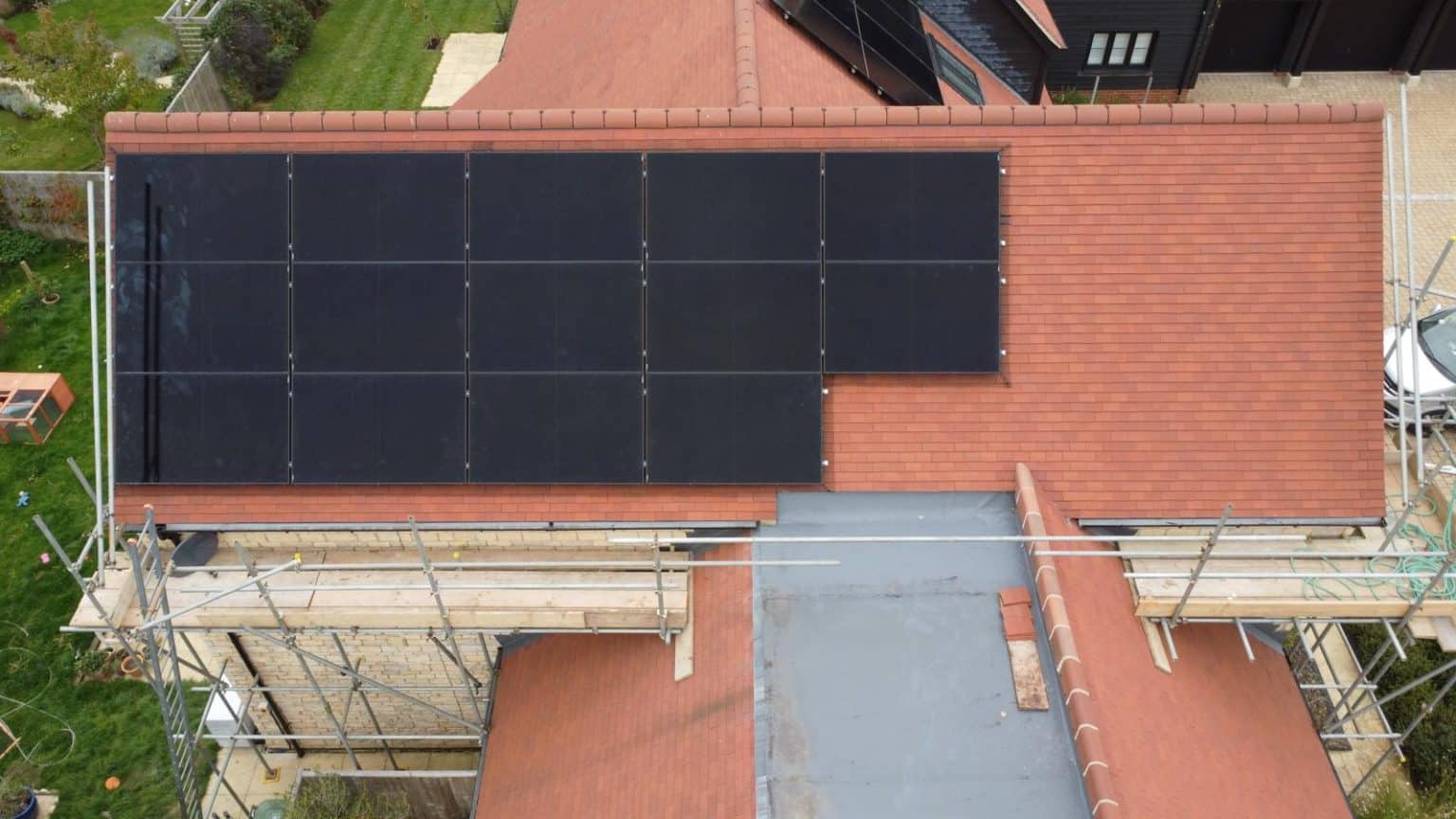
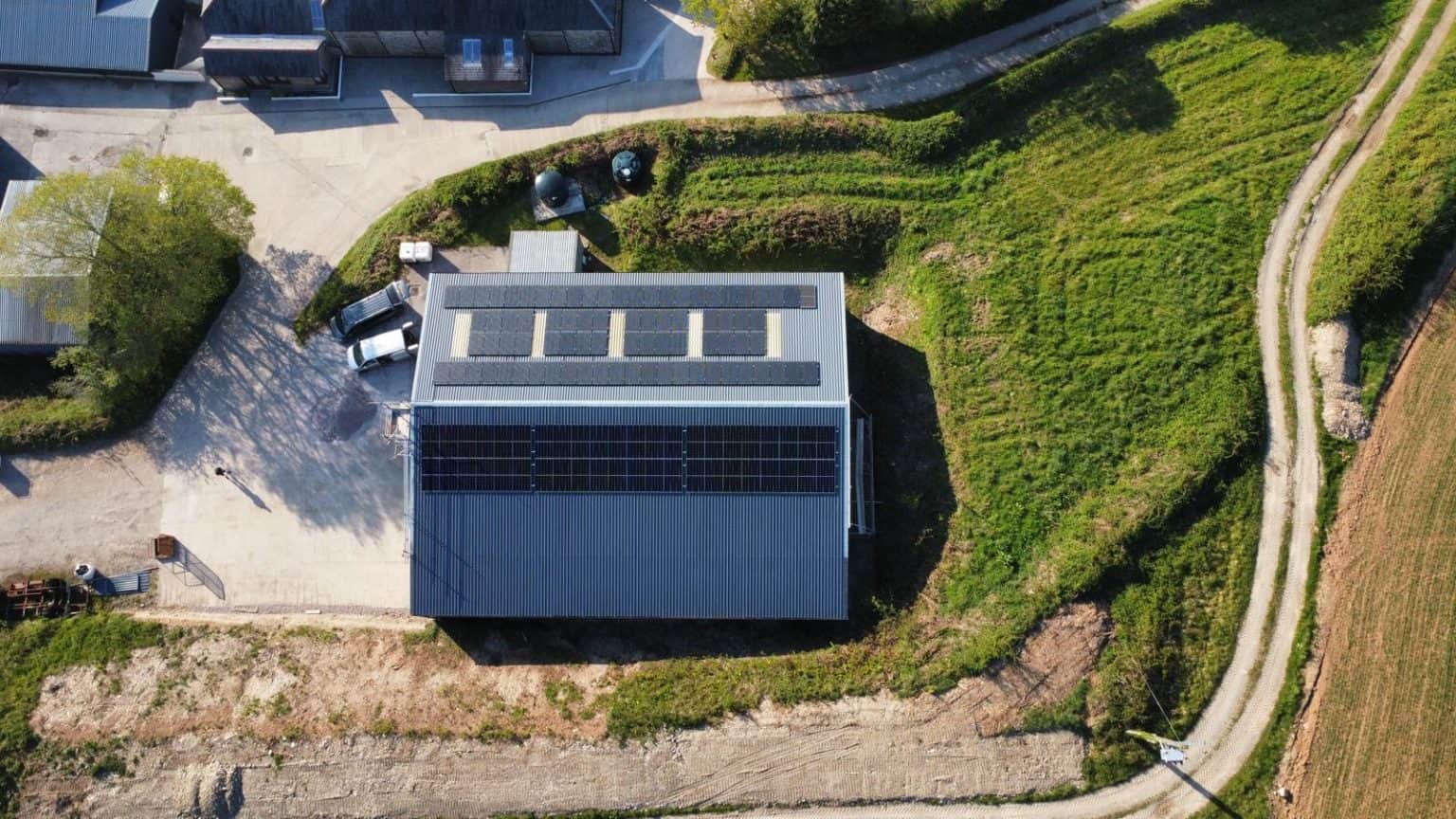
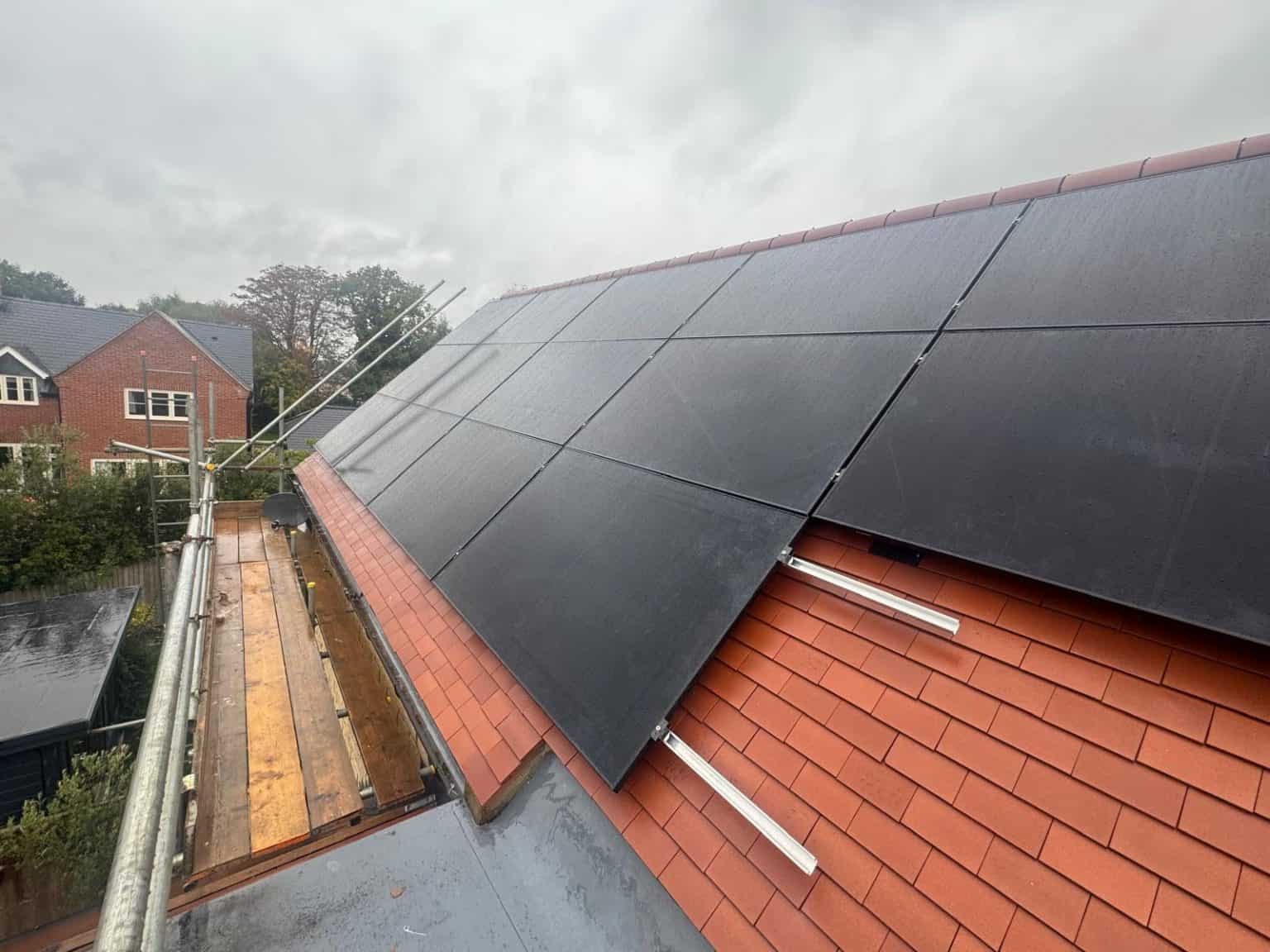
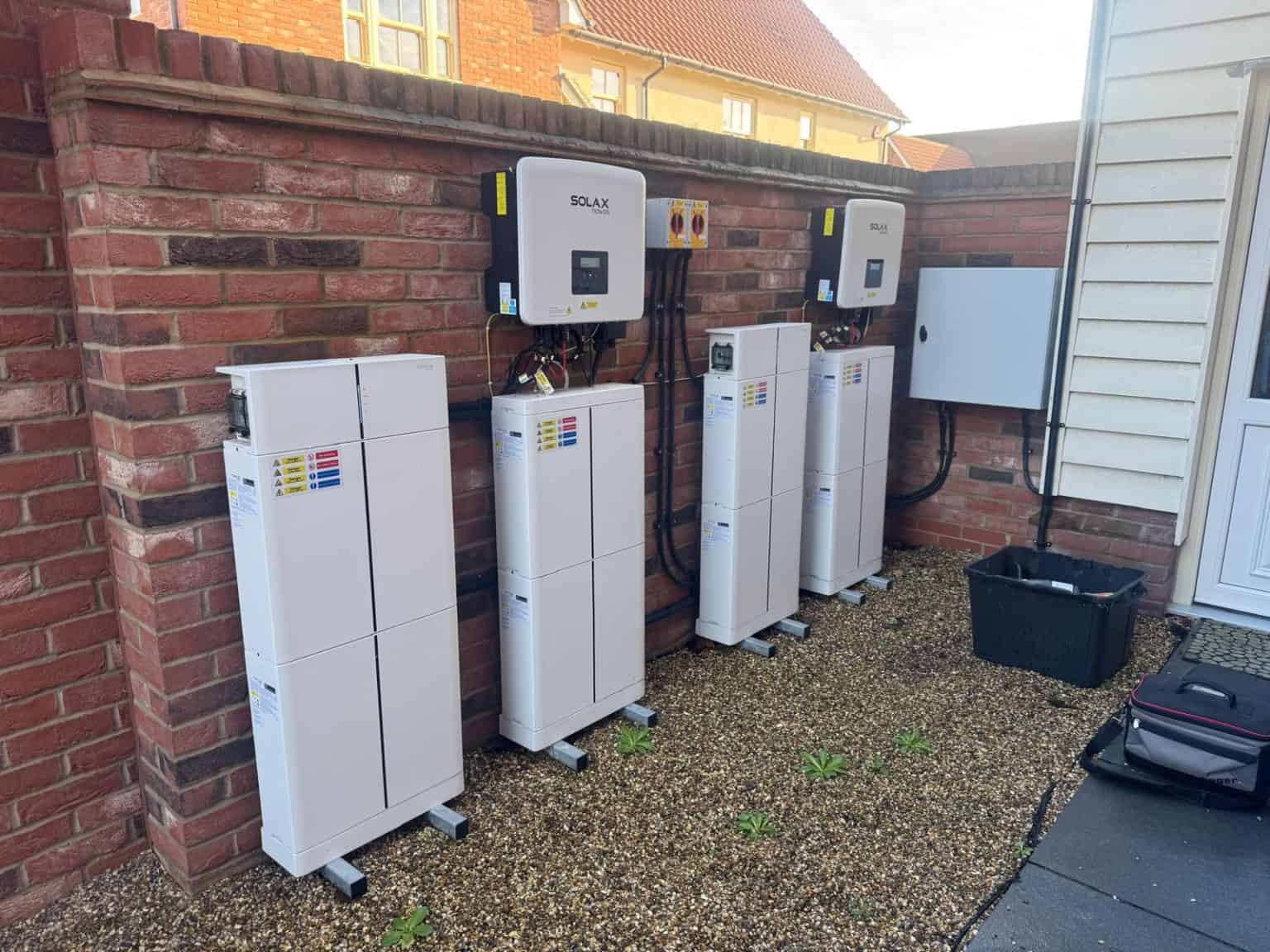
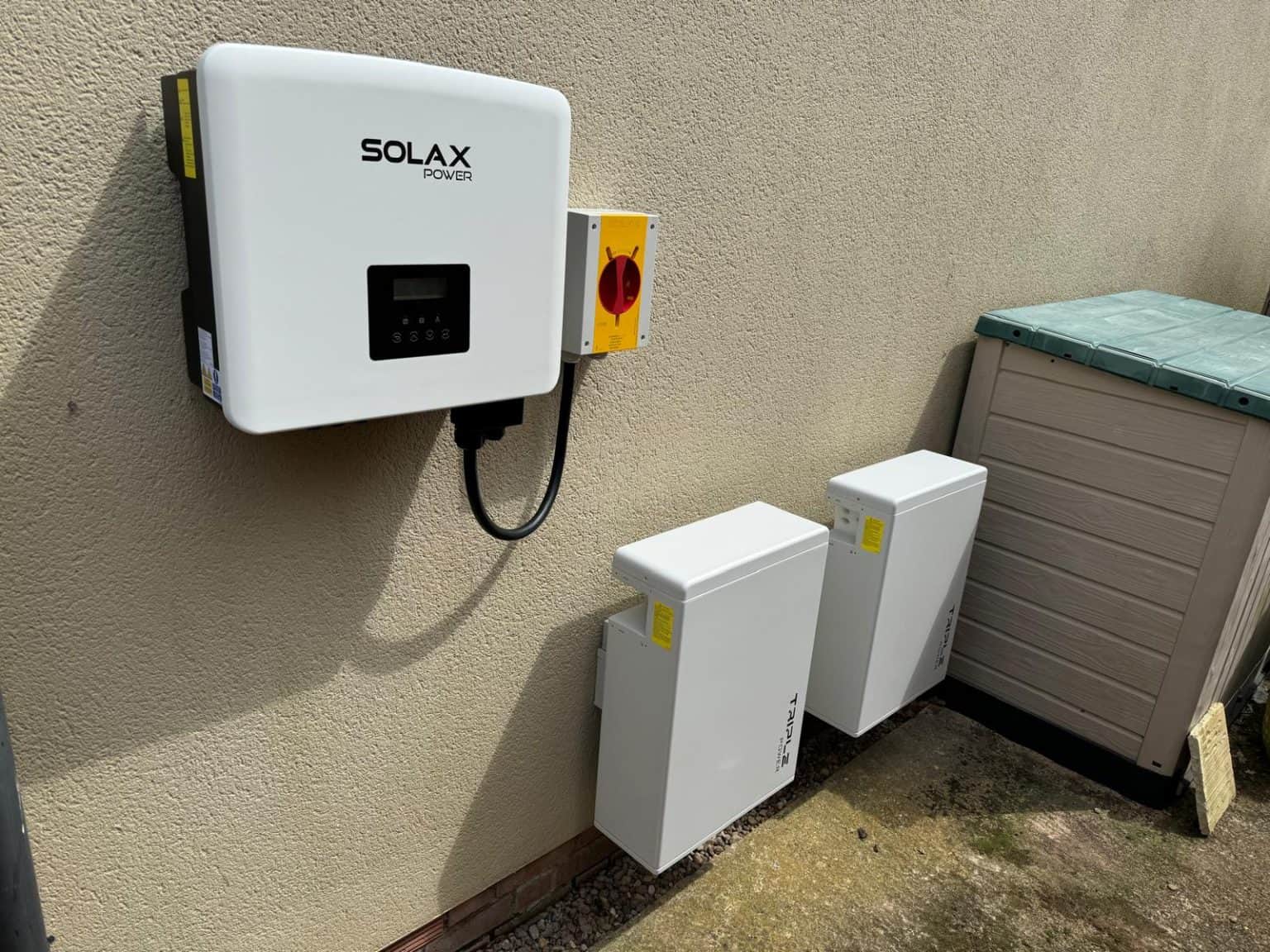
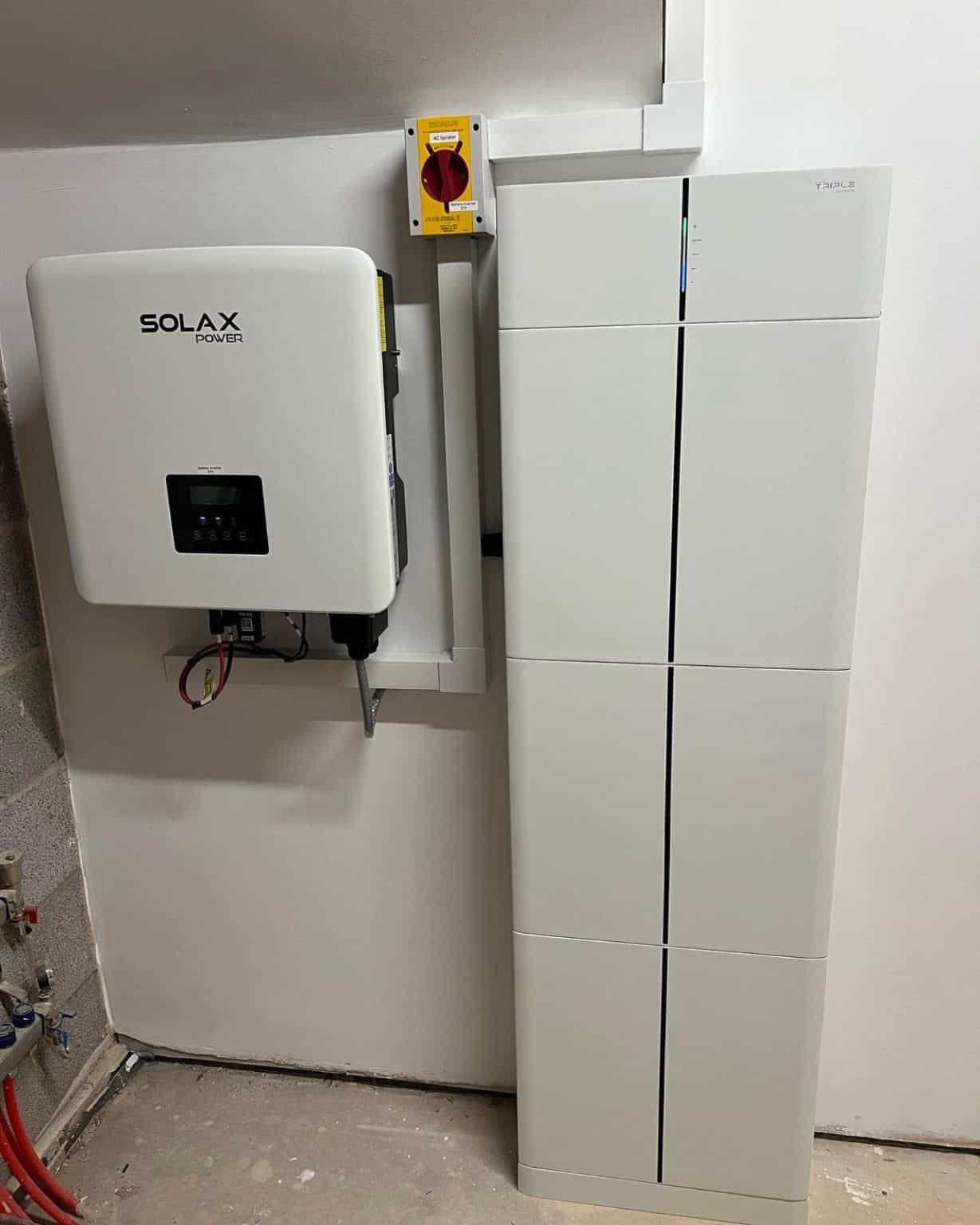
Real solar PV and battery installations from our jobs across Berkshire, Surrey and Buckinghamshire: panel layouts, inverters on garage walls, cable runs and battery set-ups. Start here if you want to picture the finished system on your own roof.
Solar panels
Inverters and batteries
How it works
From Your Estimate to a Fitted Solar System
You see every stage in writing before anyone orders a panel.
Initial Consultation
Send us your bills or smart meter data and tell us what else is in your home, or planned for it. We'll tell you whether solar suits your property. We start with a desktop survey and send you an estimate, then visit to check the roof before the price is fixed.
Get My Free Solar Design PackProperty Assessment
We survey each roof plane for orientation, pitch, shading and structural condition. Your layout and predicted generation come from your own roof, not a national average.
System Design and Installation
Once you sign off the Design Pack, we fit the system to it, labelled to DNO standards. If anything changes on site, you get the price before extra work starts. Every pitched roof is worked from scaffold, and every array gets bird mesh as standard.
Commissioning and Support
We test the system against the design before sign-off, then walk you through the monitoring app: what a good June day and a grey December week look like.
Your Solar Design Pack
Inside Your Free Solar Design Pack
Your Design Pack puts the design for your roof on paper before any equipment is ordered. Put it next to any other quote and compare the two line by line.
1
Panel layout
The layout shows where each panel sits on your roof, drawn from what the survey found.
2
Predicted generation
An estimate of what the panels should generate on your roof, month by month across a year.
3
Share used at home
How much of that output you'd use at home, and how much would go to the grid as export.
4
Battery recommendation
A yes or no on a battery for the way your household uses electricity.
5
Itemised cost
The price line by line: panels, inverter, any battery, scaffolding and cabling.
Solar calculator questions
Solar Panel Calculator FAQs
Generation uses PVGIS sunlight data for Bracknell at your roof's direction and pitch, so it reflects an average year on an unshaded Berkshire roof. Self-use and payback rest on averages for homes like yours. A roof survey is the step that replaces them with your shade and your real usage.
Panels make most of their power around midday. A household with someone in uses more of it there and then, and each of those units saves 32.78p against 12p for exporting it. Out all day, more of your generation goes to the grid at the lower rate.
A battery raises the share you use at home and adds its own cost: £4,000 to £5,500 for 5 kWh in our 2026 price bands. Run it as a solar panel and battery calculator, then again without the battery, and compare the two payback ranges. Your Design Pack gives a yes or no for your household.
Choose Roof area and the calculator allows 2 m² per panel, spacing included, so 20 m² of clear roof takes 10 panels. Vents, roof windows and edge gaps cut that down on the day. Our guide to how many solar panels you need starts from your usage instead.
We no longer pass solar jobs to an outside solar company, and Adam surveys every solar roof himself. Scaffold goes up on every pitched-roof job, and we fit bird mesh around every array to keep pigeons from nesting underneath. More detail sits on our solar panel installation page.
It starts from a survey of your roof and a look at your real usage. You get the panel layout, predicted generation, your self-use share and an itemised price on paper before anything is ordered, so you can set it beside any other quote.
Get the Figures for Your Own Roof
We survey the roof, read your usage and put the design on paper, so you can hold it against any other quote.
Panel layout
Predicted generation
Your self-use share
Itemised price