



Heat Pumps
Heat Pump vs Gas Boiler: An Honest 2026 Comparison for Berkshire and Surrey
By Adam Dare
Heat Geek trained installer
Updated 25 November 2026
Reading time
🎉 Named South East Heating Installer of the Year 2026
Your gas boiler is getting on, or you are part way through a renovation, or your energy bills have jumped and you are wondering whether a heat pump is the smarter move. You have read that heat pumps are the future, and you have also read horror stories about cold houses and sky-high bills. Both versions are out there, and neither is the whole truth. This is an honest comparison for Berkshire and Surrey homes: where a heat pump genuinely wins, where it is marginal, and where a modern gas boiler is still the sensible choice. No overselling.
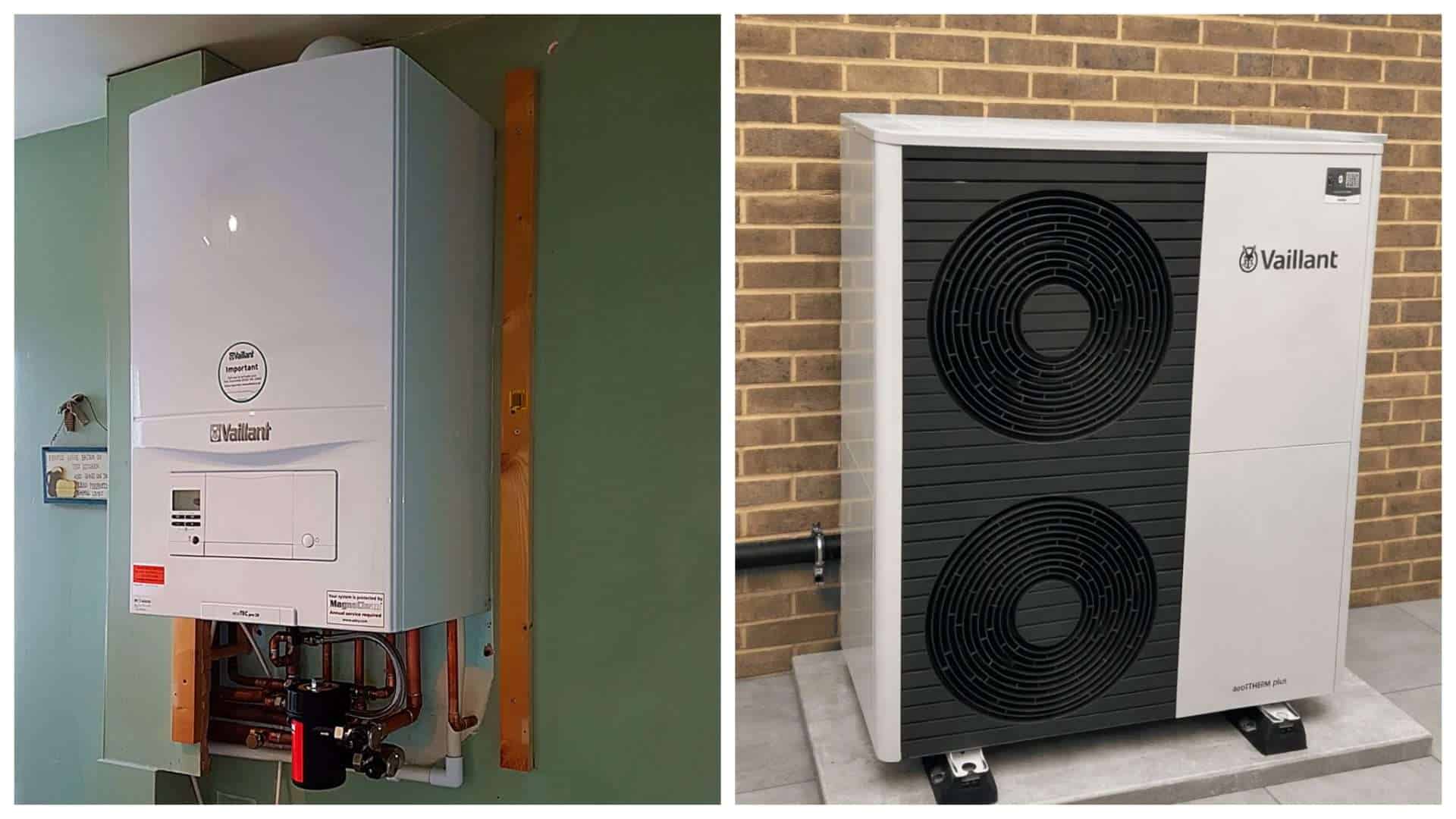
Here is the comparison across the factors that actually matter, and how to decide for your specific home.
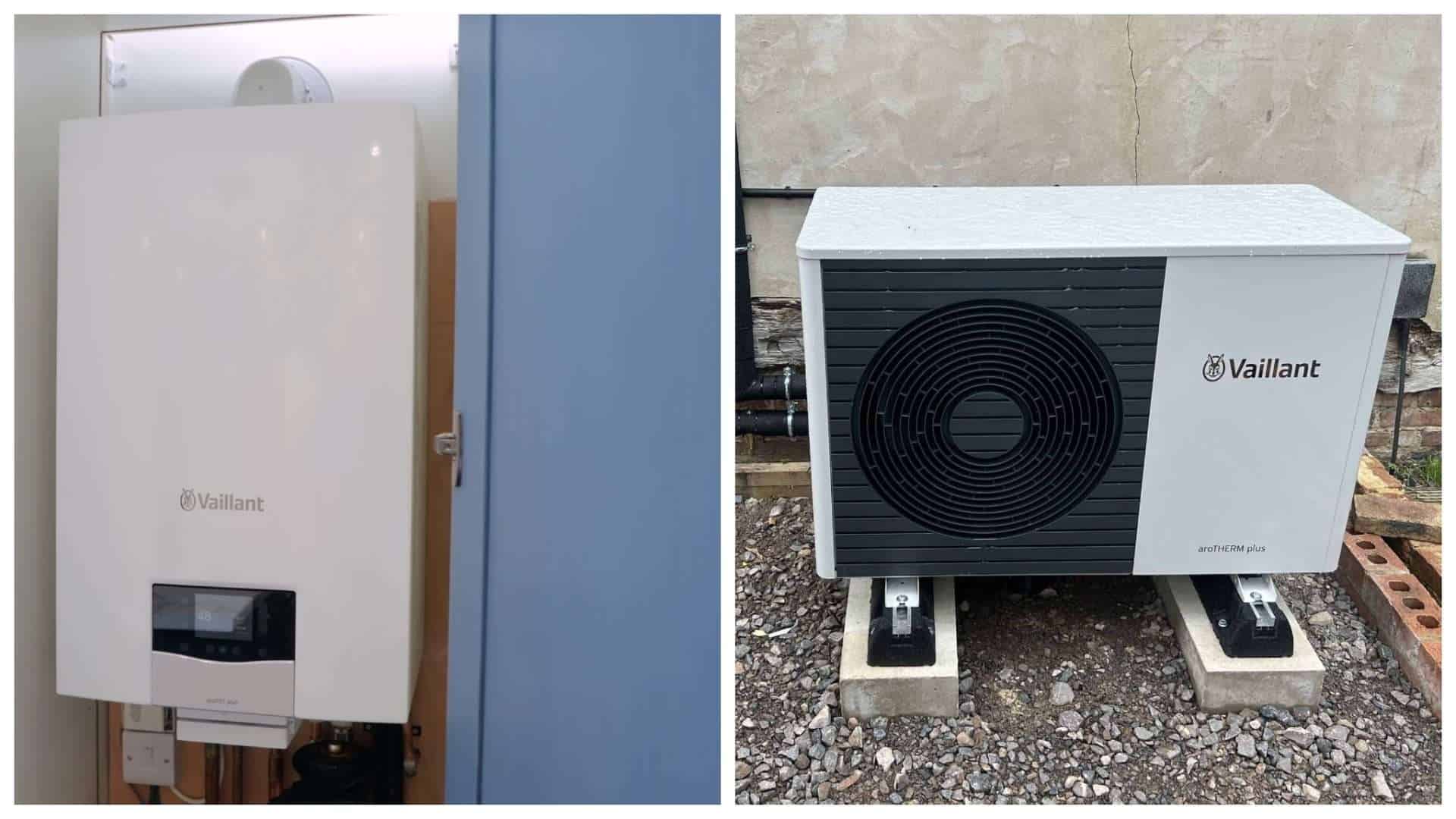
For most well-suited homes across Berkshire and Surrey, a properly designed heat pump wins on running cost, efficiency, and carbon. A modern gas boiler wins on upfront cost and simplicity. That is the short version, and the rest of this guide is the detail behind it.
| Factor | Modern gas boiler | Air source heat pump |
|---|---|---|
| Upfront cost, fitted | £2,000 to £4,000 | £10,000 to £18,000 before the £7,500 grant, with 0% VAT |
| £7,500 BUS grant | Not applicable | Comes off the price for eligible installations |
| Efficiency | Around 90% at best | 300% to 400% (a SCOP of 3 to 4) |
| Running cost | Baseline | Usually lower with a good design and smart tariff |
| Typical lifespan | 10 to 15 years | 15 to 20 years or more |
| Heat delivery | Rapid, hot, on demand | Steady, even, continuous |
| Carbon | Fossil fuel | Low, and falling as the grid decarbonises |
| Fitting disruption | Low, like for like | Moderate, usually 2 to 4 days |
The single most important thing to understand before you read another comparison: a heat pump’s performance is decided by how well it is designed for your specific property, far more than by the brand on the unit. A well-designed air source heat pump installation delivers the running costs and comfort in the right-hand column. A badly designed one gives much of that advantage back. Keep that in mind through everything below, because it is the difference between a heat pump being the better choice and being a regret.
The honest answer to “heat pump or gas boiler” is not the same for every home. It depends on your property, how you use it, and how long you are staying.
Test the Verdict Against Your House
The free Heat Pump Blueprint sets out your room-by-room heat loss, radiator schedule, flow temperatures and hot water plan, so the comparison runs on your numbers.
“I contacted a number of companies and had read up extensively on heat pumps before going ahead with Adam of Eco Renewables so I was confident in choice of installer… Anyway two months in and the house is warm and the scop is looking good.”
Andrew Symes, Google Review
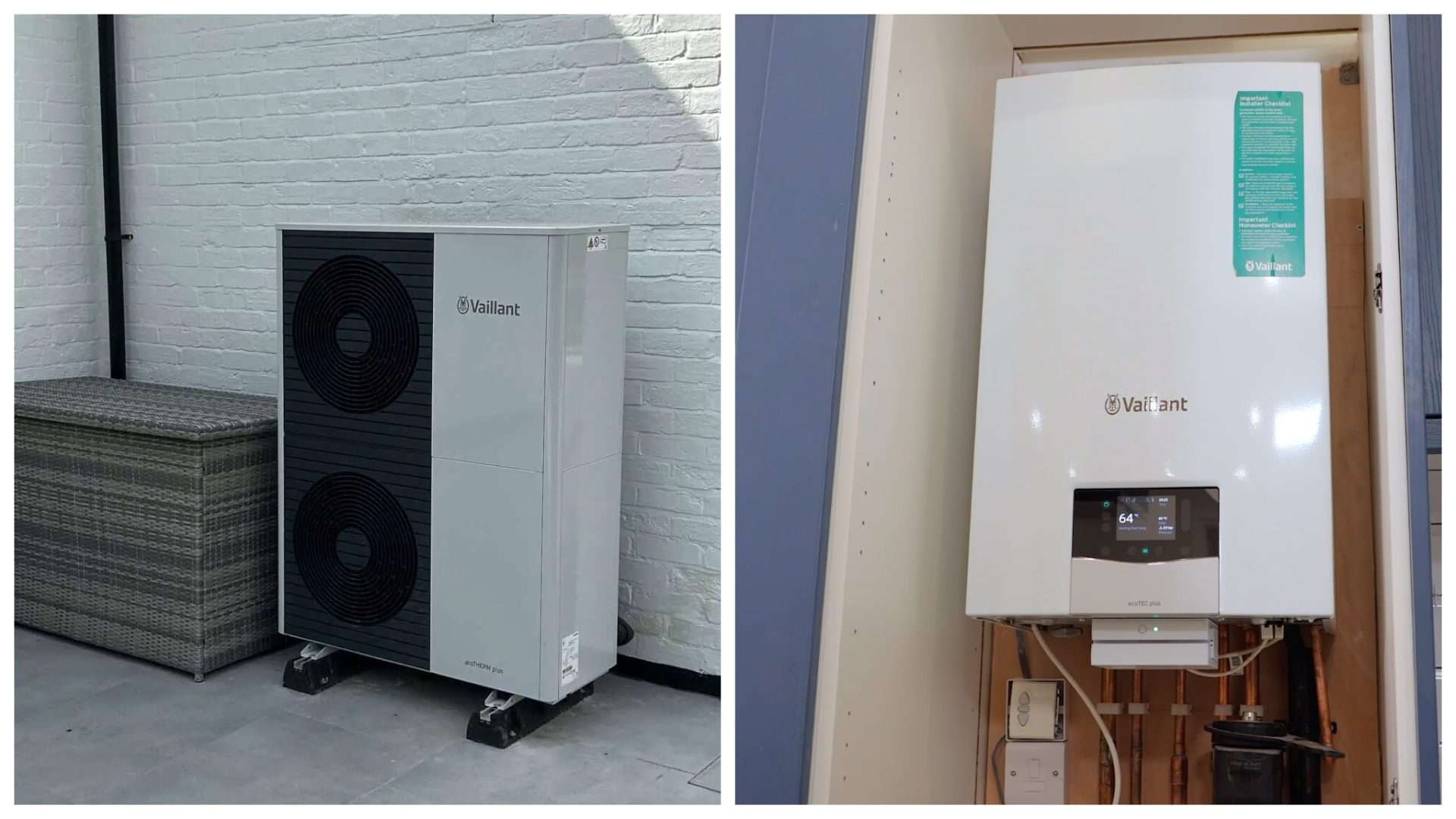
This is the question most people care about most, and the honest answer is: it depends on the design and your tariff. A well-designed heat pump running on a dedicated heat pump tariff usually costs less to run than a gas boiler heating the same home. Several suppliers now offer these, including Octopus with its Cosy tariff and E.ON Next with Next Pumped, which is a sign the energy market has adapted to heat pumps rather than treating them as a niche. A poorly designed one, forced to run at high flow temperatures with no weather compensation and on a standard tariff, can cost more than gas. Same technology, opposite outcomes.
For a typical well-insulated home in the area, a properly designed heat pump on the right tariff tends to come out a few hundred pounds a year cheaper than a modern gas boiler. The gap widens if you also run an EV or shift usage to off-peak periods, and it narrows or reverses if the system is badly set up.
The full mechanics, real 2026 figures, and the design factors that drive the numbers are covered in our guide to heat pump running costs. The headline for this comparison is simple: a heat pump is usually cheaper to run than gas when it is designed properly, and the design is the variable to scrutinise.
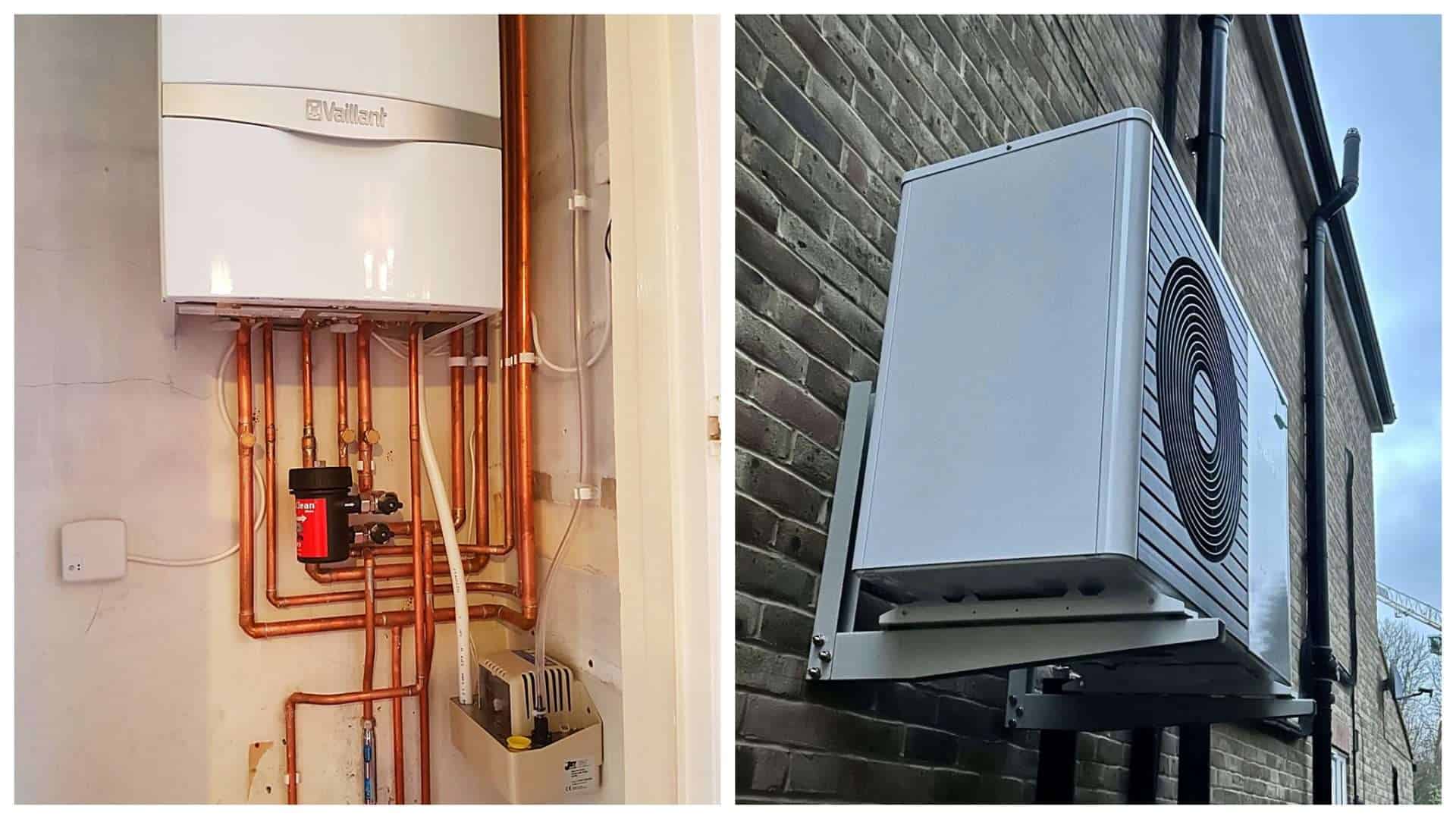
Efficiency is where the two technologies are genuinely not comparable. A modern condensing gas boiler is around 90% efficient at best, and often closer to 85% in real-world use. That means for every unit of energy you pay for, you get roughly 0.85 to 0.9 units of heat. It can never exceed 100%, because it is burning a fuel.
A heat pump does not burn anything. It moves heat from the outside air into your home, and it moves several times more heat energy than the electrical energy it uses. A well-designed system achieves a seasonal efficiency, or SCOP, of 300% to 400%. For every unit of electricity, you get three to four units of heat.
Efficiency: heat out against energy paid for
Modern condensing gas boiler
Around 90%
Electric boiler
Around 100%
Well-designed heat pump (SCOP)
300% to 400%
The heat pump figure holds only when the system runs at low flow temperatures.
The honest caveat: that 300% to 400% is only achieved when the system runs at low flow temperatures, which depends entirely on the design and the radiators. Real-world data on platforms like Heat Pump Monitor shows well-designed systems hitting those figures and badly designed ones falling well short. The efficiency advantage is real and large, but it is earned through design, not guaranteed by the box.
See the Flow Temperature Your House Needs
Your Blueprint works out the flow temperature your radiators need from the heat loss in each room.
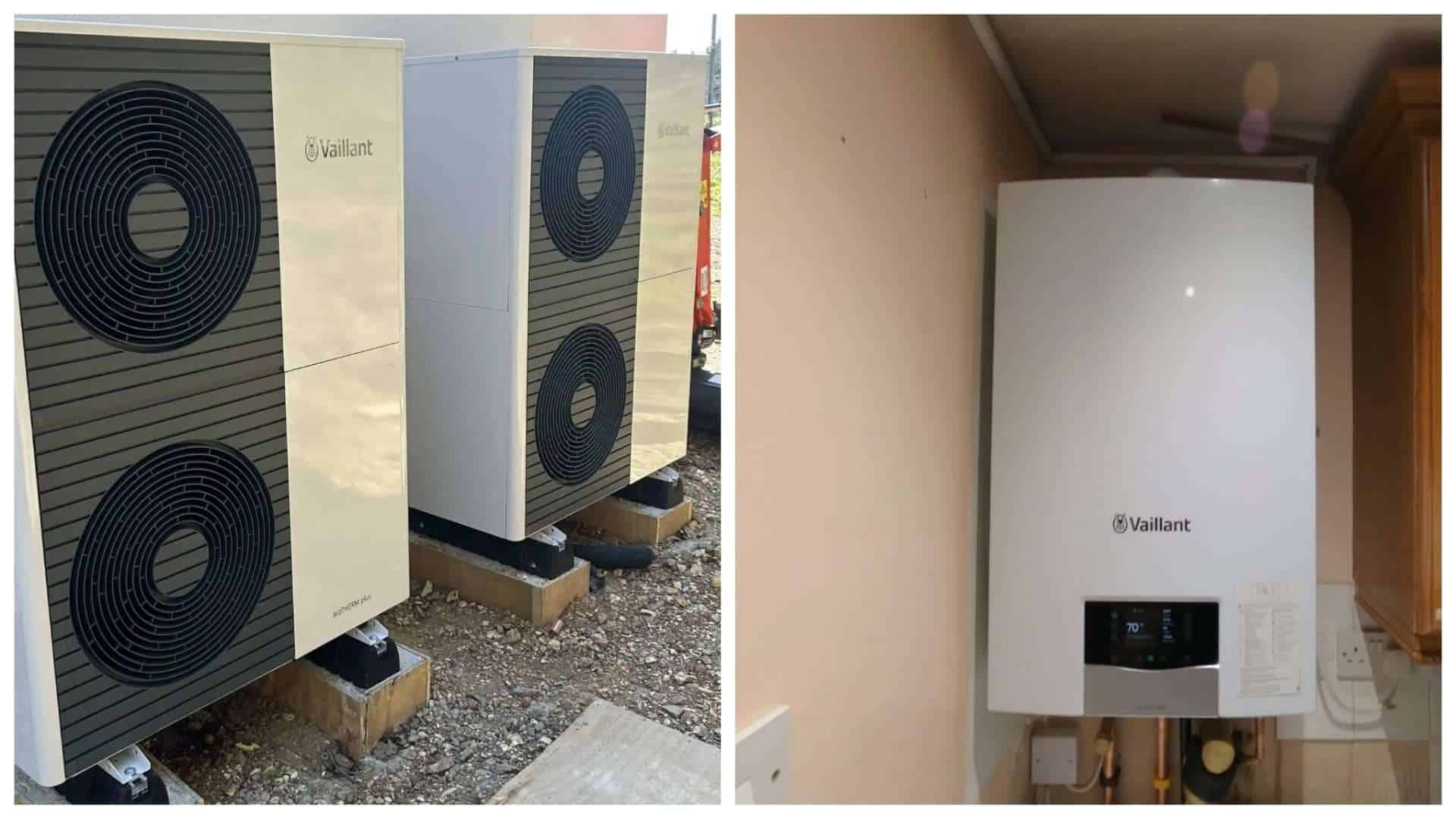
There is no getting around it: a heat pump costs more upfront than a new gas boiler. A straight gas boiler replacement is typically £2,000 to £4,000. An air source heat pump is £10,000 to £18,000 before the £7,500 grant, with 0% VAT already applied. That is the single biggest reason people hesitate, and it is a fair concern.
Upfront cost, fitted
£2,000 to £4,000
Straight gas boiler replacement, typical
£10,000 to £18,000
Air source heat pump before the grant, 0% VAT already applied
£7,500
Boiler Upgrade Scheme grant, where the home and installation meet the rules
Two things narrow the gap. The Boiler Upgrade Scheme takes £7,500 off the cost where the home and the installation meet the scheme’s rules, and the 0% VAT rate on qualifying installations, already counted in that range, runs to 31 March 2027. With the grant, a heat pump still usually costs more than a boiler, but it is a far smaller gap, and it is recovered over time through lower running costs.
The honest framing: even with the grant, a heat pump usually costs more upfront than a gas boiler, and you recover the difference through running costs only if you stay in the home long enough to benefit.
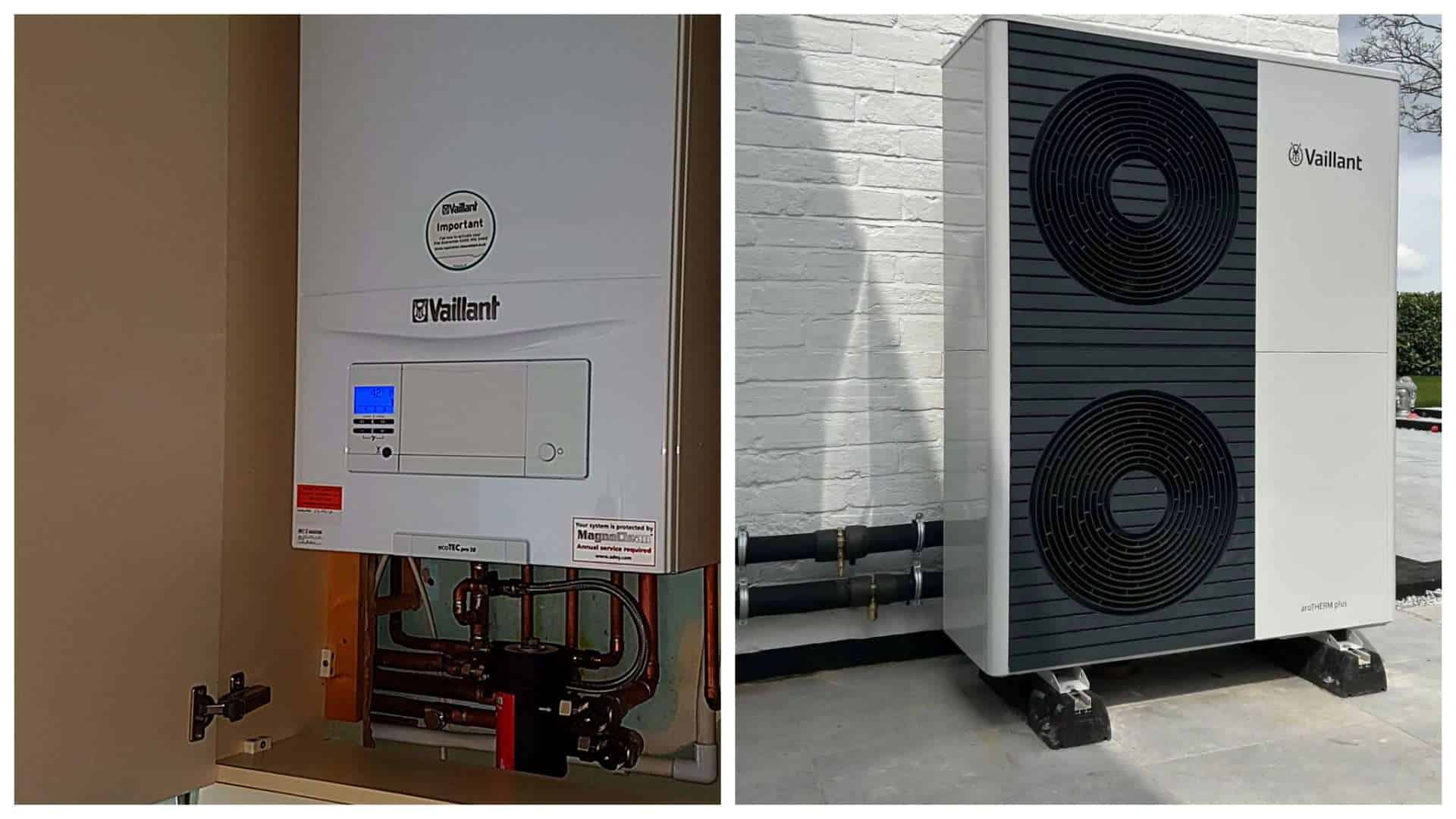
The two systems heat your home differently, and the difference is worth understanding before you choose.
A gas boiler delivers heat in rapid, hot bursts. You turn it on, radiators get hot quickly, it switches off. A heat pump works the opposite way: it delivers a steady, gentle, continuous warmth that holds the house at a constant temperature. Most people find heat pump warmth more comfortable once they adjust to it, because there are no temperature swings, but it is a genuine change in how the system behaves and how you run it.
On winter performance, the common fear is that a heat pump will not cope in a cold snap. A correctly sized system will. Heat pumps are designed around the coldest expected day for your area, so a system sized properly for a Berkshire or Surrey winter holds temperature through the cold spells. The systems that struggle are the ones that were undersized or badly designed, which comes back to the survey.
On hot water, a gas combi heats water instantly on demand, while a heat pump heats a cylinder of hot water ready for use. For most households this is no practical difference, but the cylinder needs a home, which is part of the design.
Hot Water and Warm Rooms, Designed Together
The Blueprint matches every radiator to its room’s heat loss and sets out a hot water plan for the coldest weeks of the year.
“Adam at Eco Renewables installed a heat pump in our home and I couldn’t be more delighted with the results. We’ve got a young family and even in cold spells we’re consistently warm, with no temperature fluctuations like our last heating system.”
Amy Spavins, Google Review
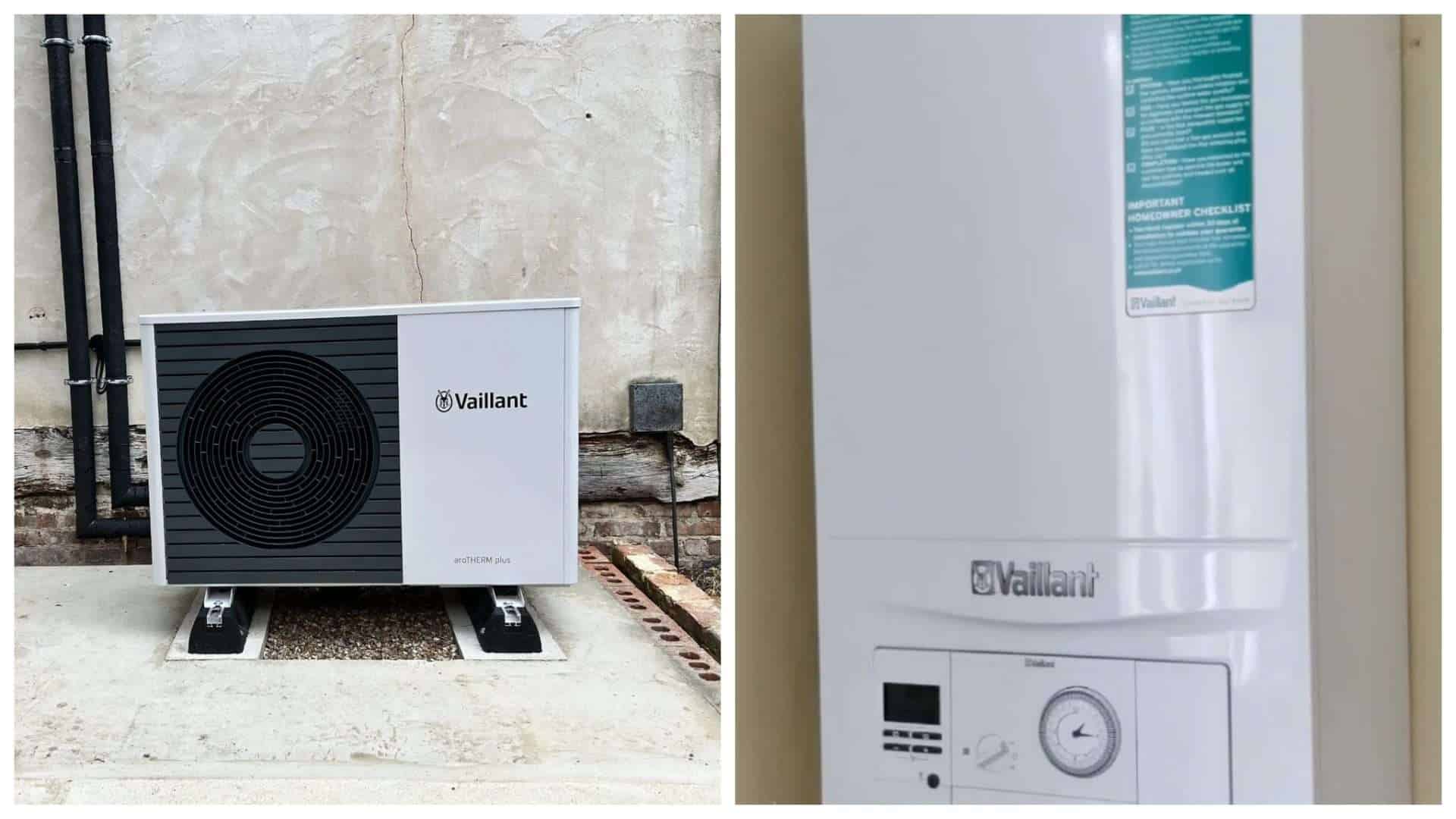
This is the part most comparisons skip, because it is the part that does not sell heat pumps to everyone. Here is the honest picture.
Where a heat pump clearly wins. Homes that are reasonably insulated or can be improved, with space for the outdoor unit and a cylinder. Owners who plan to stay long enough to recover the upfront premium. Households that want lower running costs and lower carbon, especially alongside solar or an EV. And any home currently running on oil, where a heat pump is a strong case on both cost and convenience.
Where it is marginal. Poorly insulated homes where the owner does not want to improve the insulation first will see higher running costs and a weaker case, though still a workable one. Very tight urban plots with no sensible location for the outdoor unit can be a genuine constraint.
Where a modern gas boiler still makes sense. If you are about to move, the payback window is too short to justify the upfront premium. If your boiler is recent, you have no renovation planned, and you have no appetite for the higher upfront cost, replacing like for like is a reasonable decision. And if a property genuinely cannot accommodate a well-designed system, a gas boiler may simply be the better fit for now.
Where the property may not be ready. Some older and period properties need emitter or pipework upgrades before a heat pump performs well, and a few have constraints that make it harder. This does not rule a heat pump out, but it changes the picture, and we cover it in detail in our guide to whether a heat pump will work in an older home. If a heat pump is the wrong call for your home right now, we will tell you, rather than sell you one anyway.
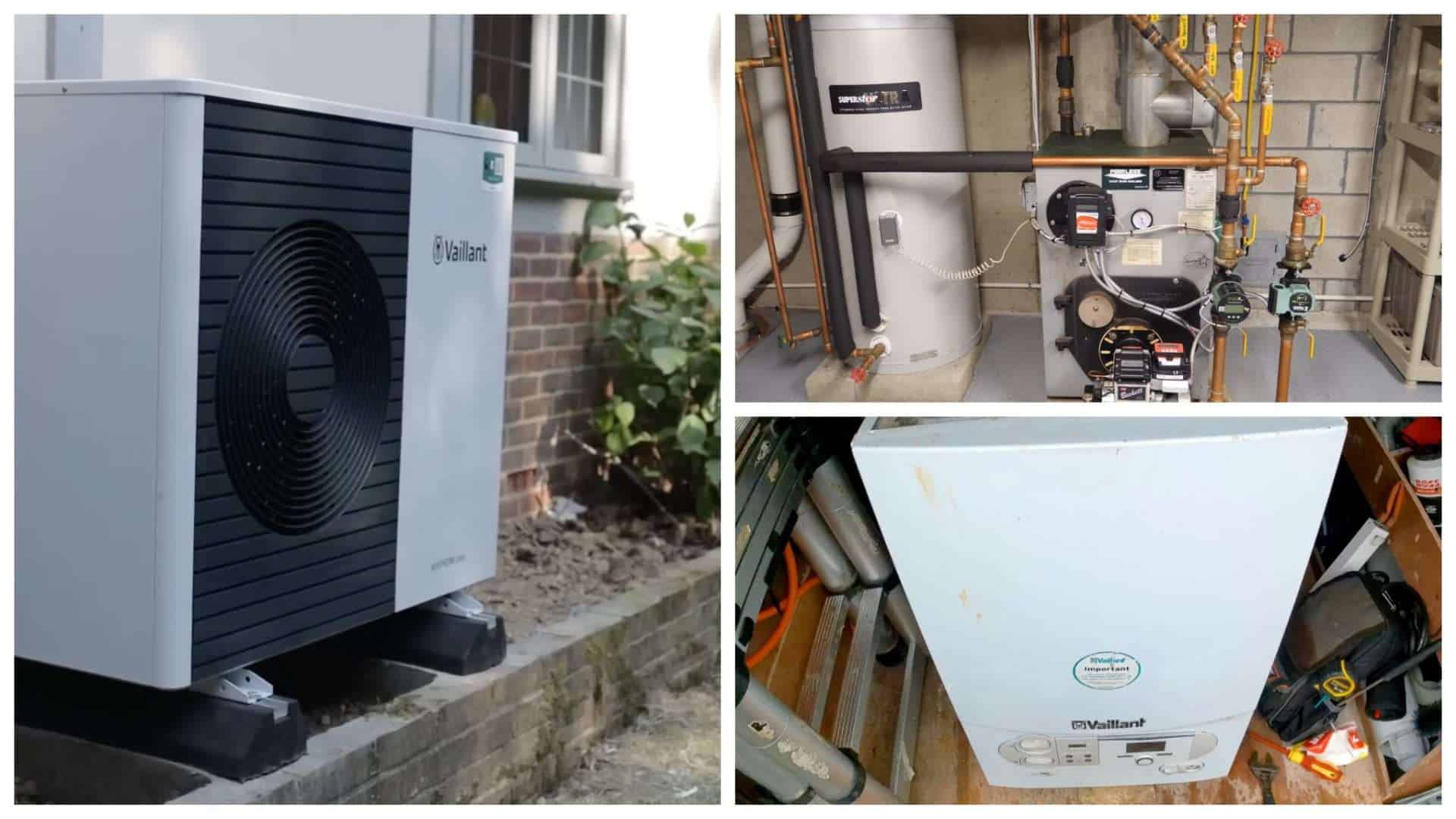
Gas is the most common comparison, but it is not the only one. Briefly, here is how a heat pump stacks up against the alternatives.
Electric boiler. Cheap to install, but very expensive to run. Under Ofgem’s price cap for January to March 2027, electricity costs 32.69p per kWh against 10.96p for gas, almost three times as much per unit, so an electric boiler running at roughly 100% efficiency is punishing on the meter. A heat pump uses the same electricity but delivers three to four times more heat from it, and that is exactly what bridges the price gap, bringing running costs back down near or below gas. On running cost, a heat pump beats an electric boiler decisively, and an electric boiler only really makes sense where a heat pump genuinely cannot be fitted.
32.69p per kWh
Electricity under Ofgem’s price cap for January to March 2027, against 10.96p for gas: almost three times as much per unit.
Oil boiler. Relevant for off-grid homes across rural Berkshire and the Surrey Hills. Oil is expensive and carbon-heavy, and prices are volatile. For most off-grid properties, a heat pump is a strong case against oil on both running cost and predictability, and it removes the need for fuel deliveries and a tank.
Hydrogen boiler. The honest answer to “should I wait for hydrogen?” is no. Hydrogen for domestic heating is not a realistic option in the foreseeable future, the infrastructure does not exist, and it is not a reason to delay a decision now. If your heating needs replacing, the choice today is realistically heat pump or gas, not hydrogen.
Biomass boiler. A viable low-carbon option for some larger rural properties, but it needs fuel storage, regular maintenance, and space, which makes it niche compared with a heat pump for most homes.
The honest answer to this comparison is that it depends on your specific property: its heat loss, its insulation, the radiators you already have, how long you are staying, and what you care about most. A comparison guide can tell you how the two technologies differ. It cannot tell you which is right for your home without looking at it.
That is what the heat loss survey and Heat Pump Blueprint are for. We measure your property, design the system around it, and give you a definitive, costed answer, including an honest “stick with gas for now” if that is genuinely the better call for your home. If you do decide to switch, our guide to replacing a gas boiler with a heat pump covers what the changeover involves.
We install across Berkshire, Surrey, and the surrounding area, and every survey ends with a straight recommendation rather than a sales pitch.
Usually, when it is designed properly. A well-designed heat pump on a smart tariff typically costs a few hundred pounds a year less to run than a gas boiler heating the same home. A poorly designed one on a standard tariff can cost more. Design and tariff are the deciding factors. Our running costs guide has the full 2026 figures for Berkshire and Surrey homes.
Yes, by a wide margin. A modern gas boiler is around 90% efficient at best. A well-designed heat pump achieves 300% to 400%, because it moves heat rather than burning fuel. The efficiency advantage depends on the system running at low flow temperatures, which is a function of the design.
A gas boiler replacement is typically £2,000 to £4,000. A heat pump is £10,000 to £18,000 before the £7,500 BUS grant, with 0% VAT, and the grant then comes off for eligible installations. So a heat pump costs more upfront, with the difference recovered over time through lower running costs.
A combi boiler is a gas boiler, so the comparison is the same: the combi is cheaper to install and heats water on demand, while a heat pump is cheaper to run, far more efficient, and lower carbon. The main practical change is that a heat pump needs a hot water cylinder, whereas a combi does not, so cylinder space is part of the design.
Cheaper to install, but much more expensive to run. An electric boiler is around 100% efficient; a heat pump delivers 300% to 400%, so it uses far less electricity for the same heat. Over time a heat pump is considerably cheaper to run than an electric boiler.
For most homes off the gas grid in rural Berkshire and Surrey, a heat pump is the better fit. Oil is expensive, carbon-heavy, and subject to volatile prices and delivery logistics. A heat pump removes the tank and the deliveries and usually costs less to run, which makes it a strong case against oil.
Yes, when it is sized correctly. Heat pumps are designed around the coldest expected day for your area, so a properly sized system holds temperature through a Berkshire or Surrey winter. Systems that struggle in the cold are ones that were undersized or badly designed, which is why the heat loss survey matters.
No. Hydrogen for home heating is not a realistic option in the foreseeable future, and the infrastructure does not exist. If your heating needs replacing, the genuine choice today is between a heat pump and a gas boiler, and waiting for hydrogen is not a sound reason to delay.
For most well-suited homes where the owner is staying long term, the heat pump wins on running cost, efficiency, and carbon. If you are about to move, have a recent boiler, or have a property that cannot take the design, sticking with gas may be the better call for now. The honest answer is property-specific, which is what a survey establishes.
The honest answer to heat pump versus gas boiler is not the same for every property. For most well-suited Berkshire and Surrey homes a well-designed heat pump is the better long-term choice, but not for every home, and not in every situation.
A heat loss survey gives you a straight, costed answer for your specific property, including whether sticking with gas is the smarter move for now. We measure your home, design the system around it, and hand you the Heat Pump Blueprint so you can decide with the full picture in front of you.
More guides from the Eco Renewables blog on the same topic.
24 November 2026
Read the guide
24 November 2026
Read the guide
24 November 2026
Read the guideEco Renewables are trusted by homeowners throughout Berkshire and the South East to provide high-quality heat pump heating system installations.
If you're considering a heat pump, the survey is where it starts. We assess the property, run the heat loss calculations, and tell you exactly what the system would look like.
Get My Free Heat Pump Blueprint


