



Solar
Home Battery Backup in Berkshire and Surrey: Will Your Solar Battery Keep the Lights On in a Power Cut?
By Adam Dare
Heat Geek trained installer
Updated 13 November 2026
Reading time
🎉 Named South East Heating Installer of the Year 2026
Home battery backup comes down to wiring: a battery runs nothing in a power cut unless the installation was built to carry circuits when the grid fails. In Berkshire and Surrey, as across Great Britain, a solar battery fitted without backup switches off with the panels in a power cut, however full it is. A backup-wired system can carry one socket, a set of chosen circuits or the whole house.
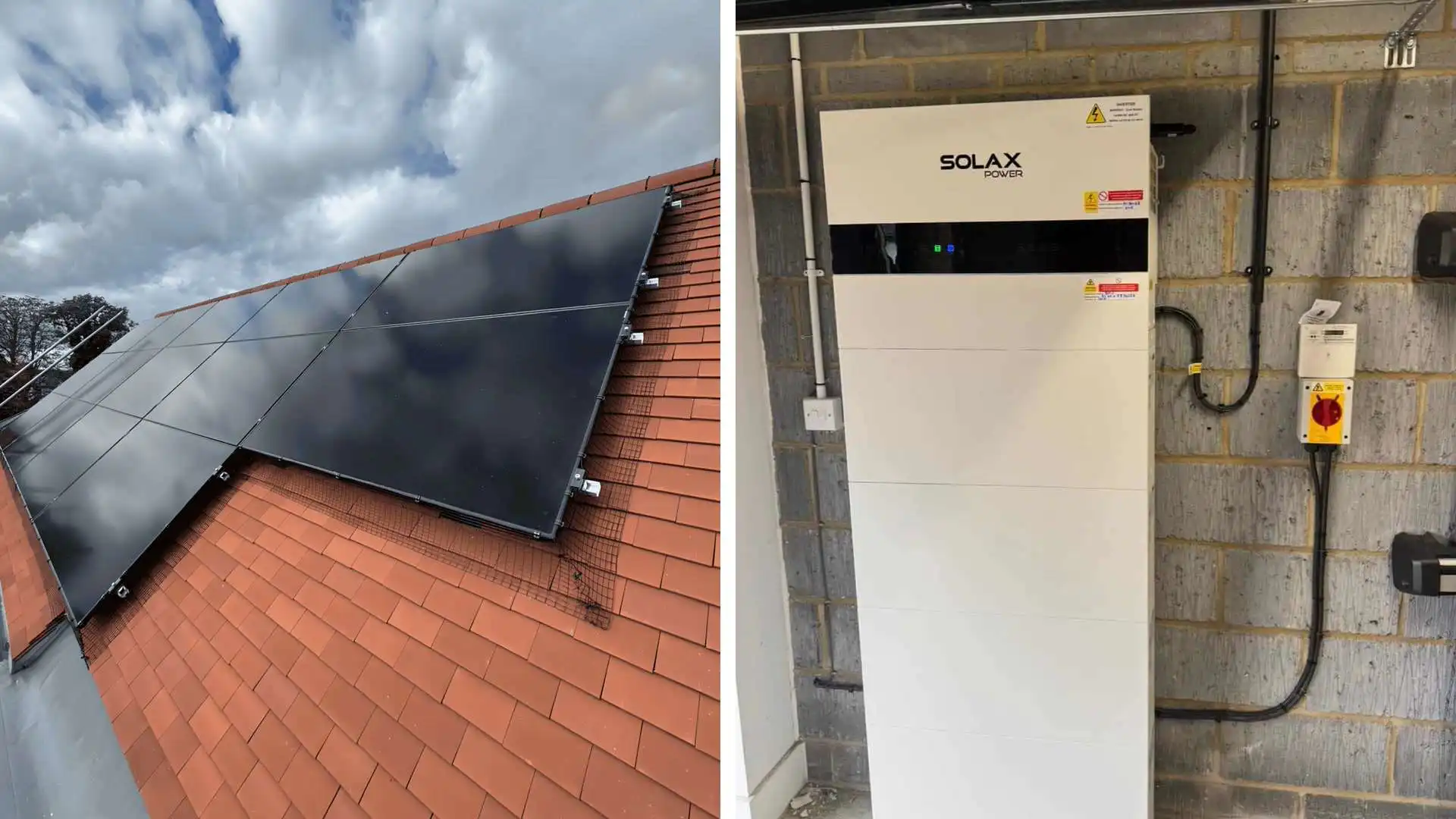
A power cut tests three things at once: whether the inverter can run apart from the network, how many kilowatts its backup output delivers, and which circuits are wired to that output. The charge left in the battery then sets how long those circuits stay on. Those three are fixed on the day the battery goes in.
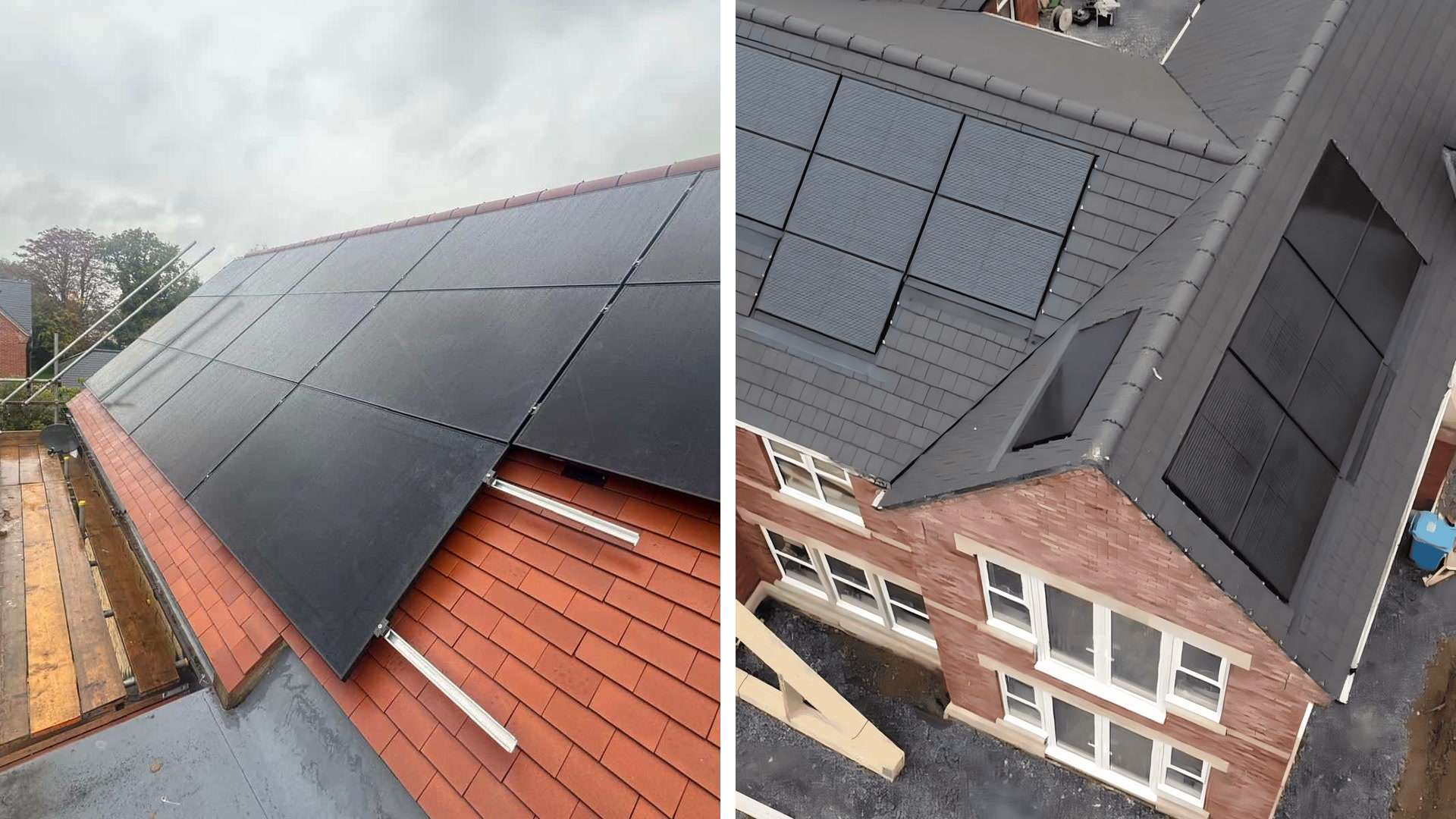
A standard grid-connected solar system stops in a power cut, even at noon in June. Its inverter carries loss of mains protection under the Energy Networks Association’s G98 and G99 connection rules, and that protection disconnects it when the network drops. SSEN, the network operator for Berkshire, states in its witness-testing guidance that the generator has to disconnect by itself, protecting staff and assets on a faulted network.
Panels keep working through a cut only when the backup system islands the house and lets the solar inverter run inside that island. Hybrid inverters, which run panels and battery through one unit, can use solar as a backup source. Some AC-coupled batteries, added beside an existing solar inverter, back up from the battery alone and leave the old panels off.
If the whole street goes dark, dial 105. The free number, launched by the network companies in 2016, routes your call to the operator that runs your local cables. In Berkshire that is SSEN; parts of Surrey sit with UK Power Networks instead, so your postcode decides.
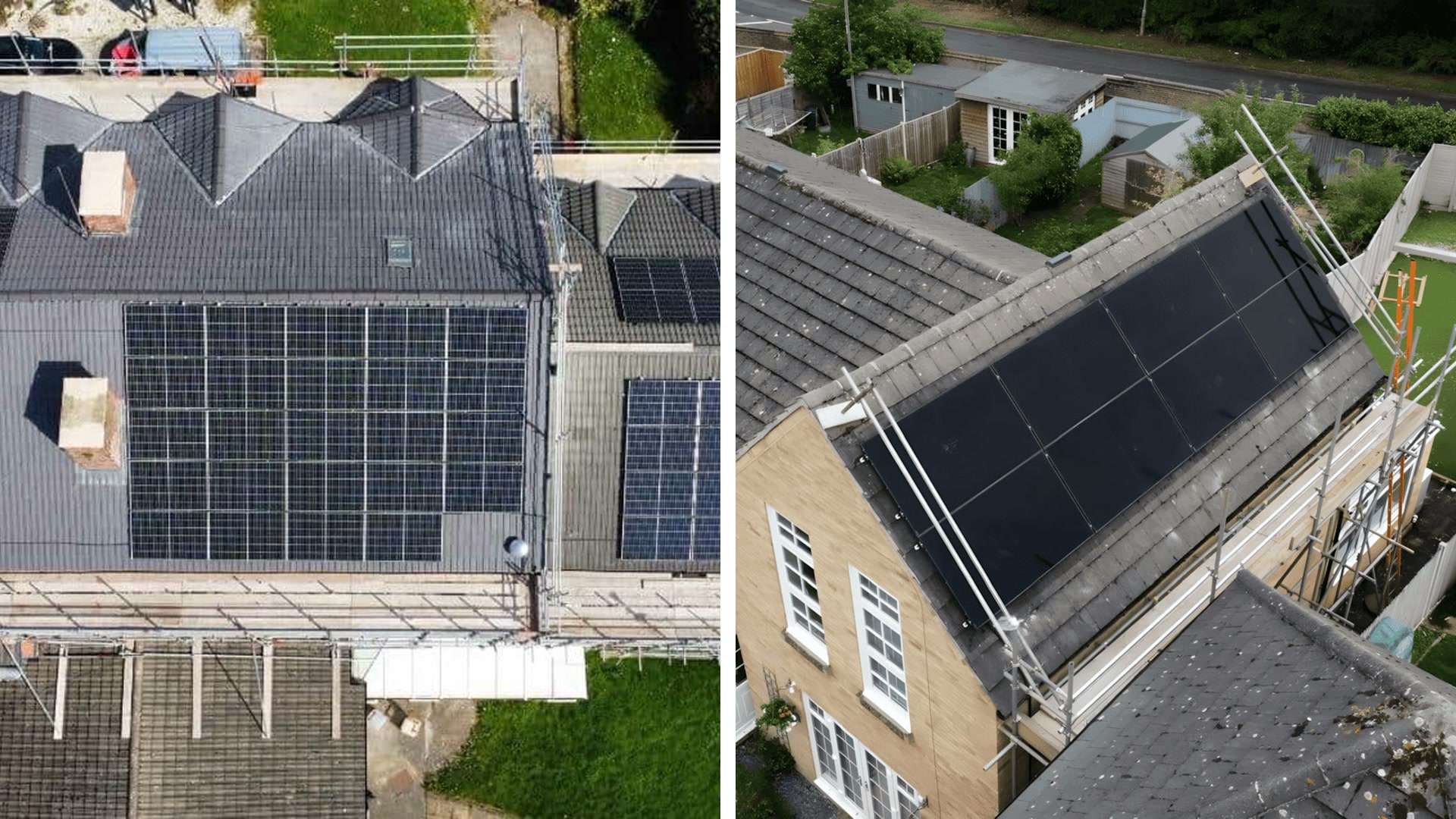
Battery backup comes in four common wiring patterns, and the one you choose fixes what runs in a cut and how far the battery stretches:
Switchover time differs too: some backup outputs come on within milliseconds, others take several seconds. Push a backup output past its rating and it cuts out, and it stays off until the inverter resets. The Fox ESS, SolaX and Sigenergy systems we fit each publish their own switchover and backup figures, and your Design Pack quotes the ones for the model proposed.
What sets backup behaviour
Varies
Switchover time: milliseconds on some inverters, seconds on others
Its kW rating
The most a backup output carries before it cuts out
Until it resets
How long an overloaded backup output stays off
Tell us at the survey which circuits have to stay on in a cut, and your Solar Design Pack will set out which of these patterns the proposed system can support.
“Adam was great at working around the project, putting pipework in while ceilings were down, liaising with builder and being flexible with dates.”
Lucy Grainger, ⭐️⭐️⭐️⭐️⭐️ Google Review
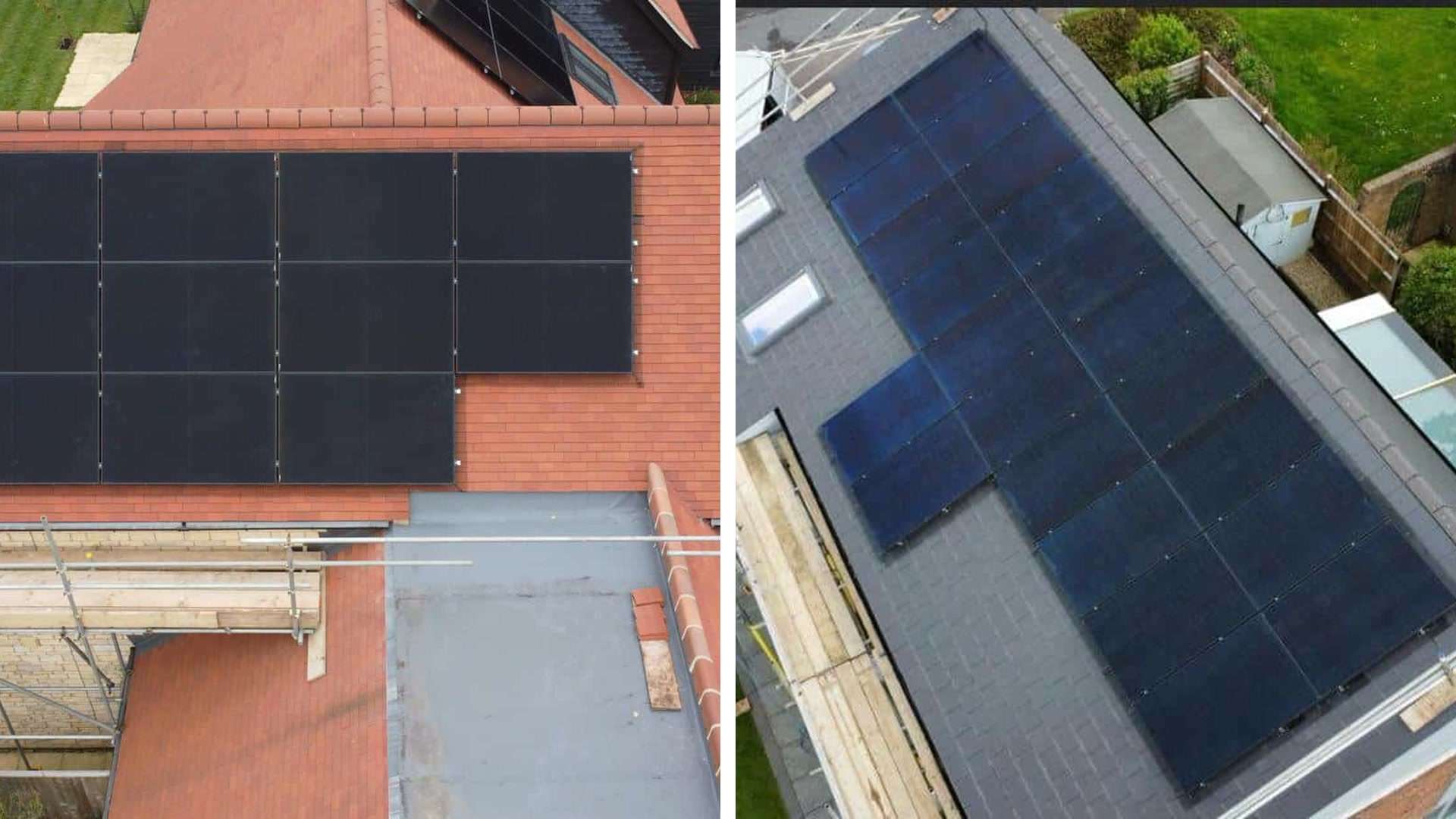
In winter, solar battery backup gets little help from the roof. PVGIS, the European Commission’s solar model, gives an unshaded south-facing roof near Bracknell a December output a little over a quarter of June’s; on the 850 to 950 kWh per kWp a year we plan with, a 4kWp array averages about 4 kWh a day in December against about 14.5 kWh in June. In island mode a hybrid inverter can feed that daytime trickle into the house, but the battery carries the evening alone.
4kWp array near Bracknell, average daily output
December
About 4 kWh
June
About 14.5 kWh
Unshaded south-facing roof, on the 850 to 950 kWh per kWp a year we plan with.
The charge left when the grid fails sets the length of the backup, and a battery drained by the evening peak has little left for a cut at 7pm. Some battery apps let you hold back a reserve: a chosen percentage stays in the battery for outages and the rest covers daily use. Set the reserve too high and less of the battery is free to store cheap-rate power for the evening, so the daily savings shrink.
A cheap overnight tariff window helps, because a battery set to charge in it can start each winter day full. On a survey for solar panel installation in Ascot, or anywhere else we cover, the reserve question comes down to how many winter evening hours your backup circuits need.
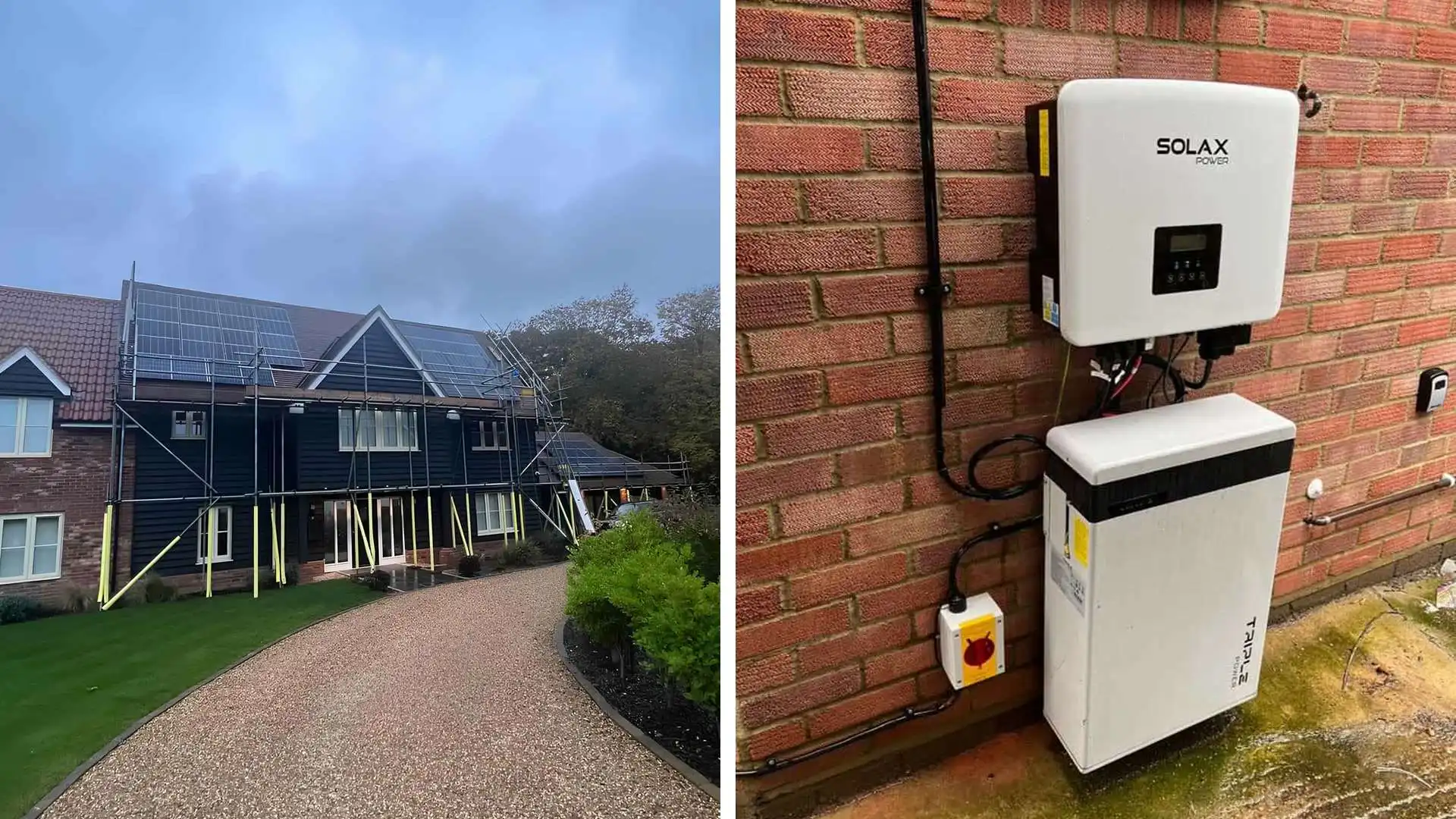
A backup installation has to cut the house off from the network before the battery powers anything. The IET’s Code of Practice for Electrical Energy Storage Systems calls that device an island mode isolator and pairs it with a neutral-earth switch, because BS 7671 does not let island circuits rely on the network’s earth. A backup quote should list:
Switchgear, earthing and paperwork
Under MCS’s guidance on notifying network operators, a battery inverter counts toward the network limit. If it and any solar inverter together stay within the G98 limit of 16A, about 3.68kW per phase, the battery goes in first and the operator is told within 28 days. Above that total, a G99 application goes in before installation, and the faster solar-and-battery route excludes storage that runs when the grid fails.
Backup touches the switchgear, the earthing and the network application at once, so settle it before the battery is chosen, starting with a Design Pack survey.
“I was able to leave Adam the keys and he and his team worked diligently and quickly to get the work done and leave the property in good order. Adam has also been available for follow up and support.”
Gerard Barron, ⭐️⭐️⭐️⭐️⭐️ Google Review
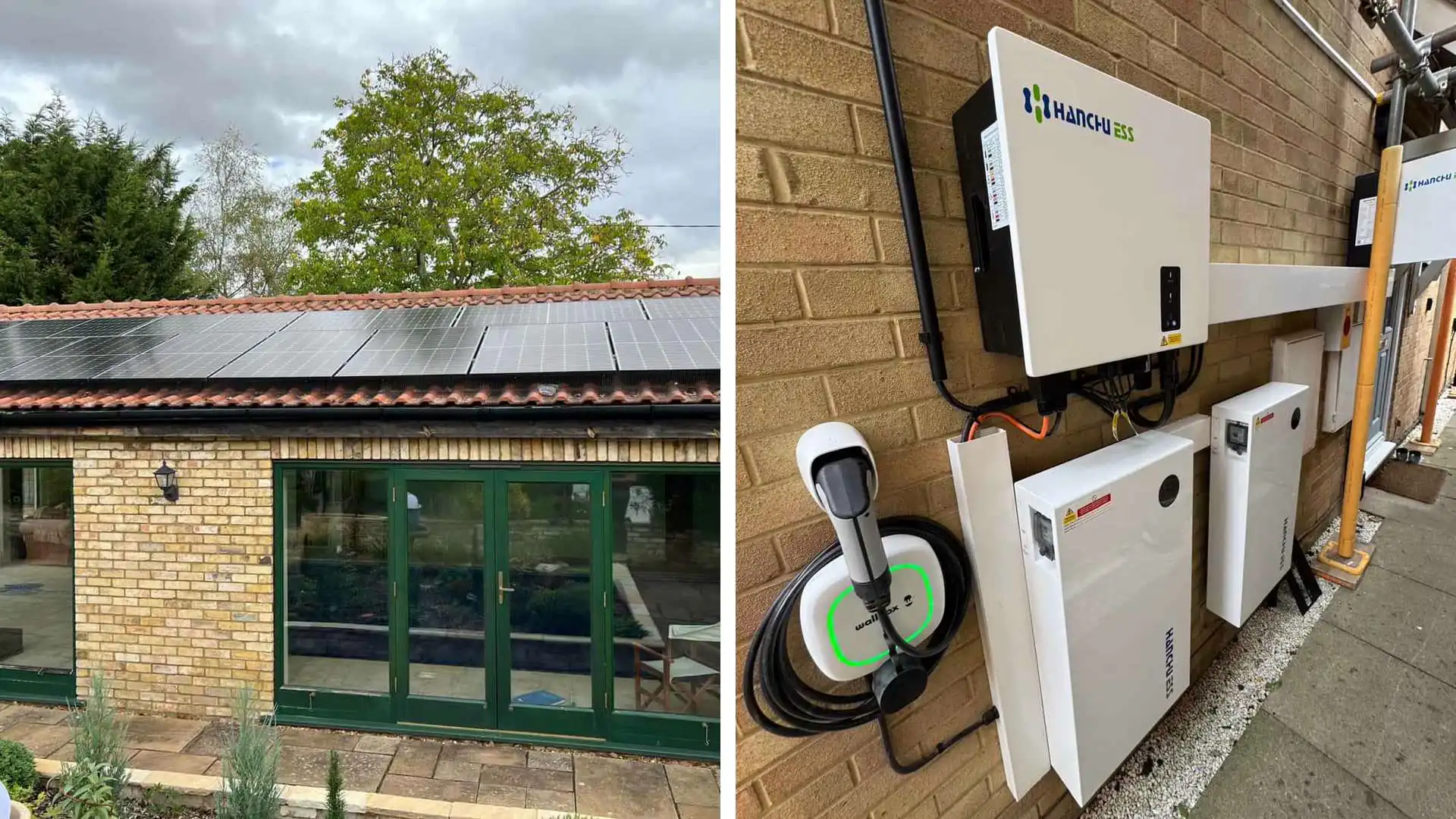
A heat pump needs electricity for its compressor, fans, circulating pump and controls, so it stops in a power cut. A gas boiler may stop as well: the gas network company SGN says gas keeps flowing in a cut, but most boilers use electricity and may not work until the power returns. Keeping the heating on means putting it on the backup circuits, whichever system heats the house.
Viessmann’s Vitocal 150-A datasheet gives the load. Its 10 to 16kW three-phase models draw 1.4 to 2.0kW at 2°C outside with 35°C flow water, 4.8 to 5.3kW at minus 7°C with 55°C flow, and up to 5.4kW at peak. The single-phase models peak at 2.3 to 4.55kW, the compressor starts on under 10A in every size, and the built-in electric heater adds up to 8kW.
Up to 5.4kW
Peak draw of Viessmann’s 10 to 16kW three-phase Vitocal 150-A models, from the datasheet.
Running time matters too: at 4.8 to 5.3kW in a freeze, the heat pump would draw a battery down faster than a fridge, lights and router together. A well-insulated house holds its heat through a short cut, so the backup list can leave the heat pump off. Our guide to running a heat pump alongside solar panels covers how the two share a winter day.
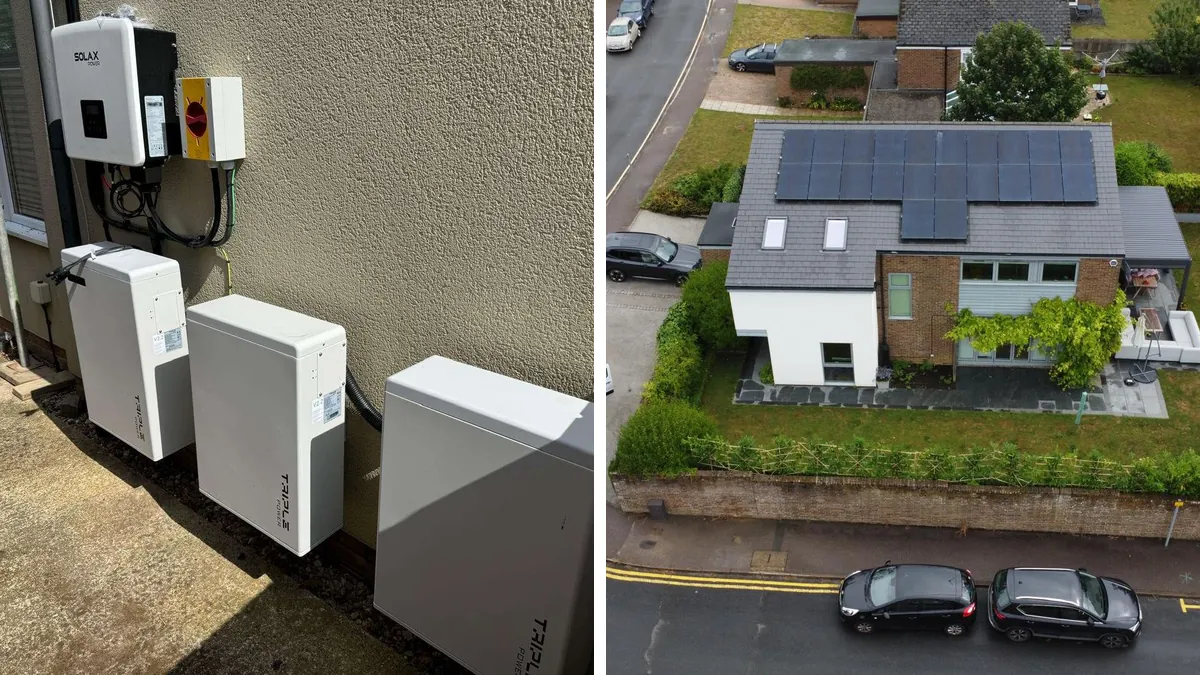
Only if it was installed with backup. A battery on a standard grid connection shuts down with the panels when the network fails. A backup-wired system islands the house and powers whatever is on its backup output: one socket, a board of chosen circuits or the whole house.
Divide the kWh stored at the moment of the cut by the power your backup circuits draw. A fridge, lights and a router run for many hours on a part-charged battery; an oven and a heat pump empty it much sooner. Our guide to choosing the right battery size covers the capacity side.
Some systems can. The backup output has to match the heat pump’s supply, single-phase or three-phase, and cover its peak draw. Viessmann’s single-phase Vitocal 150-A sizes peak at 2.3 to 4.55kW, so the backup output has to be rated above that, and its rating depends on the inverter, battery and solar chosen. A three-phase heat pump needs a three-phase backup output.
Yes, where the battery’s inverter has a backup output. The job adds a changeover or backup board, an earth electrode and fresh network paperwork. Some AC-coupled batteries back up from their own charge alone and leave the existing panels off during the cut, so ask how a quote handles the solar. Raise it at the survey for fitting a solar battery.
Yes. Backup needs a switch that separates the house from the network, an earth for the island circuits that does not depend on the network’s, and RCD protection on the backup output. A single emergency socket needs the least work; whole-house backup puts a changeover switch at the incoming supply.
Yes for a Berkshire and Surrey household working from home or keeping a full freezer: backup on a few chosen circuits covers what matters with the least wiring. Whole-house backup adds switchgear and earthing for every circuit. Any backup on a home whose inverters pass 3.68kW per phase loses the fast-track network application. The savings case sits in our look at whether solar battery storage is worth it.
Write down the circuits you would miss first in a winter power cut and bring the list to the survey. Your Solar Design Pack then states what the proposed system will do when the grid fails and which circuits it carries.
More guides from the Eco Renewables blog on the same topic.
24 November 2026
Read the guide
24 November 2026
Read the guide
24 November 2026
Read the guideEco Renewables are trusted by homeowners throughout Berkshire, Surrey, and the South East to provide high-quality solar system installations.
If you're considering a heat pump, the survey is where it starts. We assess the property, run the heat loss calculations, and tell you exactly what the system would look like.
Get My Free Solar Design Pack


