



Heat Pumps
How Does a Heat Pump Work? An Engineer’s Plain Explanation for Berkshire and Surrey Homeowners Moving Off Gas
By Adam Dare
Heat Geek trained installer
Updated 24 November 2026
Reading time
🎉 Named South East Heating Installer of the Year 2026
How does a heat pump work, and what is a heat pump at all? It is an electric heating system that collects heat from the outside air, the ground or water and moves it into your home, warming your radiators without burning gas. We wrote it for owners in Berkshire and Surrey whose gas boiler is ten or more years old and who want the mechanism explained before trusting any quote.
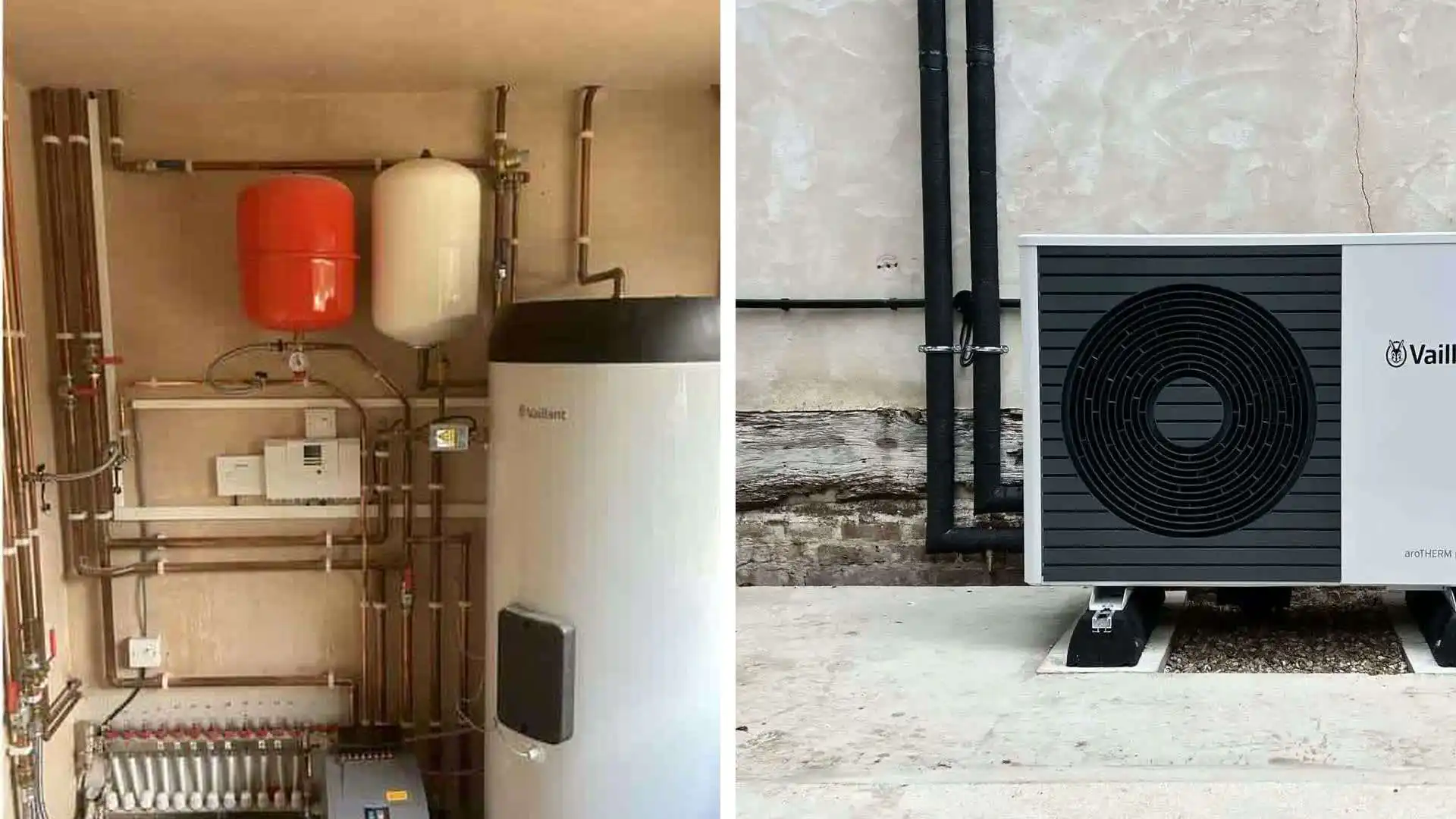
We design and fit air source heat pumps from Binfield. With Adam Dare’s Gas Safe background and Heat Geek training behind it, this guide sets each step beside the gas boiler you already know.
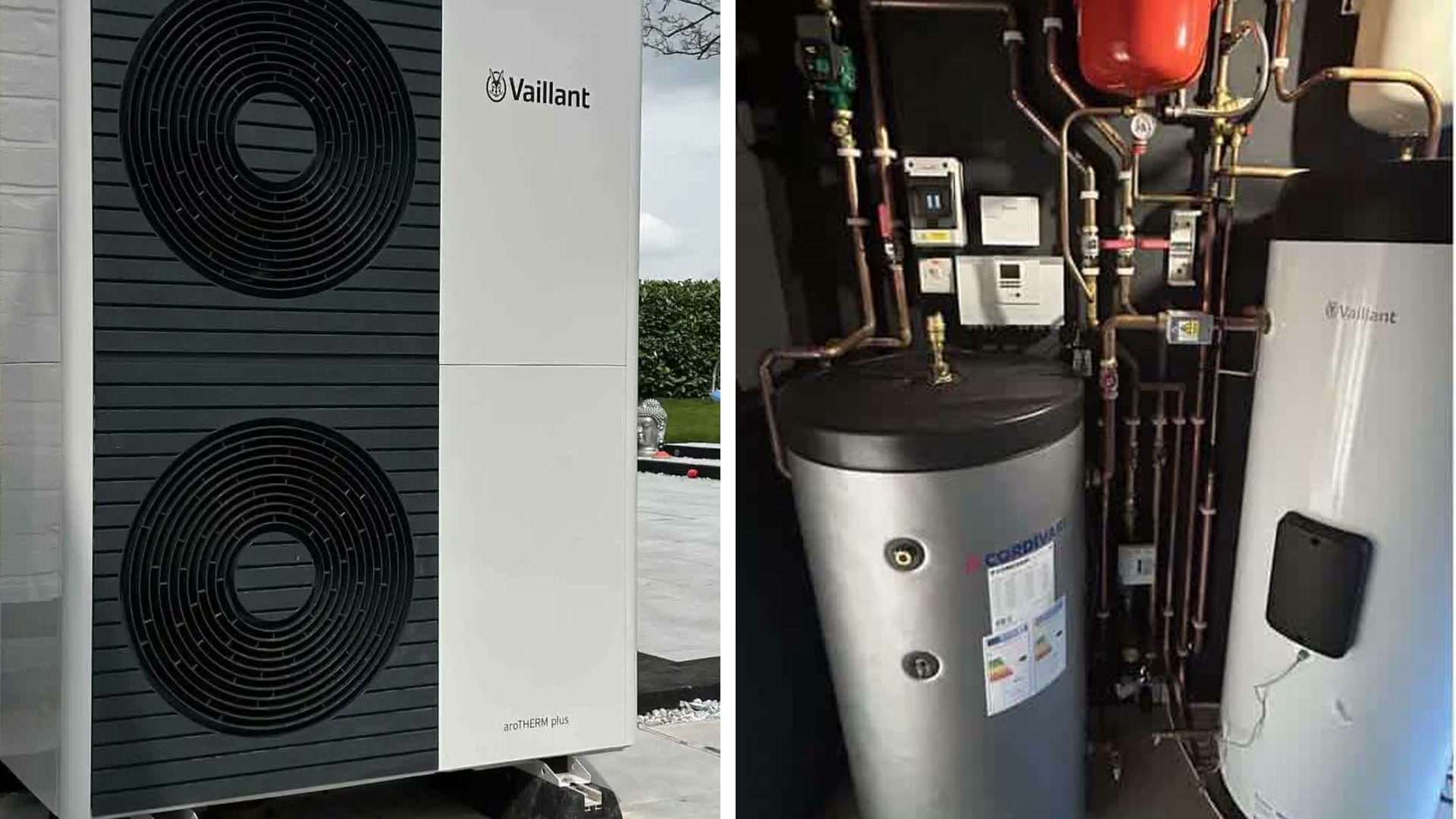
A heat pump takes low-grade heat from outside your home and raises it to a temperature that warms your rooms and your hot water. Electricity runs the compressor, the fan and the pumps, while the heat itself comes from outside. The three types differ only in where they collect it:
A fan unit outside draws heat from the outdoor air. This is the type we design and fit.
Pipes buried in the garden or down a borehole collect heat from the soil.
A loop laid in a lake, river or well collects heat from the water.
All three heat water for radiators or underfloor pipes.
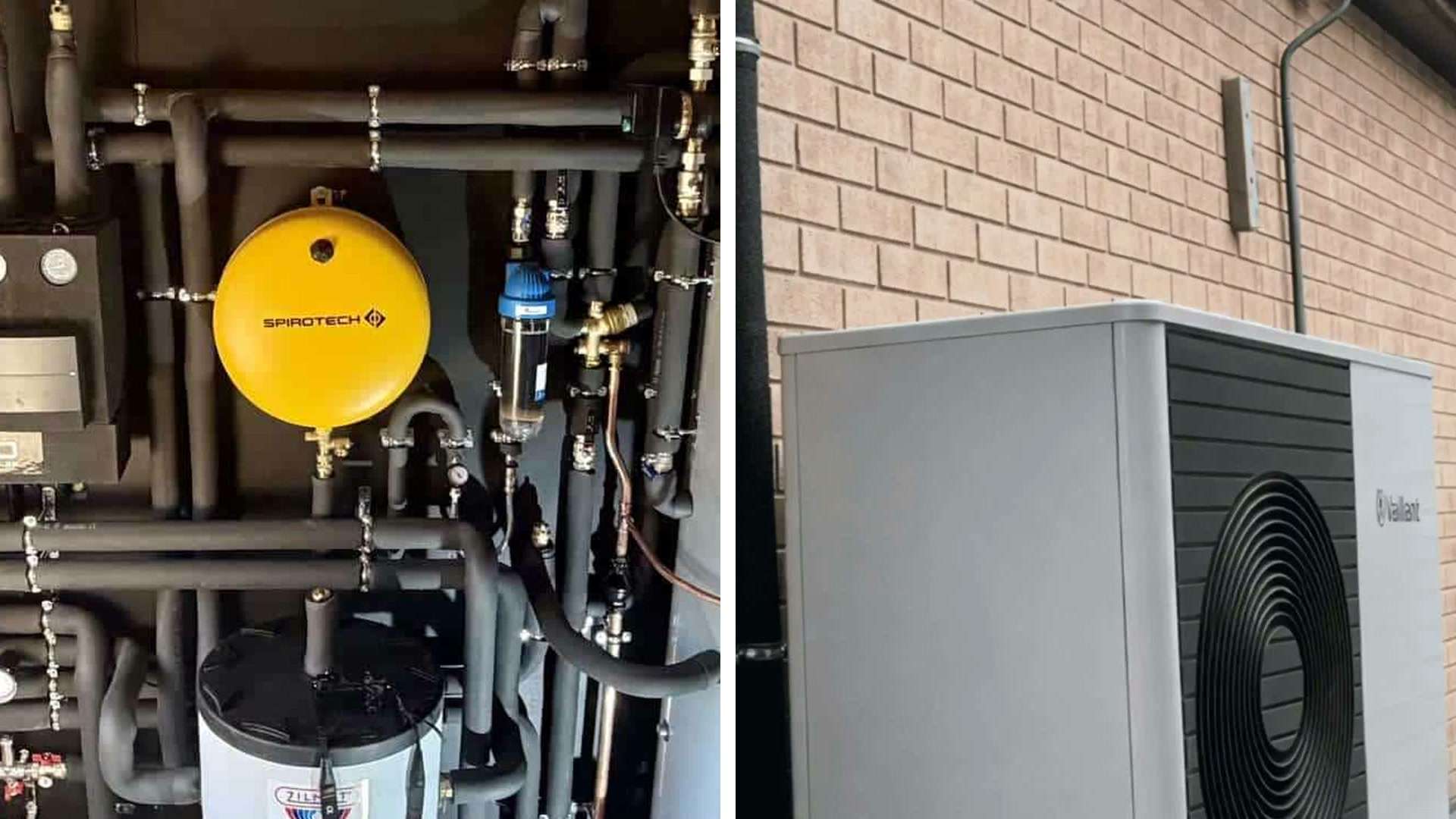
The short answer to how do heat pumps work sits in your kitchen. A fridge pumps heat out of its cold box and lets it go through the coil at the back, which is why that coil feels warm to the touch. A heat pump runs the same cycle facing the other way, with the cold coil in the garden and the warm side feeding your heating water:
Evaporate
Outdoor air passes over a coil filled with refrigerant that boils at temperatures far below a British winter’s, so even frosty air turns it into a gas.
Compress
An electric compressor squeezes that gas, and squeezing it drives its temperature up.
Condense
The hot gas gives its heat to your heating water through a heat exchanger and turns back into a liquid.
Expand
A valve drops the pressure, the liquid turns very cold, and it flows back to the outdoor coil to start again.
Because the electricity drives the move and the outdoor air supplies the heat, a heat pump hands over more units of heat than the units of electricity it draws. That ratio, measured across a whole year, is the seasonal performance factor (SPF), and the design of your system has more say over it than the make of the box outside.
See the Cycle Sized for Your Rooms
The free Heat Pump Blueprint shows the unit size your rooms call for and the water temperature this cycle would run at in your house.
“Creating first a detailed heat loss report and then a system design to meet the requirements, he wanted to ensure that I understood the different way that heat pumps work to old gas boiler technology.”
Stephen Saunders, Google Review
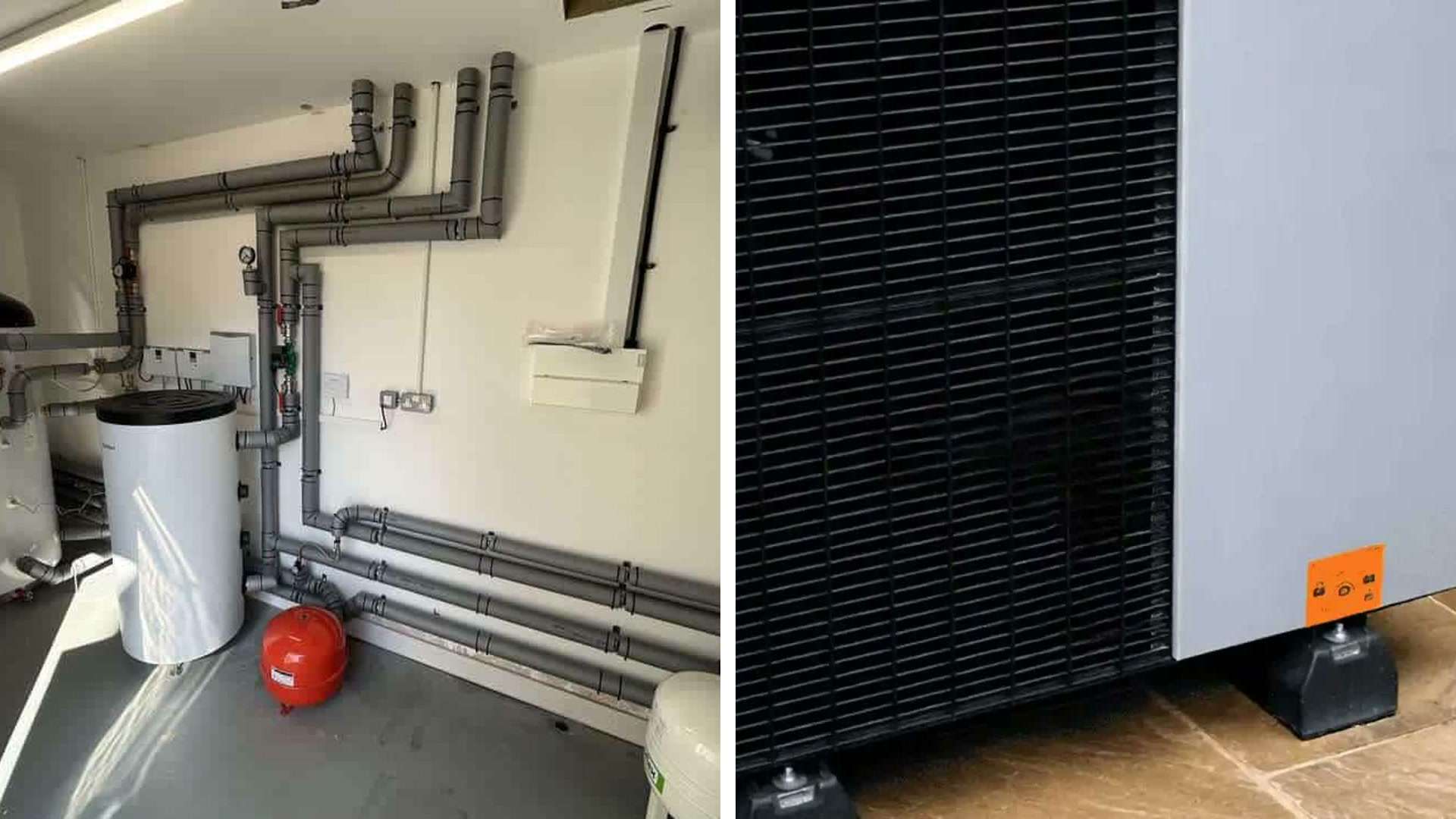
Ask what is an air source heat pump and the answer is an outdoor box holding the fan, coil and compressor from the cycle above. So how does an air source heat pump work once it stands by your house? On a monobloc unit, two insulated pipes carry heated water indoors, where a controller reads an outdoor sensor and sets how warm that water should be.
How do air source heat pumps work with the radiators you already have? They send water round the same pipes, cooler and for longer spells than a boiler. Our air source heat pump installation page sets out how we plan and fit the whole system.
Hot water takes two steps: the heat pump warms a coil inside a hot water cylinder, and the cylinder stores that water for your showers and taps.
The parts of an air source heat pump system
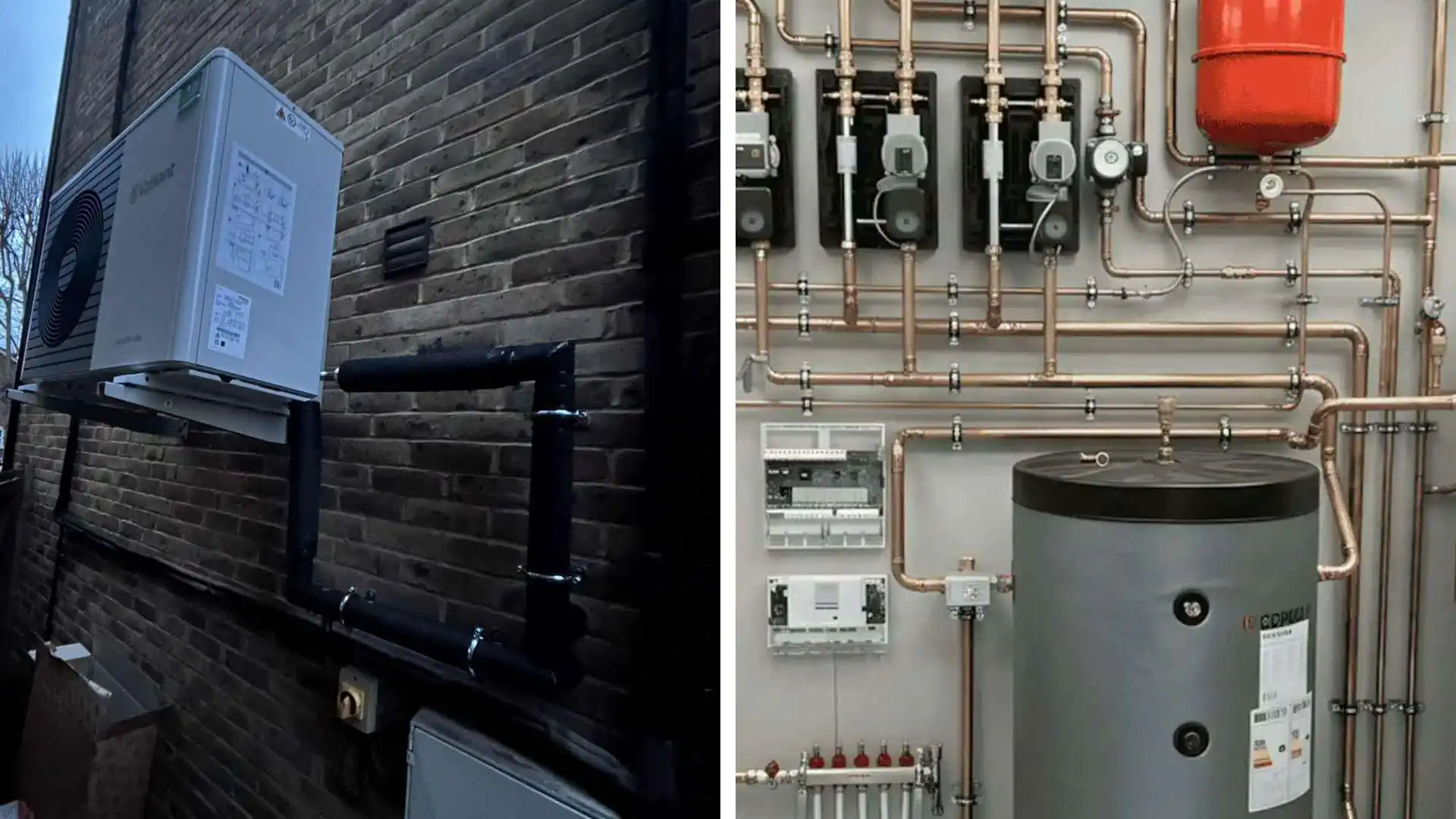
Flow temperature means how hot the water is as it sets off from the heat source to your radiators. A 2021 study of domestic heating for the Department for Business, Energy and Industrial Strategy says heat pumps work at their most efficient at 45°C or less, against the 60 to 70°C that fossil fuel boilers typically run at. Set side by side, the two machines behave like this:
| Factor | Gas boiler | Heat pump |
|---|---|---|
| How it makes heat | Burns gas in a combustion chamber | Moves heat from outdoor air with a compressor |
| Flow temperature | Typically 60 to 70°C (BEIS, 2021) | 45°C or less for best efficiency (BEIS, 2021) |
| How it runs through the day | Fires hard, then stops once rooms reach temperature | Runs for long, steady spells at a lower output |
Cooler water means each radiator gives out less heat for its size. A boiler covers an undersized radiator by running hotter, and a heat pump asked to do the same loses the efficiency you bought it for. The design answer is a radiator in each room big enough for the low flow temperature.
Find the Water Temperature Your Rooms Need
Your free Heat Pump Blueprint lists every radiator against its room and the flow temperature your system would hold on the coldest day it is designed for.
“Adams incredibly knowledgable about the systems and happy to answer any questions we had.”
Amy Spavins, Google Review
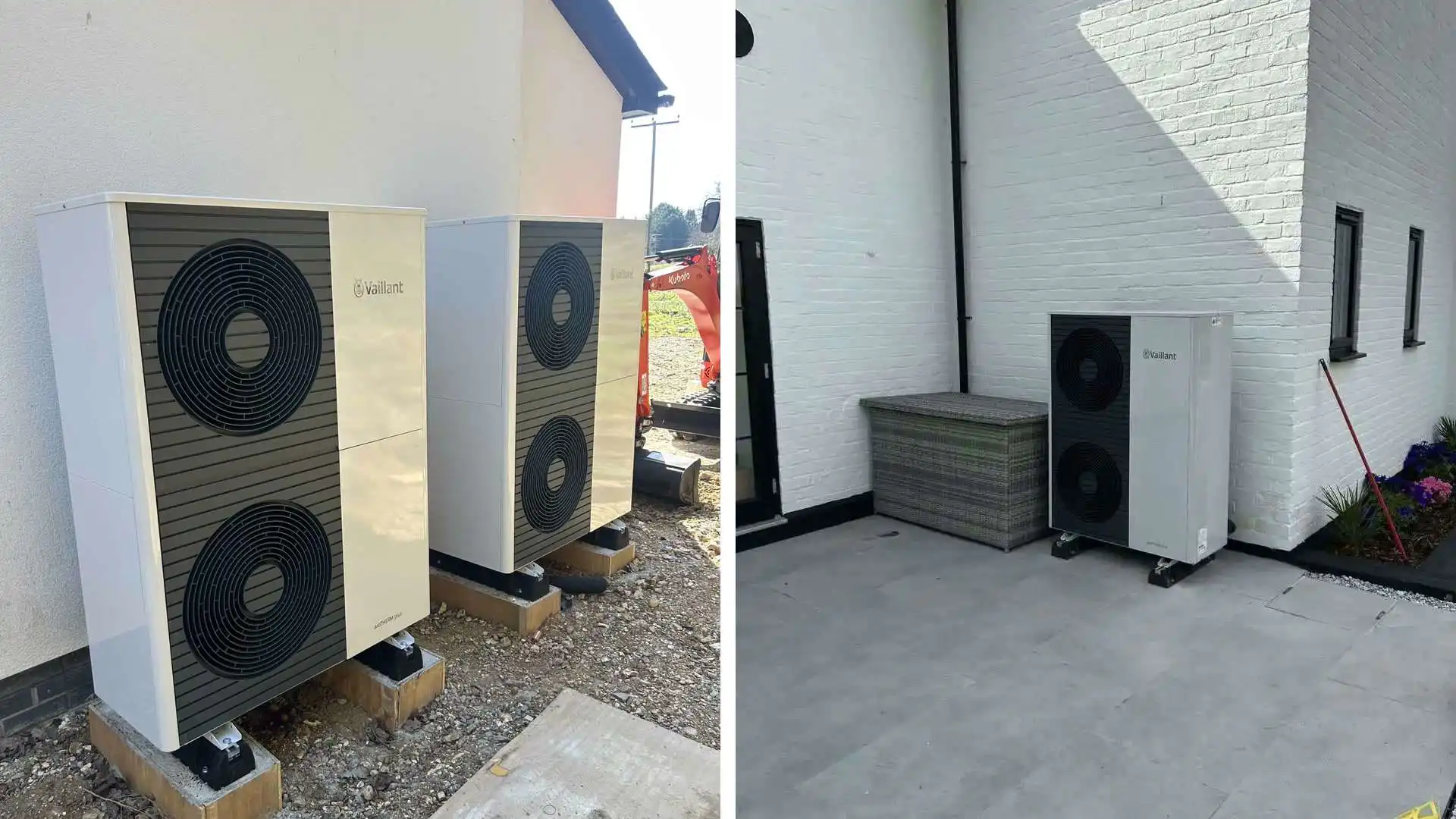
Energy Systems Catapult’s Electrification of Heat trial installed 742 heat pumps in British homes, and its interim results, from data gathered between November 2020 and August 2022, put the median seasonal performance factor of the air source systems at 2.80. The Catapult also found a wide spread between homes and said heat pump design and installation need to become more consistent.
A room-by-room heat loss design aims for an SPF of 4.0: four units of heat for every unit of electricity across a year. Getting there starts with how a heat loss survey sizes the system before anyone picks a unit, and that survey carries a fee, refunded in full if we go on to fit your heat pump.
4.0
Yearly SPF a room-by-room heat loss design aims for
2.80
Median SPF of the air source systems in the Electrification of Heat trial
Source: Energy Systems Catapult, Electrification of Heat interim results, 16 March 2023
A 1960s house in Maidenhead shows what the sums are for. Heat escaped from each room at its own rate, and the upstairs floors left little height for underfloor pipes. We put in a Viessmann Vitocal 150 13kW and used mixing groups to give the underfloor pipes and the radiators a flow temperature each; today the whole house stays at 21°C, with no room running cold.
Put Your Heat Loss Into Numbers
The free Blueprint turns your room-by-room heat loss into a unit size, a radiator list and an itemised price you can compare with any other quote.
“Adam’s experience and understanding of heatpumps and the all important heat loss calculations was evident from first contact.”
Andrew Symes, Google Review
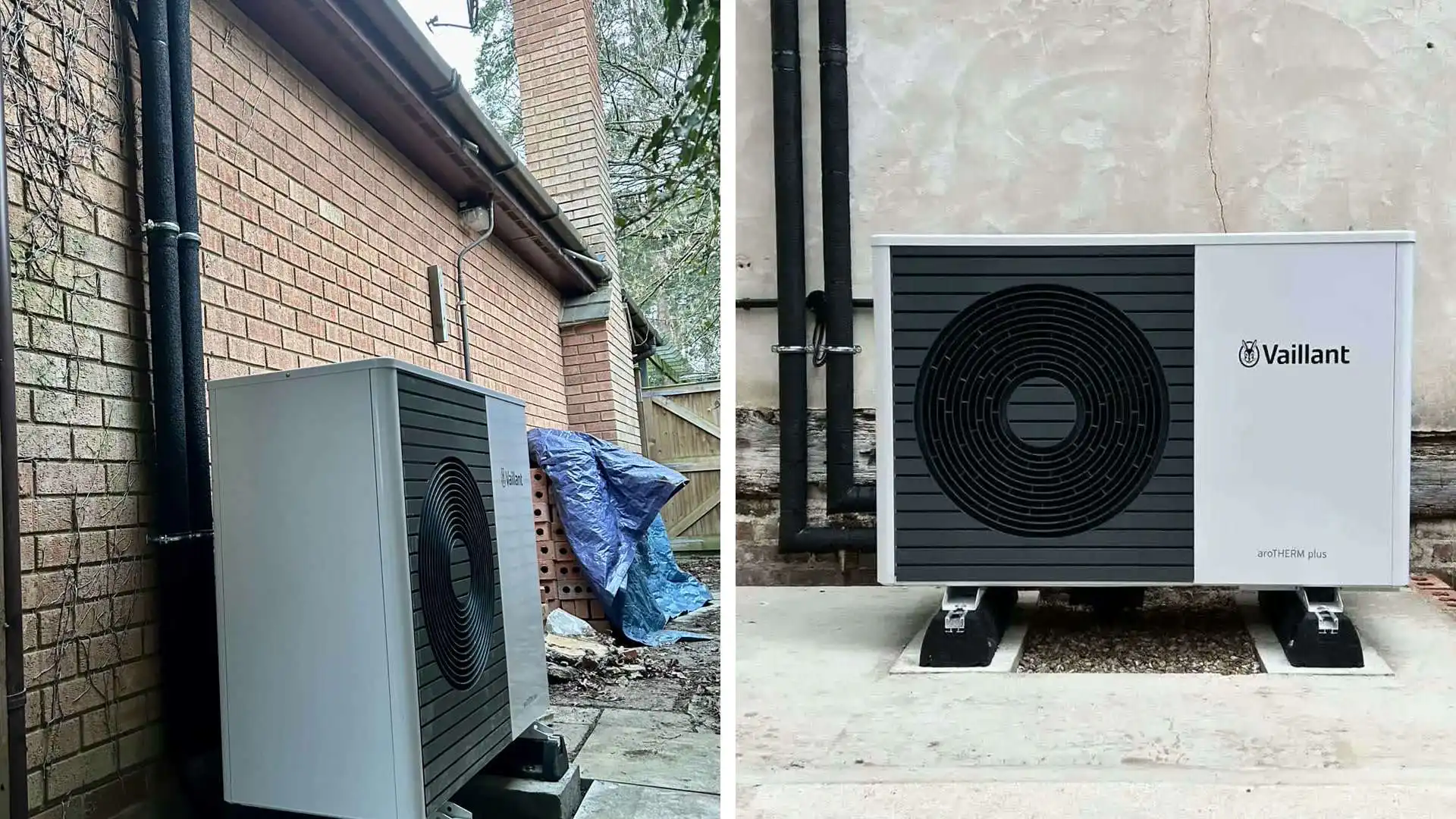
Gas boilers are the usual heating across Berkshire and Surrey, from 1960s to 1980s houses in commuter towns such as Wokingham and Bracknell to Victorian and Edwardian houses near the old town centres. A 1970s detached house often has room for a cylinder and a unit at the side, while a period town house may have one narrow side passage to work with.
The Boiler Upgrade Scheme, open in England and Wales, is worth £7,500 on an air source heat pump. Its conditions include owning the property, taking out fossil fuel heating (gov.uk lists gas, oil, LPG and electric) and using an MCS certified installer; gov.uk rules out most new builds and social housing. We’re MCS certified for heat pumps. The installer applies on your behalf, and the grant comes off your quotation.
£7,500
Boiler Upgrade Scheme grant in England and Wales, for owners who meet its conditions. The installer applies, and the grant comes off your quotation.
Our page on heat pump installation in Newbury takes the cylinder and radiator questions through one West Berkshire town, from its late-Victorian terraces to its 1960s houses.
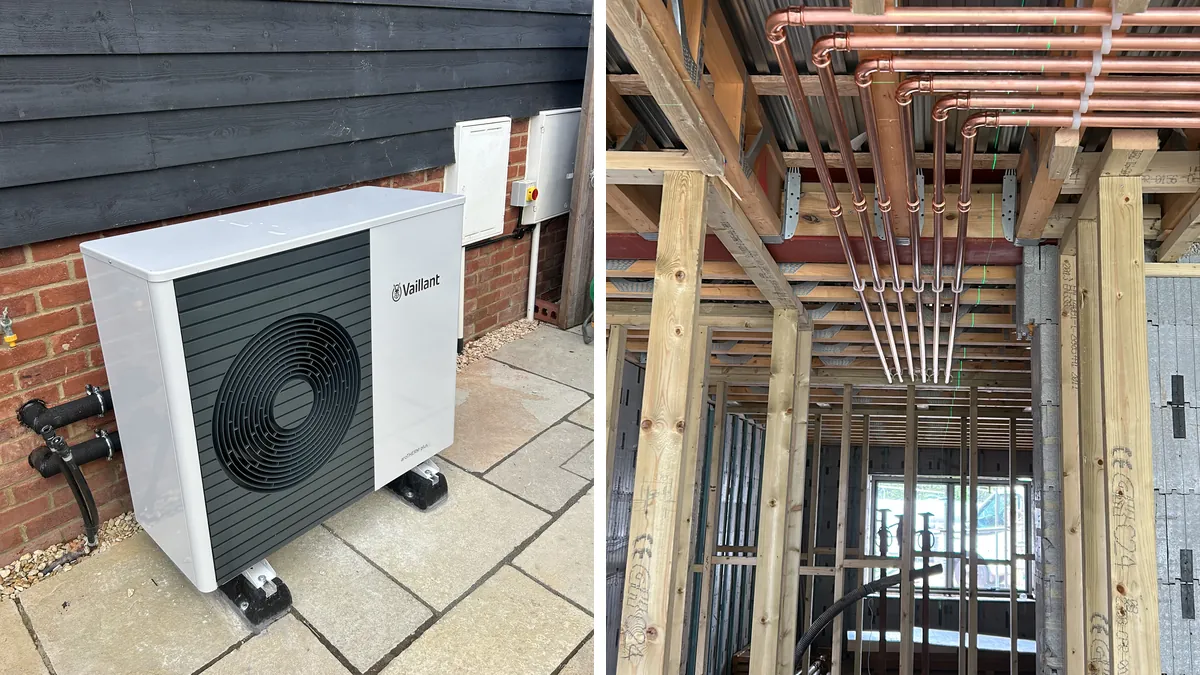
It is a pump for heat. It gathers warmth from the air outside, concentrates it with an electric compressor and delivers it to your radiators and hot water cylinder, the same cycle your fridge uses to push heat out of its cold box.
No. A boiler burns gas or oil to make heat, and a heat pump moves heat from outside using electricity; people asking what is a heat pump boiler mean the heat pump that replaces their boiler. For the switch itself, read replacing a gas boiler with a heat pump; our heat pump vs gas boiler guide compares the two on efficiency.
The refrigerant in the outdoor coil boils far below freezing, so the unit keeps drawing heat from winter air, and in damp cold spells it runs a short defrost cycle to clear ice from the coil. Our guide to running a heat pump efficiently in cold weather covers the settings for a cold snap.
In a standard design, yes. A heat pump heats water in batches and a cylinder stores it, because the unit cannot heat water on demand the way a combi boiler does. The Blueprint marks where the cylinder goes.
That depends on how much heat your house loses and how well the system is designed. A design that lets the heat pump run at a low flow temperature uses less electricity for the same warmth.
Your existing pipes and radiators carry the heat pump’s warm water, at a lower temperature and for longer than a gas boiler sends it. In the 1960s to 1980s detached houses found across Berkshire and Surrey, some rooms may need a larger radiator, and the room-by-room calculation shows which ones.
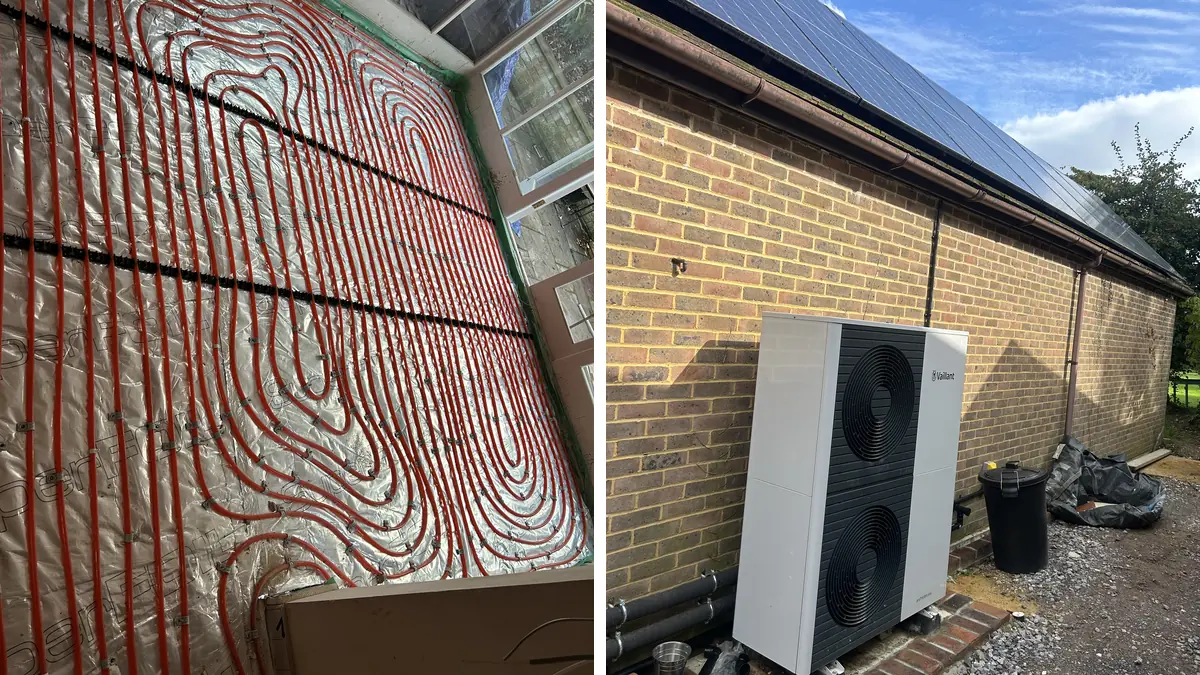
The Heat Pump Blueprint puts a figure on every room’s heat loss, then gives the unit size, the radiator list and the flow temperature for your coldest day, and you go through every figure with Adam on a video call before you decide.
More guides from the Eco Renewables blog on the same topic.
24 November 2026
Read the guide
24 November 2026
Read the guide
24 November 2026
Read the guideEco Renewables are trusted by homeowners throughout Berkshire and the South East to provide high-quality heat pump heating system installations.
If you're considering a heat pump, the survey is where it starts. We assess the property, run the heat loss calculations, and tell you exactly what the system would look like.
Get My Free Heat Pump Blueprint


